Choices for Measuring Luciferase-Tagged Reporter Pseudotyped Viral Particles in Coronavirus Research

Coronavirus (CoV) researchers are working quickly to understand the entry of SARS-CoV-2 into cells. The Spike or S proteins on the surface of a CoV is trimer. The monomer is composed of an S1 and S2 domain. The division of S1 and S2 happens in the virus producing cell through a furin cleavage site between the two domains. The trimer binds to cell surface proteins. In the case of the SARS-CoV, the receptor is angiotensin converting enzyme 2. (ACE2). The MERS-CoV utilizes the cell-surface dipeptidyl peptidase IV protein. SARS-CoV-2 uses ACE2 as well. Internalized S protein goes though a second cleavage by a host cell protease, near the S1/S2 cleavage site called S2′, which leads to a drastic change in conformation thought to facilitate membrane fusion and entry of the virus into the cell (1).  
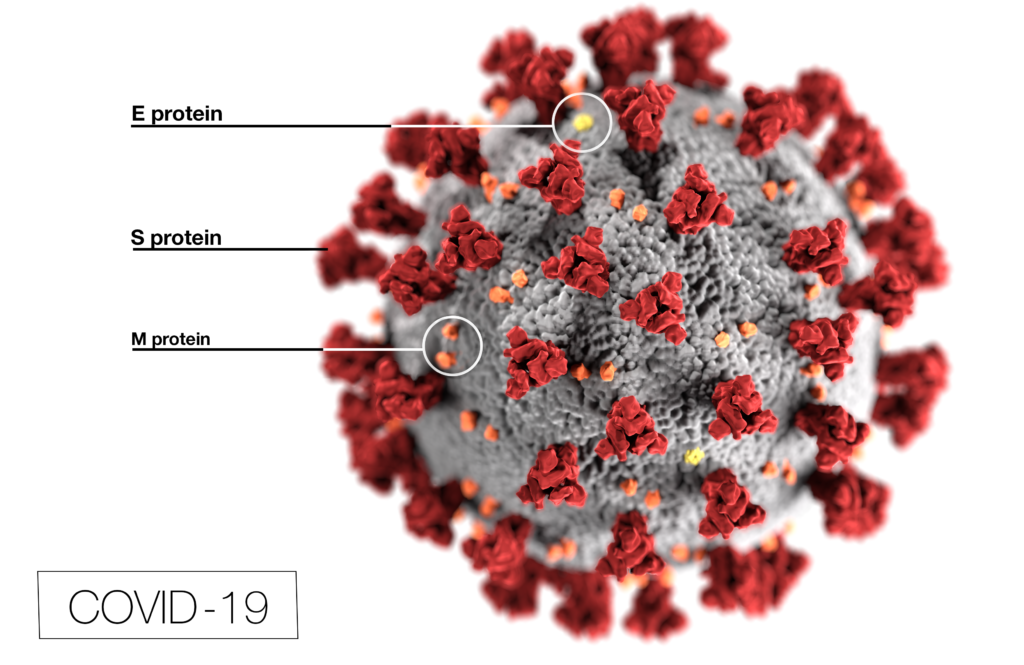
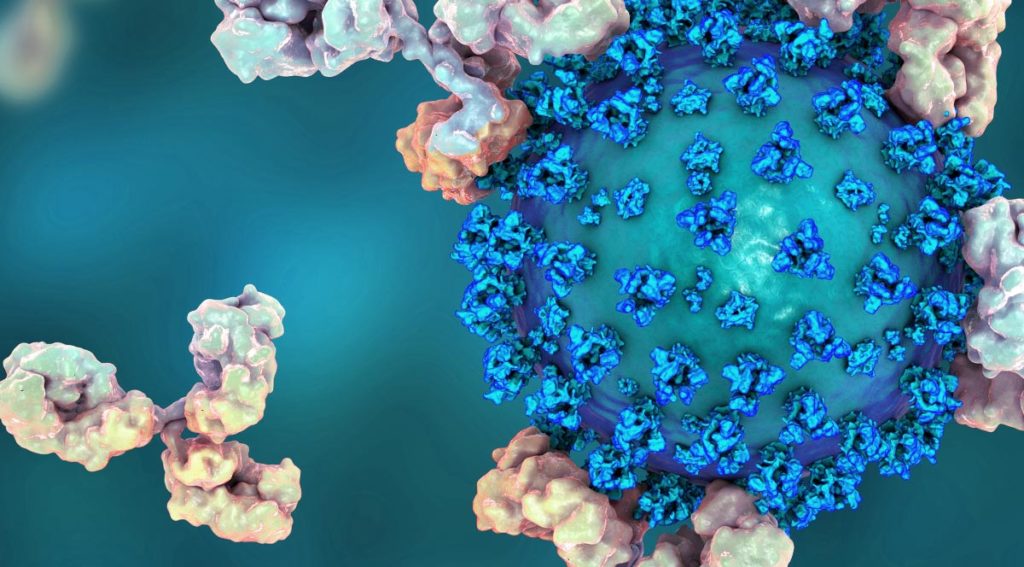
CDC / Alissa Eckert, MS; Dan Higgins, MAMS

Rather than work directly with the virus, researchers have chosen to make pseudotyped viral particles. Pseudotyped viral particles contain the envelope proteins of a well-known parent virus (e.g., vesicular stomatitis virus) with the native host cell binding protein (e.g., glycoprotein G) exchanged for the host cell binding protein (S protein) of the virus under investigation. The pseudotyped viral particle typically carries a reporter plasmid, most commonly firefly luciferase (FLuc), with the necessary genetic elements to be packaged in the particle. 

To create the pseudotyped viral particle, plasmids or RNA alone are transfected into cells and the pseudotyped viruses work their way through the endoplasmic reticulum and golgi to bud from the cells into the culture medium. The pseudoviruses are used to study the process of viral entry via the exchanged protein from the virus of interest. Entry is monitored through assay of the reporter. The reporter could be a luciferase or a fluorescent protein.   

Continue reading “Choices for Measuring Luciferase-Tagged Reporter Pseudotyped Viral Particles in Coronavirus Research”

38 Years After First Release, RNasin Protects COVID-19 Tests

A protein first purified and sold by Promega almost four decades ago has emerged as a crucial tool in many COVID-19 testing workflows. RNasin® Ribonuclease Inhibitor was first released in 1982, only four years after the company was started. At that time, the entire Promega catalog fit on a single sheet of 8.5 × 11” paper, and RNasin was one of the first products to draw widespread attention to Promega. Today, the demand for this foundational product has skyrocketed as it supports labs responding to the COVID-19 pandemic.

What is RNasin® Ribonuclease Inhibitor?

RNA is notoriously vulnerable to contamination by RNases. These enzymes degrade RNA by breaking the phosphodiester bonds forming the backbone of the molecule. To say that RNases are everywhere is barely an exaggeration – almost every known organism produces some form of RNase, and they’re commonly found in all kinds of biological samples. They’re easily introduced into experimental systems, since even human skin secretes a form of RNase. Once they’re present, it’s very hard to get rid of them. Even an autoclave can’t inactivate RNases; the enzymes will refold and retain much of their original activity.

RNasin® Ribonuclease Inhibitor is a protein that has been shown to inhibit many common contaminating RNases, but without disrupting the activity of enzymes like reverse transcriptase that may be essential to an experiment. It works by binding to the RNase enzyme, prevent it from acting on RNA molecules. This is important for ensuring that RNA samples are intact before performing a complex assay.

Continue reading “38 Years After First Release, RNasin Protects COVID-19 Tests”

Understanding the Structure of SARS-CoV-2 Spike Protein

Glycosylation is the process by which a carbohydrate is covalently attached to target macromolecules, typically proteins. This modification serves various functions including guiding protein folding (1,2), promoting protein stability (2), and participating signaling functions (3).

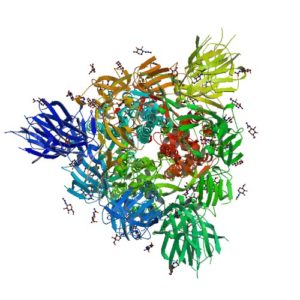
ribbon structure of SARS-CoV-2 protein
Ribbon Structure of SARS-CoV-2 Spike Protein

SARS-CoV-2 utilizes an extensively glycosylated spike (S) protein that protrudes from the viral surface to bind to angiotensin-converting enzyme 2 (ACE2) to mediate host-cell entry. Vaccine development has been focused on this protein, which is the focus of the humoral immune response. Understanding the glycan structure of the SARS-CoV-2 virus spike (S) protein will be critical in the development of glycoprotine-based vaccine candidates.

Continue reading “Understanding the Structure of SARS-CoV-2 Spike Protein”

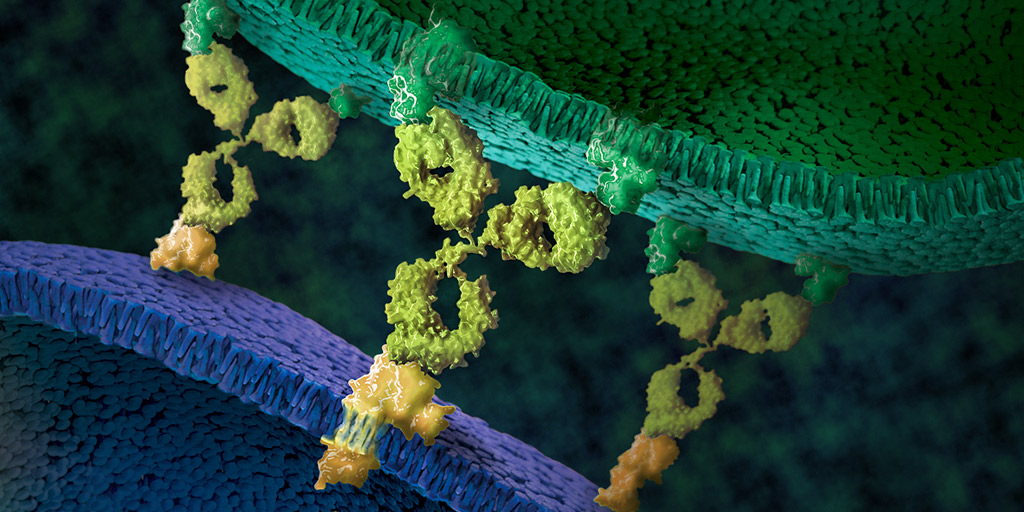
ADCC and Fc Effector Functions: Considerations for COVID-19 Vaccine Development

As we continue navigating the challenges presented by COVID-19, several research areas are crucial for helping us slow the infection rate and ending the pandemic. Advanced testing methods, such as antibody testing, help us understand and predict how the virus will spread, which can inform policy decisions. Effective therapeutics will influence clinical outcomes for individual patients, and several drugs are already being tested or administered. However, an effective vaccine against the SARS-CoV-2 virus is perhaps the most important tool we can use to protect individuals and populations from COVID-19.

Over 90 vaccines against the SARS-CoV-2 virus are currently in development around the world. While there are many different types of vaccines, the overall goal is to create long-lasting protective immunity by stimulating the production of specific antibodies. As these vaccine candidates are further characterized, monitoring ADCC activity can provide important insights into their potential efficacy.

Continue reading “ADCC and Fc Effector Functions: Considerations for COVID-19 Vaccine Development”

Neutralizing Antibodies to SARS-CoV-2 Shown to Lessen Infection in Mice

Here in the US, as around the world, we’re beginning to come out of COVID-19 hiding, whether mandated or voluntary. We are slowly starting to leave the confines of home and “safer at home” orders. Many of us are donning masks and venturing out as needed, still under social distancing considerations.

We’re looking forward to a time when social distancing won’t be necessary, when we can see our relatives and friends, and give them a hug without concern for their safety or ours.

When will that time come? Many believe that it won’t be completely safe until there is an effective vaccine to protect us from SARS-CoV-2.

How does a vaccine protect us? Effective vaccines cause our immune system to produce antibodies that are specific for SARS-CoV-2, so that if we come into contact with the virus, it will be neutralized, preventing infection.

At this time, many questions remain about whether SARS-CoV-2 virus causes production of antibodies. And if antibodies are produced, are they protective?

In some exciting news this week, scientists studying SARS-CoV-2 have shown that neutralizing antibodies to this virus are made in humans. Here’s a look at their work.

Continue reading “Neutralizing Antibodies to SARS-CoV-2 Shown to Lessen Infection in Mice”

Antibody From Humanized Mice Blocks SARS-CoV-2 Infection in Cells

As the SARS-CoV-2 coronavirus continues to spread throughout the world, the race is on to produce antivirals and vaccines to treat and prevent COVID-19. One potential treatment is the use of human monoclonal antibodies, which are antibodies engineered to target and block specific antigens. A recent study by Wang, C. and colleagues published in Nature Communications showed that human monoclonal antibodies can be used to block SARS-CoV-2 from infecting cells.

Continue reading “Antibody From Humanized Mice Blocks SARS-CoV-2 Infection in Cells”

RiboMAX and the Effort to Find Antiviral Drugs to Fight Coronaviruses and Enteroviruses

Prior to 2020, there were two major outbreaks of coronaviruses. In 2003, an outbreak of SARS-CoV sickened 8098 people and killed 774. In 2012, an outbreak of MERS-CoV began which so far has sickened 2553 and killed 876. Although the overall number of MERS cases is low, the disease has a high fatality rate, and new cases are still being reported. Even though fatality rates are high for these two outbreaks, containment was quickly achieved. This makes development of a treatment not commercially viable so no one had undertaken a large effort to develop an approved treatment for either coronavirus infection.

Fast forward to late 2019/2020… well, you know what has happened. There is currently no reliable antiviral treatment for SARS-CoV-2, the coronavirus that causes COVID-19 infections.

Zhang, et al. thought of a way to make an antiviral treatment commercially viable. If the treatment is actually a broad-spectrum antiviral, it could be used to treat more than one infection, meaning, it can be used to treat more people and thus be seen as more valuable and worth the financial risk to pharmaceutical companies. So, they decided to look at the similarities between coronaviruses and enteroviruses.

Continue reading “RiboMAX and the Effort to Find Antiviral Drugs to Fight Coronaviruses and Enteroviruses”

Public-Private Initiative to Increase COVID-19 Testing Capacity by Using Promega Maxwell Instrument in India

This blog is written by guest blogger, Dr Rajnish Bharti, General Manager of Promega Biotech India Pvt Ltd.

As COVID-19 cases accelerate, the country of India has decided to scale up testing capacity to 100,000 tests per day in the coming days.

In a major step to counter the coronavirus crisis, Promega India is supporting government agencies through our automated instruments. The Maxwell® RSC instrument is a compact, automated RNA extraction platform that processes up to 48 samples simultaneously in less than 35 minutes. The automated Promega solution allows laboratories to process up to 400 samples in a typical 8-hour shift.

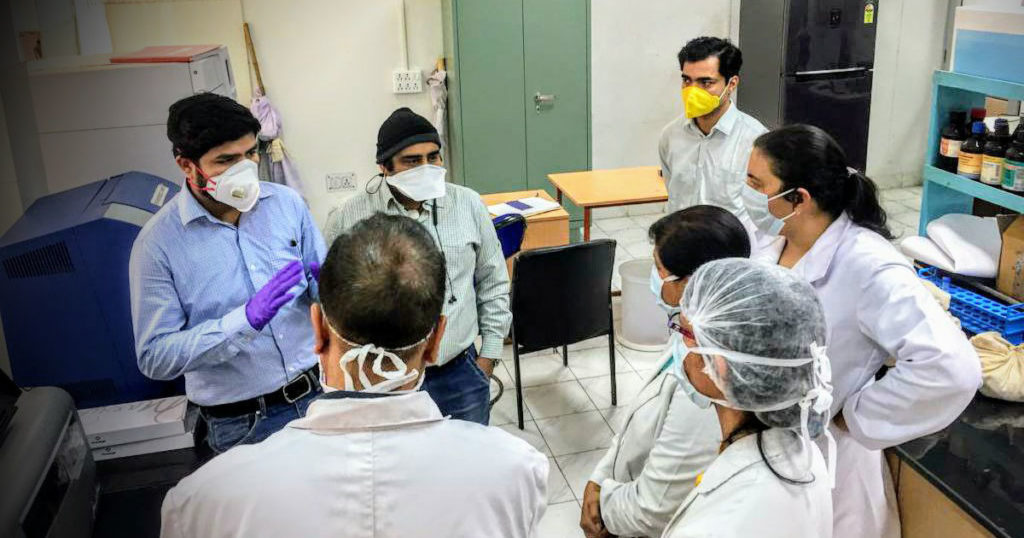
Scientists in India train on the Maxwell RSC 48
Forensic Science Laboratory-Jaipur and SMS Hospital Jaipur join hands together to use Promega Maxwell® RSC 48 to Increase COVID-19 Testing capacity.
Continue reading “Public-Private Initiative to Increase COVID-19 Testing Capacity by Using Promega Maxwell Instrument in India”

Targeting IL-6: How A Drug That Helped a 6-Year-Old Beat Cancer Can Save COVID-19 Patients

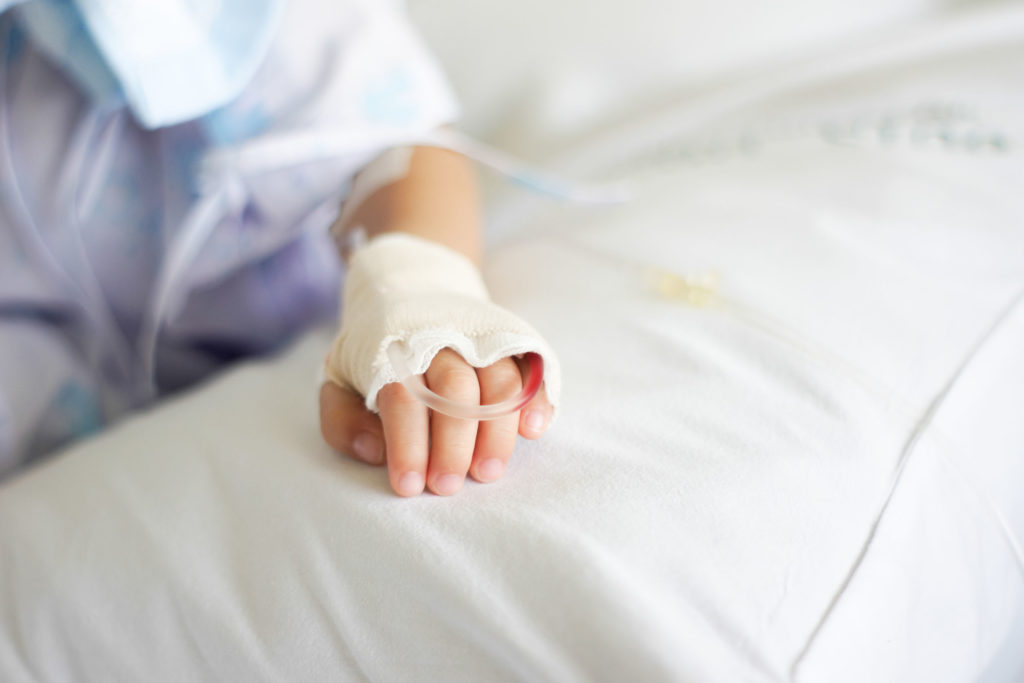
In 2012, a 6-year-old girl named Emily Whitehead was battling acute lymphoblastic leukemia (ALL), one of the most common cancers in children. Her cancer was stubborn. After 16 months of chemotherapy, the cancer still would not go into remission. There was nothing else the doctors could do, and she was sent home. She was expected to survive only a few more months. Her parents would not give up and enrolled her into a clinical trial of a new immunotherapy treatment called chimeric antigen receptor (CAR) T cell therapy. She was the first pediatric patient in the program.

Doctors took T cells from Emily’s blood and reprogrammed them in a lab. They essentially sent her T cells to boot camp where they are trained to find cancer cells and destroy them. The reprogrammed T cells were then injected back into her body. A week into treatment, she started getting a fever, the first sign that the treatment was working and her reprogrammed T cells were fighting the cancer. But soon, she got very sick. All of the indicators suggested that she had cytokine release syndrome (CRS)—also known as the cytokine storm. This happens when cytokines are released in response to an infection but the process cannot be turned off. The cytokines continue to attract immune cells to the infection site, causing damage to the patient’s own cells and eventually resulting in acute respiratory distress syndrome (ARDS). (Learn more about the cytokine storm in this blog.)

Emily was soon on a ventilator. Tests showed that she had extremely high levels of one particular cytokine: interleukin-6 (IL-6). Desperate to keep her alive, her doctors gave her a known drug that specifically targets IL-6. The results were dramatic. After one single dose, her fever subsided within hours, and she was taken off the ventilator. On May 2nd, 2012, she woke up from an induced coma—it was her 7th birthday. Her doctors said they have never seen a patient that sick get better that quickly.

The drug that saved her life was tocilizumab.

Continue reading “Targeting IL-6: How A Drug That Helped a 6-Year-Old Beat Cancer Can Save COVID-19 Patients”

Adapting Our Projects, Our Experiments, and Ourselves to Support COVID-19 Response

The COVID-19 pandemic has affected virtually everyone’s lives and business, and Promega is no exception. If you’re a frequent reader of Promega Connections, you have probably noticed that many of our recent blog posts have mentioned the novel coronavirus.

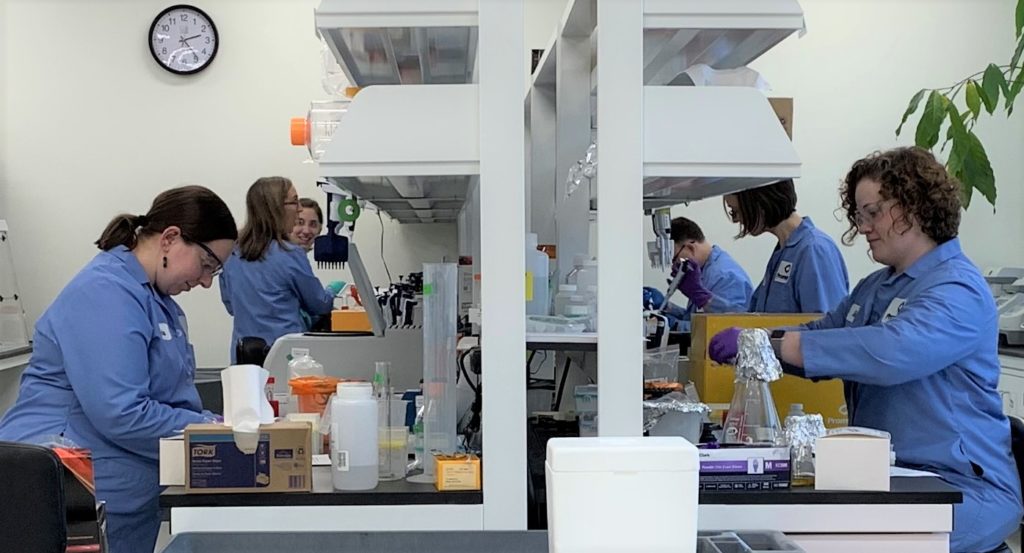
Madison Scientific Applications Team working on projects before physical distancing.

As Applications Scientists at Promega, we have adapted our work to enable support of our Promega colleagues and their customers as they respond to the pandemic. Like other groups in the company, we have ramped up our efforts. Our team typically has a broad focus on a variety of projects from across market segments of the company. During the second week of March, we switched to completely focus on virus-related experiments. Everyone on our team was in the lab collaborating on a large project to determine which kits could be used to purify viral nucleic acid from universal transport medium for virus (UTM®) and sputum, knowing that customers would be using any kit that they had on hand to do testing quickly. We completed testing in two days and data analysis and write-up within another couple of days.

In the last six weeks, we have worked on over 30 projects and completed almost 20 of them. In some cases, we identified, resourced, and began projects in the same day. In other cases, we completed projects within a day or two of receiving the request. You can find some of our data, presented as “Viral RNA Extraction Application Notes”, here.

Many projects originated from direct questions from global branches, Technical Services, and other internal colleagues on behalf of their customers. Some projects resulted from a need we identified, such as testing alternative storage methods for swab transport due to shortage of UTM®. Projects ranged from testing purification kits with relevant sample types, to comparing amplification reagents, and participating in work on forthcoming virus-related products.

Continue reading “Adapting Our Projects, Our Experiments, and Ourselves to Support COVID-19 Response”