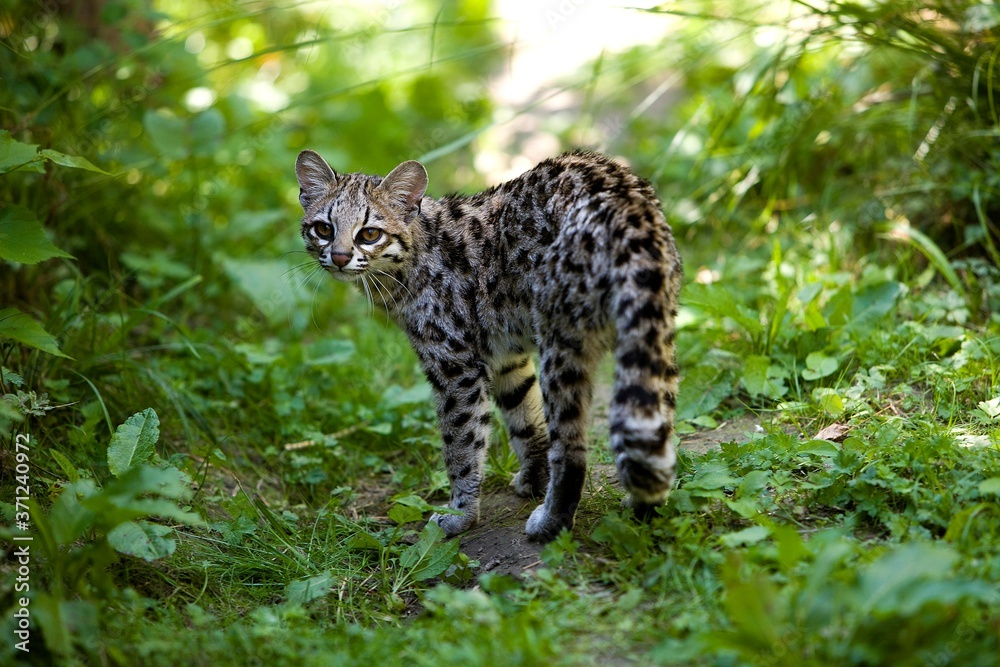
In 2017, Bolivian biologist Paola Nogales-Ascarrunz got a call from a wildlife sanctuary about what she later described to National Geographic as “a weird cat.” A local man found it as a kitten near Bolivia’s Yungas region, took it home, and spent about a year trying to feed it noodles, rice, and eggs before realizing this was no housecat. The animal was tiny, smaller than a domestic cat, with a scrunched-up face, round ears, and a coat covered in leopard-like spots.
Nogales-Ascarrunz, who leads Bolivia’s Felid Research Program, went to visit the cat and photographed it extensively. At the time, she assumed it was an unusual-looking member of Leopardus tigrinus, a species of small spotted tiger cat commonly found in Central and South America. It wasn’t until 2019, while preparing a guide to Bolivia’s cat species, that Nogales-Ascarrunz noticed something was different. The rosettes, or ring-shaped spots on its coat, were much larger than anything in her reference photos.

 Microorganisms; they are the most abundant form of life. They are all around us, silent, unseen and undetected. The number of ‘species’ of archaea and bacteria climbs every year and is predicted to rise well past one million (1). Despite their abundance, we know very little about all but a small fraction of these diverse cellular life forms because we are unable to cultivate most in a laboratory setting. In fact, 88% of all our microbial isolates belong to just four bacterial phyla (Proteobacteria, Firmicutes, Actinobacteria and Bacterioidetes; 2). The remaining branches of the microbial phylogenetic tree range from underrepresented to virtually unknown and are collectively referred to as “microbial dark matter”.