Knots: Friend or Foe?

37190697-May-5-Darcia---Option-2

Knots affect our lives in perplexing ways. They can perform life-saving assistance, such as during rock climbing, or provide Sisyphean puzzles of entanglement. Often, knots seem to have the contrarian personality of an adolescent. They loosen and unwind when you want them to stay fastened, and inevitably form tangles of confounding complexity when you seek to avoid them. These puzzling characteristics of knots were brought to mind when I read two recent articles about the scientific investigation of knots.

Why Knots Fail

The explanation of how shoelaces come untied, published in Proceedings of the Royal Society A, was quite prevalent in the news cycle recently. After observing slow-motion video footage of the shoelaces of a runner on a treadmill, researchers were able to explain how motion affects knots and results in untied shoelaces.

First, they observed that the failure of a knot is not a gradual process, but happens abruptly over the course of only one or two strides. This is possible due to the surprising amount of force generated by the impact of one step, which this study calculated to be an average of 7 g—more than twice the g-force experienced by the Space Shuttle upon reentry into the Earth’s atmosphere.

Continue reading “Knots: Friend or Foe?”


Trying New Ways to Manage Pain

meditation

I never hated my trips to the dentist until the anesthetic injection didn’t work and I felt everything the dentist was doing as he relentlessly drilled my molar. We eventually figured out why the injection didn’t work and solved the problem. I have had numerous pain-free visits since then, yet each time I’m in that chair my mind is anticipating impending doom.

The last time I went to the dentist, I decided to try a different approach. Instead of sitting in the chair anxiously awaiting all the things that might go wrong, I decided to “zoom out” in my mind. I watched my thoughts and reactions, just to see what would happen. I found that each time I thought I might experience pain, I tensed my jaw, tightened my fists, my heart raced and I made myself uncomfortable. The dentist wasn’t causing any pain in that moment, so the only thing making me uncomfortable was my reaction to my thoughts of “This is going to hurt. Get me out of here!”. I tried refocusing my attention, bringing myself into the present moment. If there was no pain, I didn’t need to be bracing myself for it. If there was a little pain, I was able to be with it in the moment instead of feeling it and then painting a worst-case scenario about how much longer it would last and if it might get worse.

Continue reading “Trying New Ways to Manage Pain”

A Cold Case, A Mystery, and DNA Databases

“How do you like the name Jack?” the woman on the phone asked.

41731849 - soft focus and blurry of baby hands vintage style color effect

On April 26, 1964, a nurse came into the hospital room of Dora Fronczak, who had just given birth to her young son, Paul. She told Mrs. Fronczak that it was time to take the baby to the nursery (at that time newborns did not stay in the room with the moms), took the baby, and left. A few hours later, another nurse came into the room to take young Paul to the nursery. It was then that everyone realized a mother’s worst fear: Her infant had been stolen.

Authorities were able to determine how the woman left the hospital and that she got into a cab, but they were never able to find the woman. However, in 1965, a small toddler-aged boy was found, abandoned outside a store in New Jersey. Blood tests were not inconsistent with him being Paul Fronczak (DNA testing was not available), and there were no other missing children cases in the area that were matches. The little boy was sent to Chicago as Paul Fronczak and the case was closed.

However, as an adult, Paul Fronczak began to suspect that the couple who raised him were not his biological parents, and in 2012 Paul underwent DNA analysis to test his suspicions. The results showed that indeed, he was not the biological son of Dora and Chester Fronczak. His next step was to enlist the help of a genetic genealogist to assist him in finding his true biological parents and his identity.

By conducting “familial searches” using commercially available DNA databases like 23andMe and AncestryDNA and many resources, the genealogist’s group found a match to his DNA on the east coast. Further groundwork, discovered that this family was indeed Paul’s…now Jack.

The knowledge of Jack’s true identity didn’t bring with it a joyous union of the adoptive family who had raised and loved Jack (as Paul) with the biological family who had pined for him over the years as many might imagine.

Continue reading “A Cold Case, A Mystery, and DNA Databases”

Biotech Manufacturing: A Good Machinist is Critical for Your Laboratory Reagents

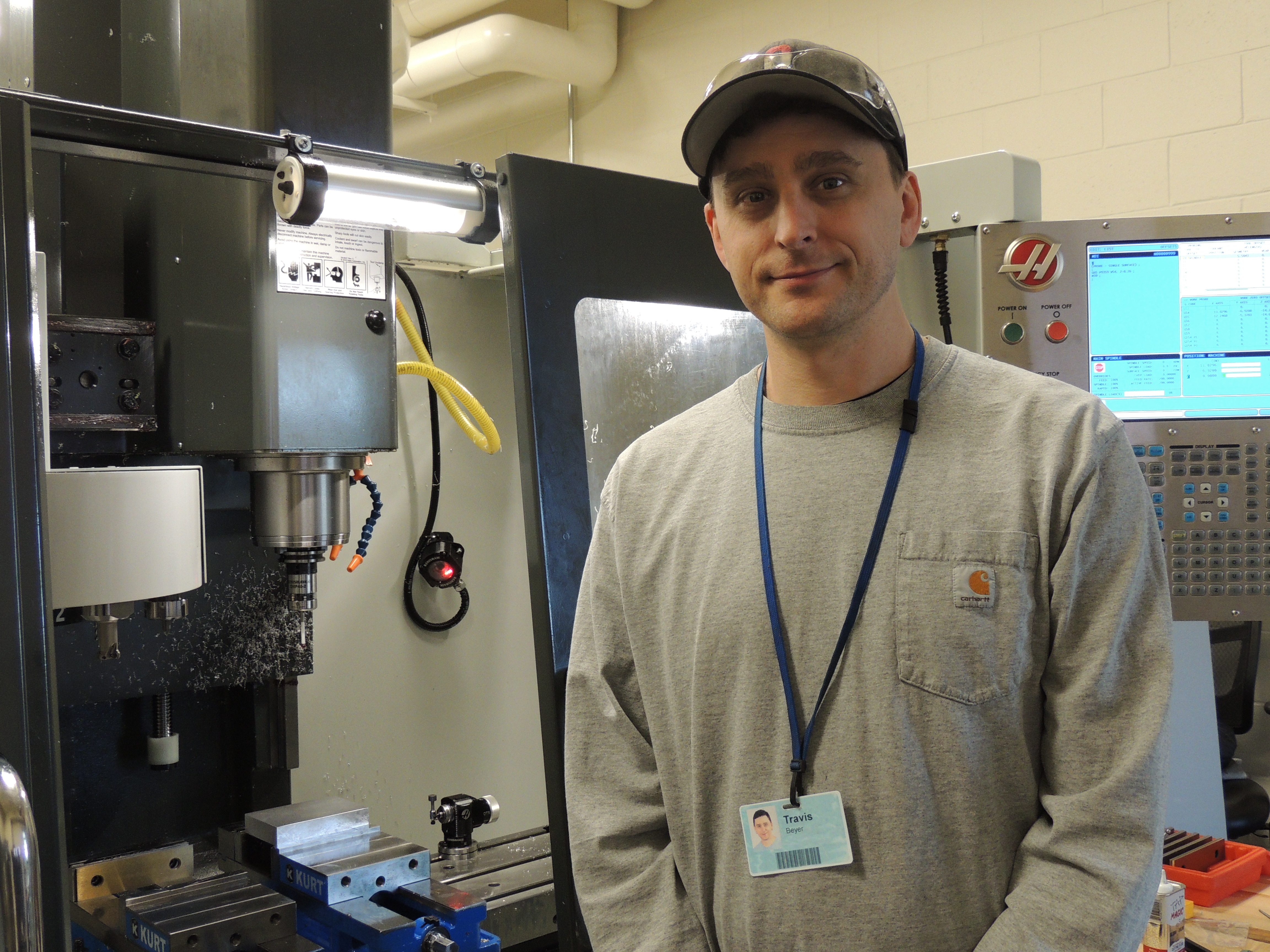
Travis Beyer, Machinist Technician, at the CNC milling machine in the Promega machine shop.

It can be easy to forget that Promega is a manufacturing business. Hidden within the well-designed walls of the company’s cGMP Feynman Center, as well as in other facilities on the Madison campus, technicians operate hundreds of machines that manufacture, dispense and package Promega reagents day in and day out. Keeping those high-tech machines running at peak performance is critical, requiring immense skill, precision and even artistry. That’s where Promega Machinist Technician Travis Beyer comes in.

“I get to make stuff,” says Travis who is not afraid to show his enthusiasm for his craft while describing the best part of his job. “There’s a product at the end of the day. Plus I get to support science, and make things that support people’s lives. That’s cool.”

I get to make stuff. There’s a product at the end of the day. Plus I get to support science, and make things that support people’s lives. That’s cool.

The da Vinci Center, another artfully designed building on the Madison campus, houses the Promega machine shop where Travis does his work designing or improving on parts for newer manufacturing equipment or reverse engineering broken or worn parts no longer available for older equipment that still serves its purpose. He makes every machine part imaginable from drive shafts to sensor brackets to filling forks, and his work is critical to manufacturing businesses like Promega, where a downed piece of equipment can cause costly production delays.

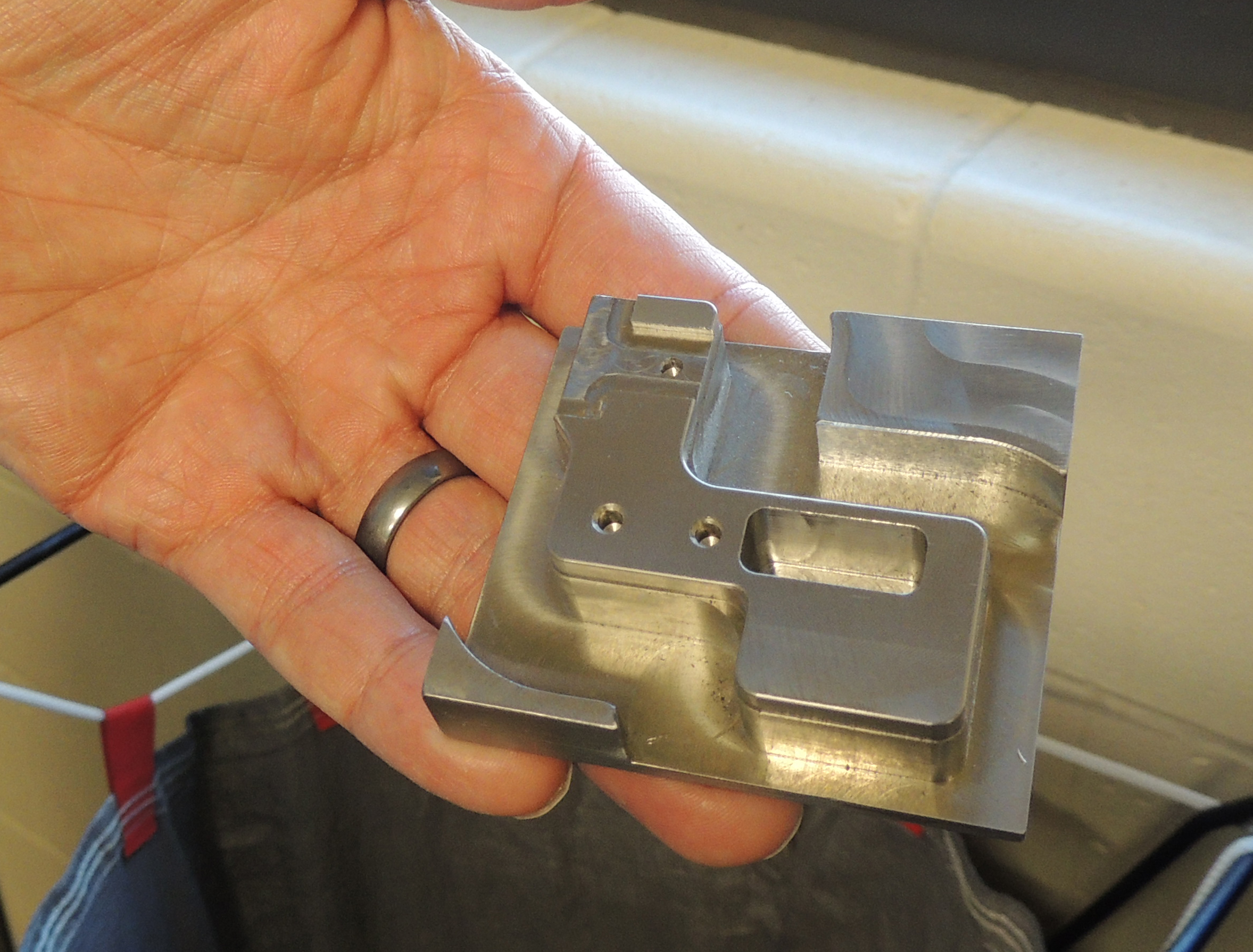
An example of a machine part that Travis designs or reverse engineers and then builds to keep Promega manufacturing moving smoothly.

As he explains, not many manufacturing companies the size of Promega have a fully capable machine shop. They usually send out their work, meaning longer lead times and more expense. But, as its distinctive architecture suggests, Promega is not like many other companies.

Continue reading “Biotech Manufacturing: A Good Machinist is Critical for Your Laboratory Reagents”

Making BRET the Bright Choice for In vivo Imaging: Use of NanoLuc® Luciferase with Fluorescent Protein Acceptors

13305818-cr-da-nanoluc-application_ligund

Live animal in vivo imaging is a common and useful tool for research, but current tools could be better. Two recent papers discuss adaptations of BRET technology combining the brightness of fluorescence with the low background of a bioluminescence reaction to create enhanced in vivo imaging capabilities.

The key is to image photons at wavelengths above 600nm, as lower wavelengths are absorbed by heme-containing proteins (Chu, J., et al., 2016 ). Fluorescent protein use in vivo is limited because the proteins must be excited by an external light source, which generates autofluorescence and has limited penetration due to absorption by tissues. Bioluminescence imaging continues to be a solution, especially firefly luciferase (612nm emission at 37°C), but its use typically requires long image acquisition times. Other luciferases, like NanoLuc, Renilla, and Gaussia, etc. either do not produce enough light or the wavelengths are readily absorbed by tissues, limiting their use to near-surface imaging.

The two papers discussed here illustrate how researchers have combined NanoLuc® luciferase with a fluorescent protein to harness bioluminescent resonance energy transfer (BRET) for brighter in vivo imaging reporters.

Continue reading “Making BRET the Bright Choice for In vivo Imaging: Use of NanoLuc® Luciferase with Fluorescent Protein Acceptors”

Preventing Viral Infection by Blocking Cellular Receptors with a Tethered Antibody

Finding a way to neutralize or block infection by HIV has long been pursued by viral researchers. Various treatments have been developed, driven by the need to find effective drugs to manage HIV in infected individuals. The ultimate goal is to develop a vaccine to prevent HIV from even taking hold in the body. With all of our knowledge about the cellular receptors HIV needs to enter the cell, there has to be a method to prevent a viral particle from binding and being internalized. Many researchers are pursuing neutralizing antibodies to the virus as one method. What about antibodies that target the cellular receptor recognized by the virus? An article published in Proceedings of the National Academy of Sciences, antibodies to cellular receptors for rhinovirus and HIV were tethered to the plasma membrane and tested for the ability to prevent infection.

Continue reading “Preventing Viral Infection by Blocking Cellular Receptors with a Tethered Antibody”

Three Factors That Can Hurt Your Assay Results

4621CA

Each luminescent assay plate represents precious time, effort and resources. Did you know that there are three things about your detection instrument that can impact how much useful information you get from each plate?  Instruments with poor sensitivity may cause you to miss low-level samples that could be the “hit” you are looking for.  Instruments with a narrow detection range limit the accuracy or reproducibility you needed to repeat your work.  Finally, instruments that let the signal from bright wells spill into adjacent wells allow crosstalk to occur and skew experimental results, costing you time and leading to failed or repeated experiments.

Continue reading “Three Factors That Can Hurt Your Assay Results”

Bones: Improved Technology is Bringing Loved Ones Home

21537407 - archeology, human bones

Today’s Promega Connections blog is written by guest blogger Rachel H. Oefelein, QA Manager/Senior DNA Analyst at DNA Labs International. 

Shakespeare said, “The evil that men do lives after them; the good is oft interred with their bones.”  This is continually true in the case of unidentified remains throughout the United States.  The action of a person going missing or the events leading to an individual’s demise are frequently the memory that haunts a town or the media for years to come. However, for each such case, somewhere lies a set of skeletal remains not yet found, or just as tragic, recovered but still unidentified.  The National Missing and Unidentified Persons System (NamUs) estimates approximately 40,000 sets of unidentified skeletal remains linger in morgues around the country or that have been cremated and buried as Jane and John Does.

Many crime labs do not have protocols in place for the extraction of DNA from skeletal remains or have outdated protocols for bone extraction that are not sensitive enough for poor quality bones. Bones are often recovered from harsh environments and have been exposed to extreme heat, time, acidic soil, swamp, chemicals treatment, etc. These harsh environmental conditions degrade the DNA present in the remains which further complicates the already difficult procedure of releasing the DNA in cells buried deep within the bone matrix. Another challenge is that cases often involve recovery of skeletal remains in areas with animal activity, water recoveries and scenes involving explosions or fires; these case types may require re-association of dozens if not hundreds of bones and bone fragments.

Continue reading “Bones: Improved Technology is Bringing Loved Ones Home”

Making a Case for Basic Research Funding

The value of public funding for “basic” versus “applied” research has long been questioned. To address this debate, the authors of a recent report in Science performed a large-scale evaluation of the value of public investment in biomedical research. After analyzing the relationship between the U.S. National Institutes of Health (NIH) grants and private patents, they found that distinguishing research as basic or applied is not useful in determining the productivity of grant funding.

Genetic research at the laboratory

The $30 billion annual budget of the NIH makes it the largest source of life science funding in the world and provides a third of all US biomedical research and development. Although there has long been a strong argument for public investment in scientific research, attacks on the tangible benefits of this research persist. In particular, some opponents argue that “basic” research is too far removed from practical applications to be worthy of investment.

Continue reading “Making a Case for Basic Research Funding”

Making the Switch from FRET to BRET: Applications of NanoLuc® Luciferase with Fluorescent Protein Acceptors for Sensing Cellular Events

A Bioluminescent Alternative

Fluorescence resonance energy transfer (FRET) probes or sensors are commonly used to measure cellular events. The probes typically have a matched pair of fluorescent proteins joined by a ligand-binding or responsive protein domain. Changes in the responsive domain are reflected in conformational changes that either bring the two fluorescent proteins together or drive them apart. The sensors are measured by hitting the most blue-shifted fluorescent protein with its excitation wavelength (donor). The resulting emission is transferred to the most red-shifted fluorescent protein in the pair, and the result is ultimately emission from the red-shifted protein (acceptor).

As pointed out by Aper, S.J.A. et al. below, FRET sensors face challenges of photobleaching, autofluorescence, and, in the case of exciting cyan-excitable donors, phototoxicity. Another challenge to using FRET sensors comes when employing optogenetic regulators to initiate the event you wish to monitor. Optogenetic regulators respond to specific wavelengths and initiate signaling. The challenge comes when the FRET donor excitation overlaps with the optogenetic initiation wavelengths. Researchers have sought to alleviate many of these challenges by exchanging the fluorescent donor for a bioluminescent donor, making bioluminescence resonance energy transfer (BRET) probes. In the three papers described below, the authors chose NanoLuc® Luciferase as the BRET donor due to its extremely bright signal.

Continue reading “Making the Switch from FRET to BRET: Applications of NanoLuc® Luciferase with Fluorescent Protein Acceptors for Sensing Cellular Events”