Rapid DNA Act of 2017: What is It?

On May 16, 2017, the U.S House of Representatives and the U.S. Senate passed the Rapid DNA Act of 2017 (H.R.510 and S.139, respectively). The bill was sponsored by Senator Orrin Hatch (R-UT) and Representative James Sensenbrenner (R-Wis) and enjoyed bipartisan support, ending up with seven Republican and five Democratic cosponsors in the Senate, and seventeen Republican and seven Democratic cosponsors in the House. The bill was passed by unanimous consent voice votes in both chambers.

So what is the Rapid DNA Act of 2017 all about?

Simply put, the act will expand the use of rapid DNA technology in law enforcement departments by creating a way for them to use the results they get by connecting them to the FBIs Combined DNA Index System (CODIS). Still curious? Read on and you will learn much more about what the Rapid DNA Act of 2017 does and doesn’t do.

Continue reading “Rapid DNA Act of 2017: What is It?”

Six (and a Half) Reasons to Quantitate Your DNA

Knowing how much DNA you have is fundamental to successful experiments. Without a firm number in which you are confident, the DNA input for subsequent experiments can lead you astray. Below are six reasons why you should quantitate your DNA.

6. Saving time by knowing what you have rather than repeating experiments. If you don’t quantitate your DNA, how certain can you be that the same amount of DNA is consistently added? Always using the same volume for every experiment does not guarantee the same DNA amount goes into the assay. Each time there is a new purified DNA sample, the chances that you have the same quantity as before are lessened. Consequently, without knowing the DNA concentration of the sample you are using, the amount of input DNA cannot be guaranteed and experiments may have to be repeated.

Continue reading “Six (and a Half) Reasons to Quantitate Your DNA”

Findings May Reveal Earliest Evidence of Selective Dog Breeding

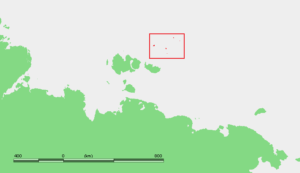
Image showing DeLong chain of islands.
Zhokhov Island is part of the DeLong chain of islands off the north coast of Siberia. Image courtesy of Wikimedia Commons.

A report in the June 2, 2017 edition of Science magazine digs into findings from an ancient archaeological site on the very remote and very, very cold Zhokhov Island, to show that the locals, hardy human hunters, not only lived and worked with dogs, but also quite probably selectively bred the dogs for certain traits.

Archaeologist Vladmir Pitulko with the Russian Academy of Sciences has been excavating on Zhokhov Island since 1989, where he has found dog bones as well as remnants of wooden sleds. With archaezoologist Aleksey Kasparov, also of the RAS, they’ve compared two of the most complete dog skulls found to those of contemporary Siberian Huskies and wolves.

Pitulko and Kasparov wanted to first determine if the skulls were those of dogs or wolves. They first employed two key skull ratios: snout height to skull length and cranium height to skull length. Using these ratios, they were able to reliably distinguish between skulls of a modern wolf and husky.

Continue reading “Findings May Reveal Earliest Evidence of Selective Dog Breeding”

Creating ART from 3D Printed Ovaries

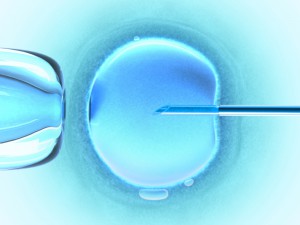
It is remarkable to me how quickly in vitro fertilization has gone from an experimental, controversial and prohibitively expensive procedure to becoming a mainstream option for those struggling with fertility issues. What was unheard of in my parents’ generation is nothing extraordinary among my friends who are having children.

My personal observations are supported by the CDC, which reported that 1.6% of all infants born in the U.S. in 2015 were the result of assisted reproductive technology (ART). This is a 33% increase since 2006, which can be attributed to rapid advances and refinements of the various technologies available to those seeking reproductive assistance.

It challenges the mind to imagine what reproductive technologies might be widespread when my children and their friends are adults. When experts speculate about the future of human reproduction, there always seems to be a lot of focus on provocative scenarios that portend a dystopian future, such as designer babies. What gets lost are some of the more general scientific advances that are being applied to ART in fascinating ways.

While improvements in reproductive technologies serve many, one group that remains underserved are pediatric cancer patients. As a result of treatment, these patients are often faced with impaired ovarian function that can prevent puberty and result in infertility. In vitro fertilization and ovarian transplants are currently used, but do not provide lasting solutions for all individuals.

In response to this need, researchers are working to develop an organ replacement that can provide long-term hormone function and fertility for all patients.  A recent study in Nature Communications presented encouraging results in mice using bioprosthetic ovaries that may further revolutionize the field of ART.

Continue reading “Creating ART from 3D Printed Ovaries”

The University of Wisconsin Master of Science in Biotechnology Program Celebrates Its 15-Year Anniversary

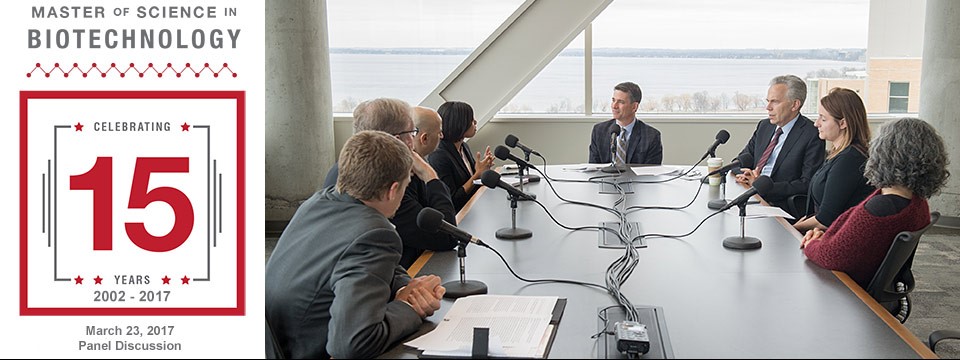
The University of Wisconsin Master of Science in Biotechnology Program began with its first cohort of students in 2002, and its 14th class graduated this May, with the BTC Institute serving as a major partner since its inception. The 15-year anniversary highlights the success the program has garnered over the years, with over 300 alumni successfully completing the program between 2002 and 2017.

Kevin Conroy, JD led the panel discussion

To celebrate and acknowledge the program’s 15-year anniversary, a panel discussion was held in March of this year on the University of Wisconsin – Madison campus at the Wisconsin Institute for Medical Research (WIMR).  A panel of alumni and faculty, led by Kevin Conroy, CEO of Exact Sciences, addressed the question: What are the future education needs of the biotechnology industry in Wisconsin?

Continue reading “The University of Wisconsin Master of Science in Biotechnology Program Celebrates Its 15-Year Anniversary”

All Aglow in the Ocean Deep

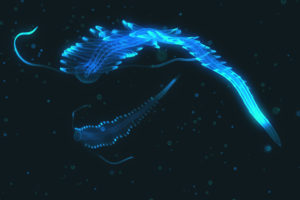
Fascinating bioluminescent organisms floating on dark waters of the ocean. Polychaete tomopteris.

Today’s blog comes to you from the Promega North America Branch Office.

In nature, the ability to “glow” is actually quite common. Bioluminescence, the chemical reaction involving the molecule luciferin, is a useful adaptation for many lifeforms. Fireflies, mushrooms and creatures of the ocean deep use their internal lightshows to cope with a variety of situations. Used for hunting, communicating, ridding cells of oxygen, and simply surviving in the darkness of the ocean depths, bioluminescence is one of nature’s more flashy, and advantageous traits.

In new research published in April in the journal Scientific Reports, MBARI researchers SĂ©verine Martini and Steve Haddock found that three-quarters of all sea animals make their own light.  The study reviewed 17 years of video from Monterey Bay, Calif in oceans that descended to 2.5 miles, to determine the commonality of bioluminescence in the deep waters.

Martini and Haddock’s observations concluded that 76 percent off all observed animals produced some light, including 97 to 99.7 cnidarians (jellyfish), half of fish, and most polychaetes (worms), cephalopods (squid), and crustaceans (shrimp).

Most of us are familiar with the fabled anglerfish, the menacing deep-sea creature known for attracting ignorant prey with a glowing lure attached to their head. As you descend below 200 meters, where light no longer penetrates, you will be surprised at the unexpected color display of the oceans’ sea life. Bioluminescence is not simply an exotic phenomenon, but an important ecological trait that the oceans’ sea creatures have wholeheartedly adopted to cope with complete darkness.

Continue reading “All Aglow in the Ocean Deep”

Why Wait? Sample Prep/Protein Digestion in as Little as 30 Minutes!

While many proteases are used in bottom-up mass spectrometric (MS) analysis, trypsin (4,5) is the de facto protease of choice for most applications. There are several reasons for this: Trypsin is highly efficient, active, and specific. Tryptic peptides produced after proteolysis are ideally suited, in terms of both size (350–1,600 Daltons) and charge (+2 to +4), for MS analysis. One significant drawback to trypsin digestion is the long sample preparation times, which typically range from 4 hours to overnight for most protocols. Achieving efficient digestion usually requires that protein substrates first be unfolded either with surfactants or denaturants such as urea or guanidine. These chemical additives can have negative effects, including protein modification, inhibition of trypsin or incompatibility with downstream LC-MS/MS. Accordingly, additional steps are typically required to remove these compounds prior to analysis.

Continue reading “Why Wait? Sample Prep/Protein Digestion in as Little as 30 Minutes!”

Revealing Time of Death: The Microbiome Edition

Forensic analysts have long sought precision when determining time of death. While on crime scene investigation television shows, the presence of insects always seems to reveal when a person died, there are many elements to account for, and the probable date may still not be accurate. Insects arrive days after death if at all (e.g., if the body is found indoors or after burial), and the stage of insect activity is influenced by temperature, weather conditions, seasonal variation, geographic location and other factors. All this makes it difficult to estimate the postmortem interval (PMI) of a body discovered an unknown time after death. One way to make estimating PMI less subjective would be to have calibrated molecular markers that are easy to sample and are not altered by environmental variabilities.

Bacterial communities called microbiomes have been frequently in the news. The influence of these microbes encompass living creatures and the environment. Not surprisingly, research has focused on the influence of microbiomes on humans. For example, changes in gut microbiome seem to affect human health. Intriguingly, microbiomes may also be a key to determining time of death. The National Institute of Justice (NIJ) has funded several projects focused on the forensic applications of microbiomes. One focus involves the necrobiome, the community of organisms found on or around decomposing remains. These microbes could be used as an indicator of PMI when investigating human remains. Recent research published in PLOS ONE examined the bacterial communities found in human ears and noses after death and how they changed over time. The researchers were interested in developing an algorithm using the data they collected to estimate of time of death.

Continue reading “Revealing Time of Death: The Microbiome Edition”

Surfing the Light Waves: Shrimp, Coral, Turtles and Other Fluorescent Organisms

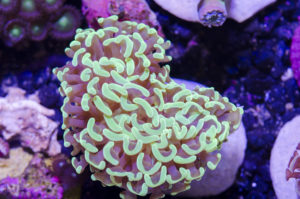
A branching torch coral, Euphyllia glabrescens.

Have you ever walked on a beach and noticed that the waves seem to glow as they roll onto shore? Perhaps you have seen fish or jellyfish that glow in the dark, or maybe you’ve chased fireflies in your backyard or on a camping trip. These are all forms of luminescence (the production of light without adding heat), but the manner that these organisms produce their light can be quite different.

Continue reading “Surfing the Light Waves: Shrimp, Coral, Turtles and Other Fluorescent Organisms”

In Healthy Eating Less is More: The Science Behind Intermittent Fasting

Mix a love of eating with a desire to live a long, healthy life what do you get? Probably the average 21st-century person looking for a way to continue enjoying food despite insufficient exercise and/or an age-related decline in caloric needs.

Enter intermittent fasting, a topic that has found its way into most news sources, from National Institutes of Health (NIH) and Proceedings of the National Academy of Sciences publications to WebMD and even the popular press. For instance, National Public Radio’s “The Salt” writers have tried and written about their experiences with dietary restriction.

While fasting has enjoyed fad-like popularity over the past several years, it is not new. Fasting, whether purposely not eating or eating a restricted diet, has been practiced for 1,000s of years. What is new is research studies from which we are learning the physiologic effects of fasting and other forms of decreased nutrient intake.

You may have heard the claims that fasting makes people smarter, more focused, and thinner. Researchers today are using cell and animal models, and even human subjects, to measure biochemical responses at the cellular level to restricted nutrient intake and meal timing, in part to prove/disprove such claims (1,2).

Continue reading “In Healthy Eating Less is More: The Science Behind Intermittent Fasting”