For decades, Oropouche virus (OROV) was considered a problem limited to the Amazon Rainforest. OROV is transmitted to humans and animals through the bite of tiny blood-feeding insects called Culicoides midges. The virus causes Oropouche fever, which leads to debilitating symptoms like a high fever and severe headache1. While the virus was first isolated in Trinidad in 1955, it has since been associated primarily with outbreaks in the Amazon Basin. However, in the last two years, over 29,000 confirmed cases have been reported across the Americas, suggesting the virus has expanded well beyond its historical range.
One of the most concerning expansions is the state of Minas Gerais in southeastern Brazil. Unlike the Amazon, Minas Gerais sits within the Atlantic Forest biome, a heavily fragmented landscape shaped by agriculture, urbanization, and a climate distinct from the humid tropics where OROV has traditionally circulated. With more than 1,600 cases of Oropouche fever since January 2024, a consortium of researchers from universities in Brazil and the US have combined their efforts to try to understand the urgent question: what is driving OROV transmission in this unfamiliar territory2?
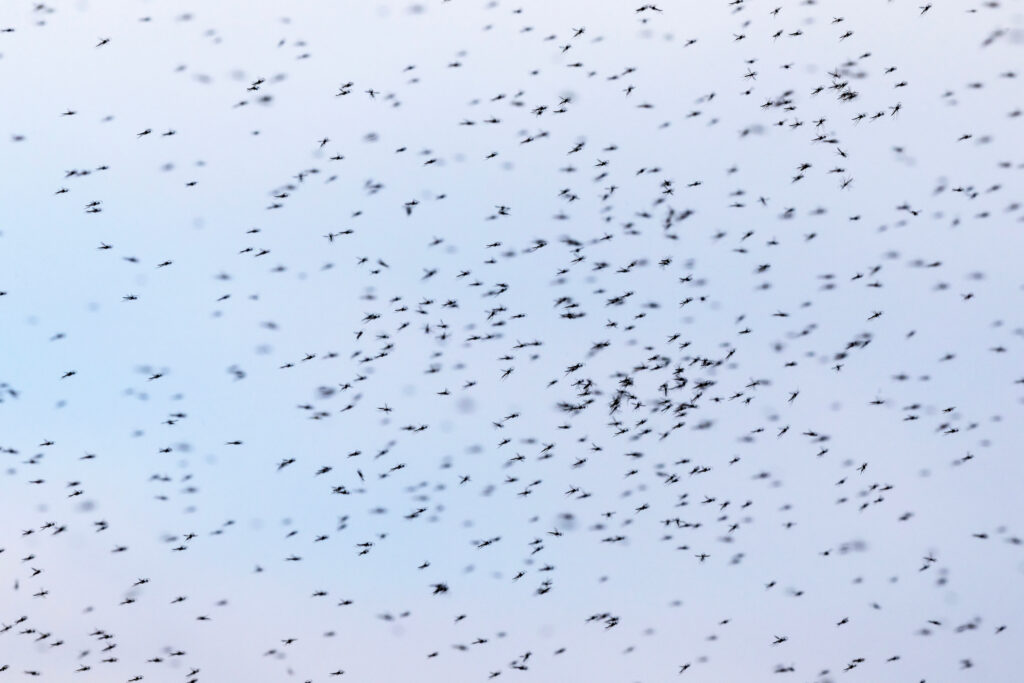
About The Winged Carrier
To understand how OROV is establishing itself outside the Amazon, the research team focused on the insect at the center of the story: Culicoides paraensis. These tiny, biting midges show a well-documented preference for human hosts2,3. In urban settings, C. paraensis is the primary vector of OROV, carrying the virus from person to person through bites. Most importantly, only female midges bite. They require blood meals to produce their eggs, so females are the major drivers of transmission. The transmission cycle is straightforward: a female midge bites an infected person, picks up the virus, then passes it to the next person it bites4.
Finding the virus inside the vector is notoriously difficult. Field infection rates for this type of virus typically range from 0.01% to 1%, meaning you’d need to screen thousands of specimens to reliably detect the virus5. So, the research team’s primary goal was to determine whether the right vector was present and actively biting humans, the ecological prerequisites for transmission.
A New Approach to Catching Midges
But C. paraensis had never been confirmed in these Minas Gerais outbreak areas. Previous surveys using standard light traps had failed to detect it entirely6. Suspecting that C. paraensis was present but being missed by standard light traps, the team designed a survey using an additional collection method: Protected Human Attraction (PHA). This method employs trained collectors who wear protective equipment to capture midges that are actively seeking to bite them. Imagine standing on your porch at dusk wearing gear that lets you safely collect every insect that comes to bite you, rather than swatting them away or swelling up with bites.
In this study, researchers deployed both collectors with PHA and standard light traps across five communities in three health regions where human Oropouche fever cases had been confirmed. This dual approach was designed to answer a specific question that previous surveys had left open: is C. paraensis present in these communities and are standard methods simply failing to catch these midges?
The Results: Caught Midges & Elusive Viruses
The PHA collection method proved to be more successful than standard light traps. Researchers collected a total of 1,171 Culicoides specimens, representing five distinct species. Of these, 819 female specimens were screened for OROV by RT-qPCR using the GoTaq® 1-Step RT-qPCR System (Promega) organized into 42 pools by species and collection site.
The most significant finding was the confirmation of C. paraensis in all five outbreak communities, representing the first time this species has been documented in these areas. While C. leopoldoi was the most abundant species overall (79% of captures), C. paraensis accounted for over 20% of specimens and dominated the human-attraction captures: 90% of all C. paraensis individuals were caught through PHA, not light traps. This stark difference in capture method suggests that C. paraensis in these communities is strongly anthropophilic (actively seeking human blood meals) and that standard light trap surveillance alone would dramatically underestimate its presence.
The physiological assessment of captured females reinforced this picture. Of the 312 females examined, over 73% showed evidence of having already taken at least one blood meal, indicating established, actively feeding populations rather than incidental visitors.
As expected given the sample size and typical virus infection rates, no OROV RNA was detected in the tested pools. But the study wasn’t designed to find the needle, it was designed to confirm the presence of the blood-drinking haystack.
Environmental modeling suggested that humidity and temperature were significant predictors of midge abundance, with humidity showing the strongest association. These climate drivers suggest that seasonal and long-term environmental shifts could further influence vector populations and, by extension, transmission risk in these Atlantic Forest landscapes.
Together, these findings establish a critical baseline for OROV surveillance outside the Amazon and show a successful sample collection tool for tracking these midges. The confirmed presence of C. paraensis, its strong human-biting behavior and the environmental factors driving midge abundance provide the foundation for monitoring and responding to the virus’s continued geographic expansion.
- Centers for Disease Control and Prevention (CDC). About Oropouche. CDC, 2025. https://www.cdc.gov/oropouche/about/index.html ↩︎
- Penha, G.B., D’Bastiani, E. et al. Culicoides (Diptera: Ceratopogonidae) in extra-Amazonian Oropouche outbreak areas of Minas Gerais, Brazil: Ecological insights into virus transmission. Viruses 18, 361 (2026). https://doi.org/10.3390/v18030361 ↩︎
- “Interim Guidance on Entomological Surveillance and Prevention Measures for Oropouche Virus Vectors” from PAHO (2024), available at: https://www.paho.org/en/documents/interim-guidance-entomological-surveillance-and-prevention-measures-oropouche-virus ↩︎
- Pinheiro, F.P., Travassos da Rosa, A.P.A., Gomes, M.L.C., LeDuc, J.W. & Hoch, A.L. Transmission of Oropouche virus from man to hamster by the midge Culicoides paraensis. Science 215, 1251–1253 (1982). https://doi.org/10.1126/science.6800036 ↩︎
- Gu, W., Lampman, R. & Novak, R.J. Problems in estimating mosquito infection rates using minimum infection rate. J. Med. Entomol. 40, 595–596 (2003). https://doi.org/10.1603/0022-2585-40.5.595 ↩︎
- Laender, J.O., Ribeiro, E.S., Gouveia, A.M.G., Lobato, Z.I.P. & Felippe-Bauer, M.L. Levantamento das espécies de Culicoides Latreille, 1809 (Diptera: Ceratopogonidae) encontradas nas mesorregiões Norte de Minas, Jequitinhonha e Vale do Mucuri, Minas Gerais, Brasil. Entomol. Vect. 11, 145–157 (2004). ↩︎

Anna Bennett
Latest posts by Anna Bennett (see all)
- The Tilcayo: A Tiny, Scrunch-Faced Cat With a Complicated Family Tree - September 24, 2026
- Midges on the Move: Tracking The Oropouche Virus Into New Territory - August 20, 2026
- The Calcium-Platelet Connection in Cancer Metastasis - July 14, 2026