 My seven year old daughter has a necklace I made her that says “Dandelion Girl” . I made it for her because she remains enamored with these cheerful yellow flowers despite other people’s best attempts to disillusion her. To her they are not weeds, but pretty flowers that turn to a white puff ball that a nature-made toy. Imagine my surprise when I came across an article referring to the genetics of “Dandelion Children”.
The name come from a Swedish expression describing dandelion children as those who can survive and thrive in whatever circumstances they encounter. The opposite of these are “Orchard Children”, children who are highly sensitive to their surroundings and when properly nurtured, blossom, often spectacularly, but when neglected often fail just as spectacularly. Continue reading “Orchids and Dandelions: Parenting the Flowers and Weeds”




 This week science lost a celebrity of the most unusual sort. Known to people around the world as Lonesome George, he was recognized as the last living member of his subspecies, the Pinta giant tortoise (Geochelone abingdoni) one of the giant tortoises of the Galapagos Islands. These slow and steady creatures hold a special place in science history. Observing differences between the giant tortoise populations of different Galapagos Islands helped a young Charles Darwin develop his theory of evolution.
 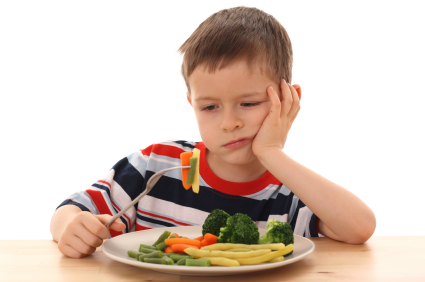 The study, made available online ahead of publication (1), found that from a very early age, people associate sweeten drinks with salty and higher fat foods such as pizza and French fries (or chips). Perhaps partly as a result of this association, young people (ages 19–23 years) viewed unfavorably the pairing of a sweetened drink with raw or cooked vegetables. The test subjects showed strong reactions (either positive or negative) to the pairing of sweetened drinks with certain foods. In contrast, water didn’t evoke strong any reactions indicating that it was viewed as reasonable complement to most food.
  The worst part was I knew I had only myself to blame.