Of Elephant Research and Wildlife Crime – Molecular Tools that Matter

Here at Promega we receive some interesting requests…

Take the case of Virginia Riddle Pearson, elephant scientist. Three years ago we received an email from Pearson requesting a donation of GoTaq G2 Taq polymerase to take with her to Africa for her field work on elephant herpesvirus. Working out of her portable field lab (a tent) in South Africa and Botswana, she needed a polymerase she could count on to perform reliably after being transported for several days (on her lap) at room temperature. Through the joint effort of her regional sales representative in New Jersey/Pennsylvania (Pearson’s lab was based out of Princeton University at the time) and our Genomics product marketing team, she received the G2 Taq she needed to take to Africa. There she was able to conduct her experiments, leading to productive results and the opportunity to continue pursuing her work.

Continue reading “Of Elephant Research and Wildlife Crime – Molecular Tools that Matter”

Easy Automated Genomic DNA Isolation for GMO Testing: From Vision to Reality

29980616-July25-PureFood---Kelly-600x300

The European Union (EU) has a zero tolerance policy for products containing any material from non-authorized genetically modified (GM) crops. Seed entering EU markets may not contain even trace amounts of non-authorized genetically modified material. In 2012, as the global use of GM crops increased, seed testing loads in the EU continued to build. Isolating genomic DNA (gDNA) using traditional manual methods was becoming impractical in the face of increasing amounts of material that required testing. There was a growing need for an automated method to isolate gDNA from seed samples. Working to address this need, a group of scientists from the Bavarian Health and Food Safety Authority collaborated with scientists from Promega Corporation to evaluate the Maxwell® 16 Instrument and the associated chemistry as possible a solution for the testing labs.

Continue reading “Easy Automated Genomic DNA Isolation for GMO Testing: From Vision to Reality”

A Crash Course in CRISPR

CRISPR is a hot topic right now, and rightly so—it is revolutionizing research that relies on editing genes. But what exactly is CRISPR? How does it work? Why is everyone so interested in using it? Today’s blog is a beginner’s guide on how CRISPR works with an overview of some new applications of this technology for those familiar with CRISPR.

Introduction to CRISPR/Cas9

27850283-June-13-CRISPR-image-WEB

Clustered Regularly Interspaced Short Palindromic Repeats (CRISPR) were discovered in 1987, but it took 30 years before scientists identified their function. CRISPRs are a special kind of repeating DNA sequence that bacteria have as part of their “immune” system against invading nucleic acids from viruses and other bacteria. Over time, the genetic material from these invaders can be incorporated into the bacterial genome as a CRISPR and used to target specific sequences found in foreign genomes.

CRISPRs are part of a system within a bacterium that requires a nuclease (e.g. Cas9), a single guide RNA (sgRNA) and a tracrRNA. The tracrRNA recruits Cas9, while sgRNA binds to Cas9 and guides it to the corresponding DNA sequence of the invading genome. Cas9 then cuts the DNA, creating a double-stranded break that disables its function. Bacteria use a Protospacer Adjacent Motif, or PAM, sequence near the target sequence to distinguish between self and non-self and protect their own DNA.

While this system is an effective method of protection for bacteria, CRISPR/Cas9 has been manipulated in order to perform gene editing in a lab (click here for a video about CRISPR). First, the tracrRNA and sgRNA are combined into a single molecule. Then the sequence of the guide portion of this RNA is changed to match the target sequence. Using this engineered sgRNA along with Cas9 will result in a double-stranded break (DSB) in the target DNA sequence, provided the target sequence is adjacent to a compatible PAM sequence.

Continue reading “A Crash Course in CRISPR”

The Making of a Promega Product: Teamwork = Success for the Maxwell RSC® ccfDNA Plasma Kit

Ever think about the kinds of challenges R&D scientists run up against in the course of developing a new product? The development of the Maxwell® RSC ccfDNA (circulating cell-free DNA) Plasma Kit is a particularly interesting example. Its path to commercialization was characterized by a number of unexpected technical hurdles, yet each was overcome through creative troubleshooting and aided by valuable collaborations across departments. All had a hand in finally launching the kit last August.

26062525-ccfDNA_Mar25-blog-DNAThe product’s launch was an exciting milestone for Promega as research interest in the role of ccfDNA as biomarkers in human disease continues to grow. Elevated levels of ccfDNA have now been reported in patients with cancer, inflammatory disease, infections and cardiovascular disease. In pregnant women, up to 10% of ccfDNA can be attributed to the fetus, so critical fetal DNA analysis can now be conducted through maternal blood samples. There are many advantages in the ability to isolate and analyze ccfDNA, so the development of a kit with high throughput capability was a priority for the Nucleic Acid Purification R&D team. Continue reading “The Making of a Promega Product: Teamwork = Success for the Maxwell RSC® ccfDNA Plasma Kit”
T-Vector Cloning: Answers to Frequently Asked Questions

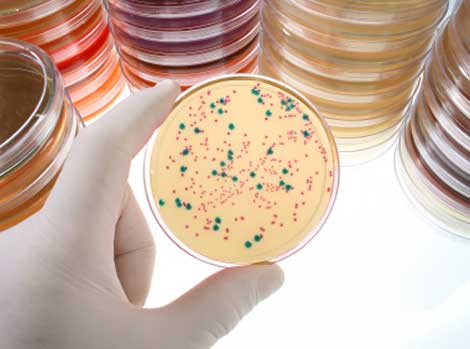
Blue/White colony screening helps you pick only the colonies that have your insert.

Q: Can PCR products generated with GoTaq® DNA Polymerase be used to for T- vector cloning?

A: Yes. GoTaq® DNA Polymerase is a robust formulation of unmodified Taq Polymerase. GoTaq®DNA Polymerase lacks 3’ →5’ exonuclease activity (proof reading) and also displays non-template–dependent terminal transferase activity that adds a 3′ deoxyadenosine (dA) to product ends. As a result, PCR products amplified using GoTaq® DNA Polymerase will contain A-overhangs which makes it suitable for T-vector cloning.

We have successfully cloned PCR products generated using GoTaq® and GoTaq® Flexi DNA Polymerases into the pGEM®-T (Cat.# A3600) and pGEM®-T Easy (Cat.# A1360) Vectors.

Q: Can GoTaq® Long PCR Master Mix be used for T-Vector Cloning?

A: Yes it can. GoTaq® Long PCR Master Mix utilizes recombinant Taq DNA polymerase as well as a small amount of a recombinant proofreading DNA polymerase. This 3´→5´ exonuclease activity (proof reading) enables amplification of long targets. Despite the presence of a small amount of 3´→5´ exonuclease activity, the GoTaq® Long PCR Master Mix generates PCR products that can be successfully ligated into the pGEM®-T Easy Vector System.

We have demonstrated that GoTaq® Long PCR Master Mix successfully generated DNA fragments that could be ligated into pGEM®-T Easy Vector System without an A-tailing procedure, and with ligation efficiencies similar to those observed with the GoTaq® Green Master Mix.

For details refer to Truman, A., Hook, B. and Wieczorek, D. Using GoTaq® Long PCR Master Mix for T-Vector Cloning.

Tip: For cloning blunt-ended PCR fragments into T-vectors, use the A-tailing protocol discussed in the pGEM®-T and pGEM®-T Easy Technical Manual #TM042.

Q: How do I prepare PCR products for ligation? What products can be used to purify the DNA?

Continue reading “T-Vector Cloning: Answers to Frequently Asked Questions”

Top 10 Tips to Improve Your qPCR or RT-qPCR Assays

headache

Scientists have had a love-hate relationship with PCR amplification for decades. Real-time or quantitative PCR (qPCR) can be an amazingly powerful tool, but just like traditional PCR, it can be quite frustrating. There are several parameters that can influence the success of your PCR assay. We’ve highlighted ten things to consider when trying to improve your qPCR results.

Continue reading “Top 10 Tips to Improve Your qPCR or RT-qPCR Assays”

Real-Time (quantitative) qPCR for Quantitating Library Prep before NGS

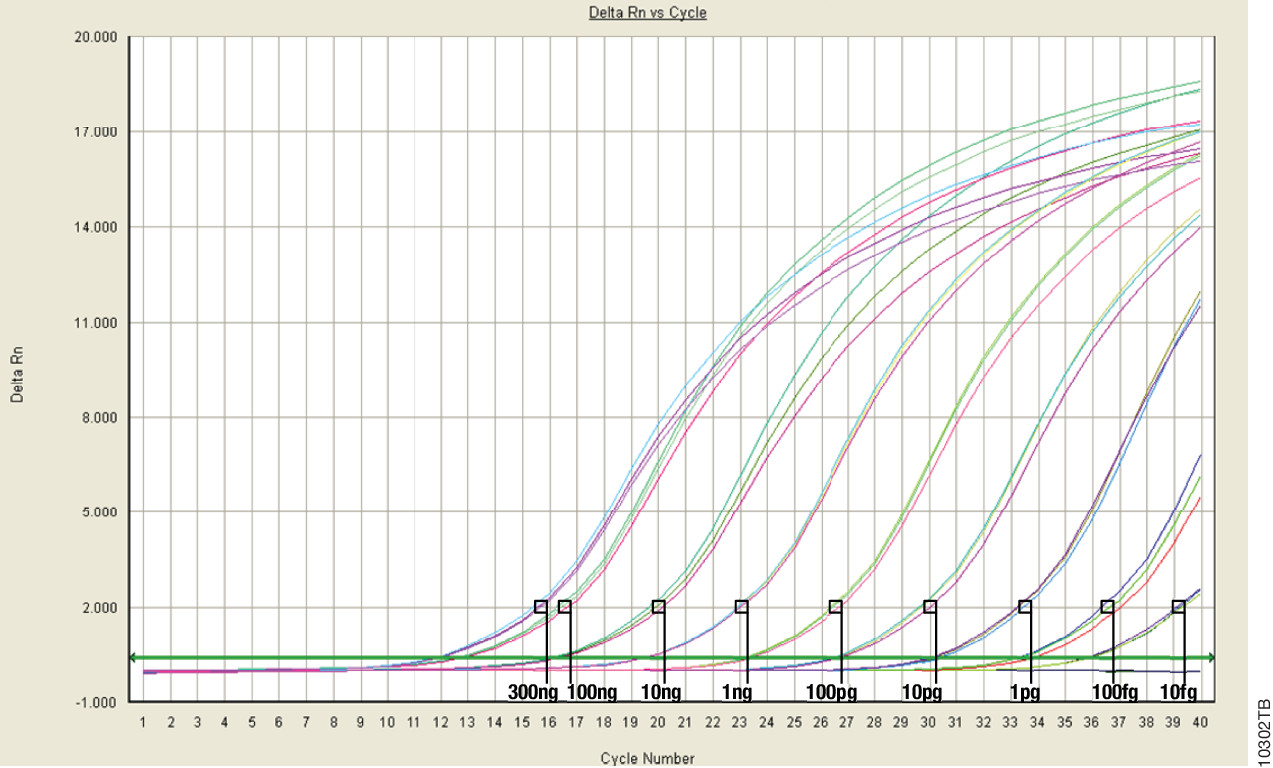
Real-Time (or quantitative, qPCR) monitors PCR amplification as it happens and allows you to measure starting material in your reaction.

This the last in a series of four blogs about Quantitation for NGS is written by guest blogger Adam Blatter, Product Specialist in Integrated Solutions at Promega.

When it comes to nucleic acid quantitation, real-time or quantitative (qPCR) is considered the gold standard because of its unmatched performance in senstivity, specificity and accuracy. qPCR relies on thermal cycling, consisting of repeated cycles of heating an cooling for DNA melting and enzyamtic replication. Detection instrumentation is capable of measuring the accumulation of DNA product after each round of amplification in real time.

Because PCR amplifies specific regions of DNA, the method is highly sensitive, specific to DNA, and it can determine whether a sample is truly able to be amplified. Degraded DNA or free nucleotides, which might otherwise skew your quantiation, will not contribute to the signal, and your measurement will be more accurate.

However, while qPCR does provide technical advantages, the method requires special instrumentation, specialized reagents and is a more time-consuming process. In addition, you will probably need to optimize your qPCR assay for each of your targets to achieve your desired results.

Because of the added complexity and cost, qPCR is a technique suited for post-library quantitation when you need to know the exact amount of amplifiable, adapter-ligated DNA.  PCR is the only method capable of specifically targeting these library constructs over other DNA that may be present. This specificity is important because accurate normalization is especially critical for producing even coverage in multiplex experiments where equimolar amounts of several libraries are added to a pooled sample. This normalization process is essential  if your are screening for rare variants that might be lost in background and go undetected if underrepresented in a mixed pool.


Read Part 1: When Every Step Counts: Quantitation for NGS

Read Part 2: Nucleic Acid Quantitation by UV Absorbance: Not for NGS

Read Part 3: Fluorescence Dye-Based Quantitation: Sensitive and Specific for NGS Applications

Fluorescence Dye-Based Quantitation: Sensitive and Specific for NGS Applications

This is the third post in a series of blogs on quantitation for NGS applications written by guest blogger Adam Blatter, Product Specialist in Integrated Solutions at Promega.

Fluorescent dye-based quantitation uses specially designed DNA binding compounds that intercalate only with double stranded DNA molecules. When excited by a specific wavelength of light, only dye in the DNA-bound state will fluoresce. These aspects of the technique contribute to low background signal, and therefore the ability to accurately and specifically detect very low quantities of DNA in solution, even the nanogram quantities used in NGS applications.

For commercial NGS systems, such as the Nextera Rapid Capture Enrichment Protocol by Illumina, this specificity and sensitivity of quantitation are critical. The Nextera protocol is optimized for 50ng of total genomic DNA. A higher mass input of genomic DNA can result in incomplete tagmentation, and larger insert sizes, which can adversely affect enrichment. A lower mass input of genomic DNA or low-quality DNA can generate smaller than expected inserts, which can be lost during subsequent cleanup steps, giving lower diversity of inserts.

Continue reading “Fluorescence Dye-Based Quantitation: Sensitive and Specific for NGS Applications”

Nucleic Acid Quantitation by UV Absorbance: Not for NGS

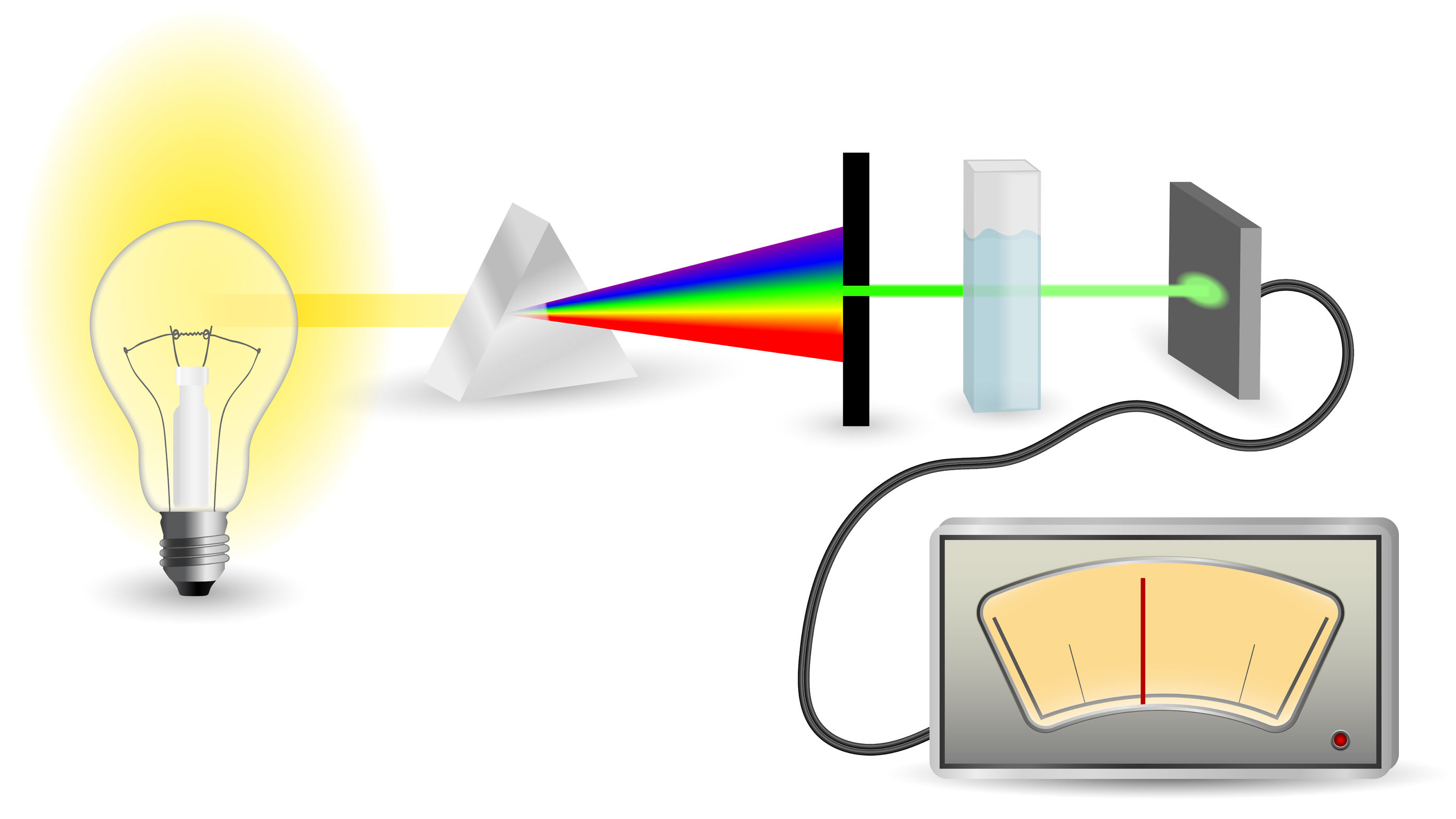
schematic diagram of UV-Vis Absorbance Method
For UV-Vis Spectrophotometry, light is split into its component wavelengths and directed through a solution. Molecules in the solution absorb specific wavelengths of light.

This is the second in a series of four blogs about Quantitation for NGS is written by guest blogger Adam Blatter, Product Specialist in Integrated Solutions at Promega.

Perhaps the most ubiquitous quantitation method is UV-spectrophotometry (also called absorbance spectroscopy). This technique takes advantage of the Beer-Lambert Law: an observation that many compounds absorb UV-Visible light at unique wavelengths, and that for a fixed path length the absorbance of a solution is directly proportional to the concentration of the absorbing species. DNA, for example has a peak absorbance at 260nm (A260nm).

This method is user friendly, quick and easy. But, it has significant limitations, especially when quantitating samples for NGS applications.

Continue reading “Nucleic Acid Quantitation by UV Absorbance: Not for NGS”

When Every Step Counts: Quantitation for NGS

13170MA-800x277This series of blogs about Quantitation for NGS is written by guest blogger Adam Blatter, Product Specialist in Integrated Solutions at Promega.

As sequencing technology races toward ever cheaper, faster and more accurate ways to read entire genomes, we find ourselves able to study biological systems at a level never before possible. From basic science to translational research, massively parallel sequencing (also known as next-generation sequencing or NGS) has opened up new avenues of inquiry in genomics, oncology and ecology.

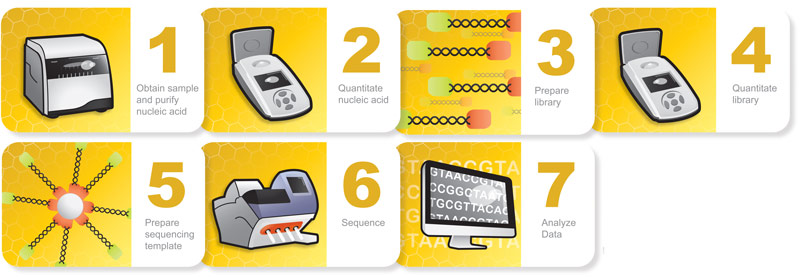
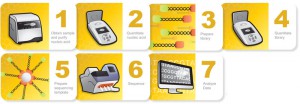
Many commercial sequencing platforms have been established (e.g., Illumina, IonTorrent, 454, PacBio), and new technologies are developed every day to enable new and unique applications. However, all of these platforms and technologies work off the same general principle: nucleic acid must be extracted from a sample, arranged into platform-specific library constructs, and loaded into the sequencer. Regardless of the sample type or the platform used, every step throughout this workflow is critical for successful results. An often overlooked part of the NGS workflow is sample quantitation. Here we are presenting the first in a series of four short blogs about the critical step of quantitation in NGS workflows.

Sample input is critical to NGS in terms of both quality and quantity. Knowing how much DNA you have, often in nanogram quantities, can make the difference between success and failure. There are several key points in the NGS workflow where sample quantitation is important before you can proceed:

  • After initial nucleic acid extraction from the sample matrix and before proceeding with library preparation
  • Post-library preparation when pooling barcoded libraries for multiplexing
  • Final pooled library quantitation immediately before loading for sequencing

There are several common methods for quantitating nucleic acids: UV-spectroscopy, Fluorescence spectoscopy, real-time quantitative PCR (qPCR). Because of inherent differences in sensitivity, specificity, time and cost, each of these techniques pose certain advantages and disadvantages with respect to the specific sample you are quantitating. Our next three blogs will discuss each of these methods against the backdrop of quantitating samples for NGS applications.


Read Part 2: Nucleic Acid Quantitation by UV Absorbance: Not for NGS

Read Part 3: Fluorescence Dye-Based Quantitation: Sensitive and Specific for NGS Applications

Read Part 4: Real-Time (Quantitative) qPCR for Quantitating Library Prep before NGS