New Study Suggests Long Mononucleotide Repeat Markers Offer Advantages for Detecting Microsatellite Instability in Multiple Cancers

A new study, published in the Journal of Molecular Diagnostics (1), highlights the potential of using long mononucleotide repeat (LMR) markers for characterizing microsatellite instability (MSI) in several tumor types. The paper is a result of a collaborative effort between researchers from Johns Hopkins University and Promega to evaluate the performance of a panel of novel LMR markers for determining MSI status of colorectal, endometrial and prostate tumor samples.

Microsatellite instability (MSI) is the accumulation of insertion or deletion errors at microsatellites, which are short tandem repeats of DNA sequences found throughout the genome. MSI in cancerous cells is the result of a functional deficiency within one or more major DNA mismatch repair proteins (dMMR). PCR-based MSI testing is a commonly used method that can help understand a tumor’s genomic profile as it relates to MMR protein function.

Historically, MSI has been a biomarker associated with Lynch syndrome, the hereditary predisposition to colorectal and certain other cancers. In recent years, research interest in MSI has exploded, driven by the discovery that its presence in tumor tissue can be predictive of a positive response to anti-PD-1 immunotherapies (2,3).

Continue reading “New Study Suggests Long Mononucleotide Repeat Markers Offer Advantages for Detecting Microsatellite Instability in Multiple Cancers”


High-Molecular Weight DNA for Long-Read Sequencing

Imagine that you’re putting together a large, complex jigsaw puzzle, comprising thousands of exceptionally small pieces. You lay them all out and attempt to make sense of them. It would be far easier to assemble this puzzle were the pieces larger, containing more of the image advertised on the box. The same can be said when sequencing a genome.

high-molecular weight DNA  Depiction of a DNA helix

Traditional short-read or next-generation sequencing relies on DNA spliced into small fragments (≤300 base pairs) and then amplified. While useful for detecting small genetic variants like single-base changes to the DNA, this type of sequencing can fail to illuminate larger variations (typically over 50 base pairs) in the genome. Long-read sequencing, or third generation sequencing, allows more accurate genome assemblies, facilitating better detection of structural variants like copy number variations, duplications, translocations and inversions that are too large to identify with short-read sequencing. Long-read sequencing has the capability to fill in “dark regions” of a genome that are unfinished and can be used to assemble larger, more complex genomes using longer fragments of DNA, or high-molecular weight (HMW) DNA.

Continue reading “High-Molecular Weight DNA for Long-Read Sequencing”

Finding the Right Maxwell® RSC Kit for Your Nucleic Acid Extraction

This blog was written by guest writers Paraj Mandrekar (Technical Services Scientist 3) and Michelle Mandrekar, (Research Scientist 4).

Here are some designer’s notes comparing the Maxwell® RSC Blood DNA and the Maxwell® RSC simplyRNA kit chemistries for nucleic acid extraction.

The Maxwell RSC Blood DNA Kit and Maxwell RSC simplyRNA Blood Kit were both developed from the same non-silica-based purification chemistry and use the same underlying paramagnetic particle. This chemistry is characterized by an extreme binding capacity (the capacity of nucleic acid that can be bound on the particle), leading to both chemistries being capable of isolating large amounts of nucleic acid volumes and then eluting into relatively small volumes (50 µL). It is not unusual with either chemistry to have isolates that exceed 100 ng/µL. Although the chemistries have several similarities, there are some important distinctions between how the two chemistries were designed that influence which kit you choose for your nucleic acid extraction.

Image of blood with molecules of DNA and RNA superimposed Nucleic Acid Extraction
Continue reading “Finding the Right Maxwell® RSC Kit for Your Nucleic Acid Extraction”

The Latest Addition to the Lab: A Review of the Spectrum Compact CE System

When it comes to acquiring new equipment, choosing the right instrument for your lab can be daunting―you want to make a worthwhile investment that will go the distance, both in longevity and overall capacity. In a perfect world, the instruments available to you would have been thoroughly tested and reviewed, especially as they compare to one another, making your job that much easier.

In the case of benchtop capillary electrophoresis (CE) instruments, researchers Nastasja Burgardt and Melanie Weissenberger have done just that. Their article, titled “First experiences with the Spectrum Compact CE System”, appeared in the International Journal of Legal Medicine and offered a comprehensive review of the performance of the recently released Spectrum Compact CE System in a forensic genetics laboratory setting.

Continue reading “The Latest Addition to the Lab: A Review of the Spectrum Compact CE System”

ProDye Brings Sanger Sequencing to Multiple Platforms

Researchers looking for new chemistry for Sanger sequencing need look no further than the ProDye™ Terminator Sequencing System, developed by Promega for use in capillary electrophoresis instruments. Sanger sequencing, or dye-terminator sequencing, has been the gold standard of DNA analysis for over 40 years and is a method commonly used in labs around the world. Even as new technologies emerge, Sanger sequencing remains the most cost-effective method for sequencing shorter pieces of DNA.

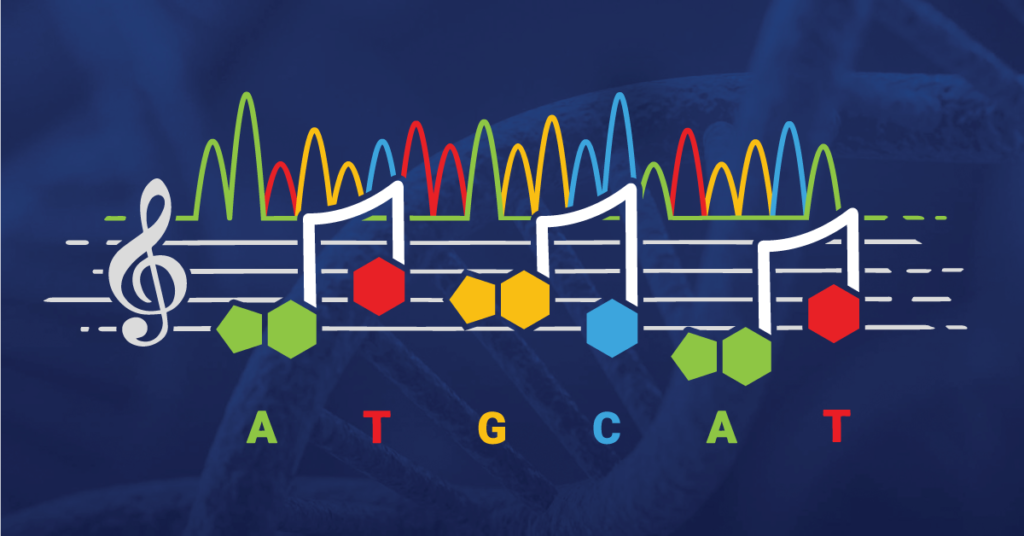
Sanger sequencing depicted as results on a musical cleft
Continue reading “ProDye Brings Sanger Sequencing to Multiple Platforms”

LncRNA: The Long and Short of “Junk RNA”

The Central Dogma and Junk DNA

lncRNA, long noncoding RNA

On September 19, 1957, Francis Crick delivered a lecture during a symposium at University College London, titled “Protein Synthesis”. The lecture was published a year later (1); in it, Crick quotes his colleague James Watson as saying, “The most significant thing about the nucleic acids is that we don’t know what they can do.” In contrast, Crick argued that proteins play a central, indispensable role as enzymes within the cell that catalyze a variety of chemical reactions. He believed that the main role of genetic material was to control the synthesis of proteins, although the mechanism of that process was not known.

Crick’s hypothesis came to be known as the central dogma of molecular biology, and it was immortalized in his hand-written notes that described the flow of information from DNA to RNA to proteins. This achievement was all the more remarkable, considering that messenger RNAs were completely unknown at that time, and very little was known about how the cellular translational machinery functioned within the cytoplasm to synthesize proteins. Although the later discovery of retroviruses appeared to challenge Crick’s central dogma, he explained quite succinctly that his original statement had simply been misunderstood, and that information could flow in both directions between DNA and RNA (2).

Continue reading “LncRNA: The Long and Short of “Junk RNA””

RNA-Protein Interactions: A New Frontier for Drug Discovery

Almost 90% of the human genome is transcribed into RNA, but only 3% is ultimately translated into a protein. Some non-translated RNA is thought to be useless, while some play a significant yet often mysterious role in cancer and other diseases. Despite its abundance and biological significance, RNA is rarely the target of therapeutics.

“We say it’s undruggable, but I would say that ‘not-yet-drugged’ is a better way to put it,” says Amanda Garner, Associate Professor of Medicinal Chemistry at the University of Michigan. “We know that RNA biology is important, but we don’t yet know how to target it.”

Amanda’s lab develops systems to study RNA biology. She employs a variety of approaches to analyze the functions of different RNAs and study their interactions with proteins. Her lab recently published a paper describing a novel method for studying RNA-protein interactions (RPI) in live cells. Amanda says that with the right tools, RPI could become a critical target for drug discovery.

“It’s amazing that current drugs ever work, because they’re all based on really old approaches,” Amanda says. “This isn’t going to be like developing a small molecule kinase inhibitor. It’s a whole new world.”

Continue reading “RNA-Protein Interactions: A New Frontier for Drug Discovery”

Galloping to Greatness: Meet Kurt the First Cloned Przewalski’s Horse

On August 6, 2020, the first successfully cloned Przewalski’s horse was born at the Texas-based veterinary facility, Timber Creek Veterinary, along with a new hope for restoring some much-needed genetic diversity to the species. The successful birth of this foal is the culmination of the collaborative efforts between Revive & Restore, San Diego Zoo Global (SDZG), and ViaGen Equine, and lays the groundwork as an important model for future conservation efforts.

Kurt the first cloned Przewalsk'si horse
Kurt at Timber Creek Veterinary, 09/28/20.
Photo by Scott Stine.

The new Przewalski’s foal (pronounced “shuh-VAL-skees”) has been affectionately dubbed Kurt, in honor of noted animal conservationist, geneticist and pathologist, Dr. Kurt Benirschke. Dr. Benirschke played an instrumental role in founding the Frozen Zoo®, a genetic library comprised of cryopreserved cell lines of endangered species. Established in the 1970s, this collection was built on a foundation of prescient hope, banking on the future development of reproductive and cloning technologies that did not yet exist.

Now thanks to his foresight, that gamble is paying off and the fruits of that labor are literally being brought to life almost 50 years later through Kurt the foal, who is as adorable as he is important to the future of his kind.

Continue reading “Galloping to Greatness: Meet Kurt the First Cloned Przewalski’s Horse”

Identifying the Ancestor of a Domesticated Animal Using Whole-Genome Sequencing

What animal can be found around the globe that outnumbers humans three to one? Gallus gallus domesticus, the humble chicken. The human appetite for eggs and lean meat drive demand for this feathered bird, resulting in a poultry population of over 20 billion.

Controversy over the origin of the domestic chicken (when, where and which species) have lead some researchers to look for that information in the genomes of contemporary chicken breeds and wild jungle fowl, the candidates from which chickens were derived. By sequencing over 600 genomes from Asian domestic poultry as well as 160 genomes from all four wild jungle fowl species and the five red jungle fowl subspecies, Wang et al. wanted to understand and identify the relationships and relatedness among these species and derive where domesticated chickens first arose.

Continue reading “Identifying the Ancestor of a Domesticated Animal Using Whole-Genome Sequencing”

XpressAmp™ Direct Amplification: Simplified and Accelerated Time to qPCR Results

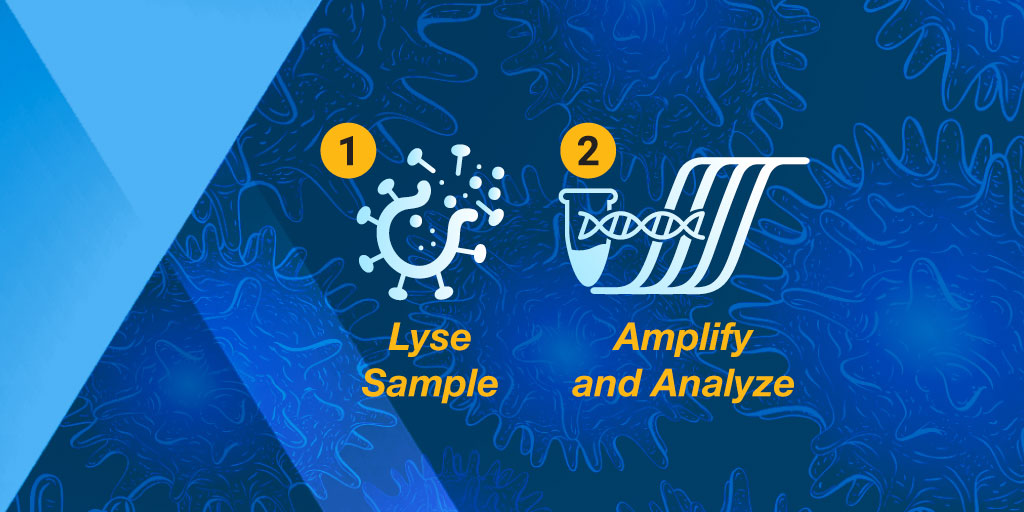
As the SARS‐CoV‐2 pandemic continues to rage across the United States and around the globe, the demand for COVID‐19 testing is increasing. The vast majority of the COVID-19 assays use RT‐qPCR to detect the viral RNA in patient samples such as nasopharyngeal swabs, which are collected and stored in viral or universal transport media (VTM/UTM). The general workflow for these COVID‐19 assays can be broken down as follows:

  1. Collect and store patient samples
  2. Ship samples to testing laboratory
  3. Extract RNA from samples
  4. Amplify and analyze samples

While many companies who manufacture the products that are used in these steps have been able to adapt and significantly increase their production capacities, there are still gaps between the supply of these products and the global test demand. Both the sample collection and storage step and the RNA extraction/purification step have a tendency to bottleneck and experience supply constraints. One way to address these bottlenecks and expand production capacity for these in‐demand products is to evaluate the viability of skipping a step in the workflow, without hindering the ability to detect viral RNA from samples.

Continue reading “XpressAmp™ Direct Amplification: Simplified and Accelerated Time to qPCR Results”