Photo 51 is the now-famous X-ray diffraction picture that allowed Watson and Crick to crystalize centuries work of scientific study (from Mendel to Chargaff) into a viable structural model that explained how DNA could serve as the material of the gene. The photo was painstakingly produced by Dr. Rosalind Franklin, a contemporary of Watson and Crick. Although she and her colleague R.G. Gosling did publish their work in the same issue of Nature as the Watson and Crick paper (1,2), their work did not receive the same public accolades of that of Watson and Crick.
Applications Scientists help partners and customers apply existing technology to new questions. Read more about their work.
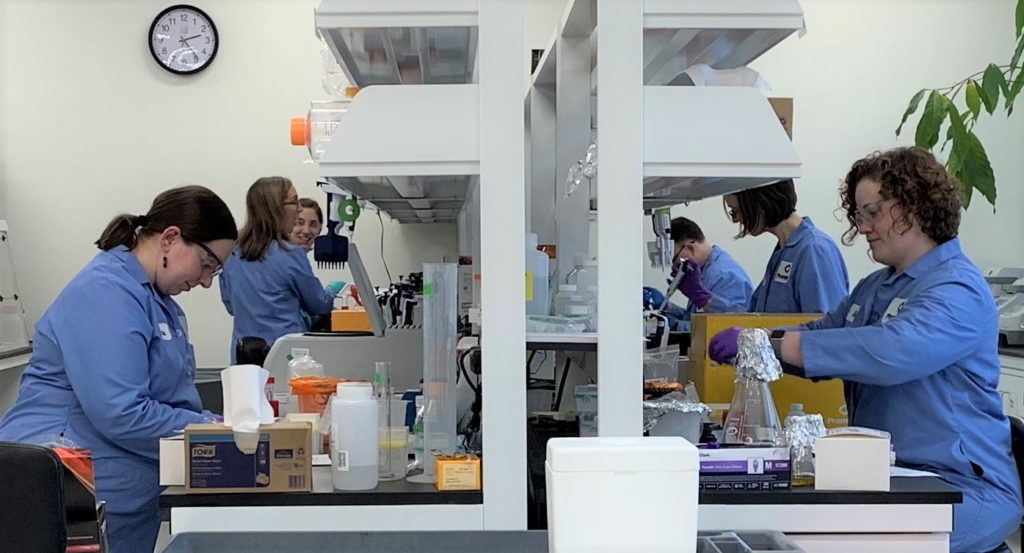
Women scientists have been contributing to our understanding of the world around us throughout history. On this 100th anniversary of Dr. Rosalind Franklin’s birth, we want to take a little time to recognize the work that women scientists are doing at Promega.
As scientists, we can do science forever. The beauty about science is that the questions never end – we can keep asking, and every time we find an answer, we have a new direction to pursue. But it’s very important to know when it’s time to write up your results.
Publishing may be connected to leaving or transitioning your position, but at all times you should be thinking, “What is my end goal? What is the big question I want to answer? What are the questions the field has about my research?” As you reach milestones and make discoveries, whether big or small, consider whether you will have a complete and compelling story to tell in the end.
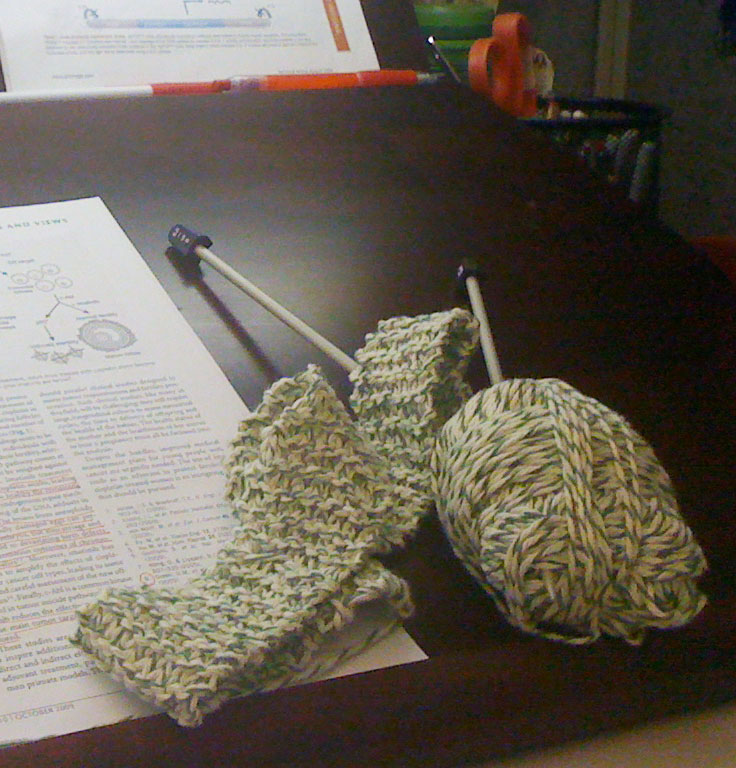
For a while now I have made a living knitting words, stringing them together with a rhythm and flow to create a finished piece that has some kind of meaning. Recently I started learning how to knit yarn together with a rhythm (ideally) that will bring the loops and knots together into some kind of finished whole that has meaning: a scarf, a hat, a dish rag. And just like the clacking of knitting needles can relax and de-stress you, the clicking of the keyboard when your writing is in rhythm can be a joyful experience.
The rhythm and flow of language is important in all types of writing, including scientific writing. If your language has a consistent rhythm and flow, chances are your reader will be more likely to understand it on a first read.
Science touches our lives, daily. But far too many scientific concepts and terms are misunderstood and used incorrectly. Even those of us wearing a “scientist” badge sometimes misappropriate terms, which can act to reproduce the misuse.
A basic level of science literacy is so important for all of us. Why? So that when bombarded with comments about vaccination or climate change on a social media site, we are able to sift through the jargon, understand what’s correct and what is not correct, and make decision based in facts vs. internet gossip. With just a bit of knowledge of basic science terms, you are better protected against deception and you’ll know how to sort facts from fiction.
Here are a few general science terms that are commonly misunderstood and misused.
Have you read last week’s breaking story about the microbiome of the human placenta? Wait, stop, don’t run away to Google it! I’ll tell you all about it – this is a science blog, remember?
I’m asking because as I started reading about the topic in preparation for writing this blog post, I noticed two things. First, as a science writer who tries to stay well-connected with what’s going on in the world of biology research, it would have been nearly impossible for me to avoid this story. I get eight or nine daily digest emails from scientific publications every day, and I think over the course of last week, every single one came with a headline related to the placenta study. (Of course, I read them all. And the Nature study they were based on.)
Second, I noticed that each story I read had a slightly different angle on covering the research. As scientists, we like to believe that science is, well, just science. It’s factual. We pore over the data and reach a conclusion. If we aren’t sure of something, we search the journals. The story, if there is one, is about methods and controls, protocols and reagent quality. However, when information about that research is communicated broadly, outside of the journals, we can get a different impression based on how the author frames their article.
We have published 130 blogs here at Promega this year (not including this one). I diligently reviewed every single one and compiled a list of the best 8.5%, then asked my coworkers to vote on the top 5 out of that subset. Here are their picks:
As a first-year grad student, I was so excited to start my thesis work. I brainstormed to make a list of experiments to try and then discussed them with one of the senior grad students in the lab. As I enthusiastically explained the goals of my experiments and what I was planning, he gave me a strange look. Puzzled, I asked for some feedback. He told me that, while these were good research ideas, almost all of them had been published. Hence, my first lesson learned from grad school: immerse yourself in the field by reading relevant papers and then plan some innovative experiments to move forward. It’s critical to have a deep knowledge of your field of study—not just to be a good grad student, but to see what is being done and then build on it, or take a totally different approach to innovate.
Reading papers is a big part of keeping up with the latest research. And attending conferences can give you a sense of current work before it’s published. However, I’m sure that, at least once, you’ve heard a cool talk at a conference and then quite a while later, haven’t seen the corresponding paper (so that you can read about all the ins and outs of what they did!). Why would this be? They may have been discussing the data early on in their project. Or perhaps they submitted a manuscript and the review/publishing process is taking a long time. Maybe the data were so surprising that they felt they needed to do a lot of follow-up work to support their conclusions. Or maybe their PI takes forever to write/comment on manuscripts. Etc.
The sooner that you can find out what is going on in a field, the sooner you can design smart, relevant experiments. What can be done to get cutting edge work out there to facilitate the progression of a field as a whole?
Bottlenecks in communicating research can occur at 5 different points in the process. Here are some tips to try to alleviate these delays.
The tactic of “telling a good story” is nothing new within the business of selling, marketing and even educating about science. The word itself, “storytelling,” achieved buzzword status a few years ago in the corporate world, so it’s no surprise that it now touches industry scientists. But the importance of telling a good story within the realm of peer-reviewed scientific papers? That is something new, and it may impact how scientists write up their results from this point forward.
In a provocative scientific study published in PLOS ONE in December 2016, researchers from the University of Washington showed that “Narrative Style Influences Citation Frequency in Climate Change Science.” Perhaps the results they report are unique to climate change science—an area of science especially susceptible to public perception. But then again, perhaps not. This paper may be worth considering no matter what field of science you call your own.
The authors—Ann Hillier, Ryan Kelly, and Terrie Klinger—used metrics to test their hypothesis that a more narrative style of writing in climate change research papers is more likely to be influential, and they used citation frequency as their measure of influence. A sample of 732 abstracts culled from the climate change literature and published between 2009 and 2010 was analyzed for specific writing parameters. The authors concluded that writing in a more narrative style increases the uptake and influence of articles in this field of science and perhaps in scientific literature across the board.
Seq—shorthand for “sequence”— has become a more recognizable term thanks to a novel and provocative genomics initiative called the BabySeq Project. The project, officially launched in May 2015, was designed to explore the impact of whole-exome sequencing (WES) on newborn infants and their families. A randomized, controlled trial to sequence healthy and sick infants and then provide sequencing information, it is the first of its kind. Those infants randomized to receive WES undergo genetic sequencing of all protein-coding genes and analysis of about 1,700 genes implicated in childhood health, along with 18 years of follow up genetic counseling.
The project is directed by Robert C. Green, geneticist and physician at Brigham and Women’s Hospital, Harvard Medical School and the Broad Institute, and Alan H. Beggs of Boston Children’s Hospital and Harvard Medical School. Funding, totaling $25 million, comes from the National Institute of Child Health and Development and the National Human Genome Research Institute. Continue reading “To Seq, or Not to Seq”
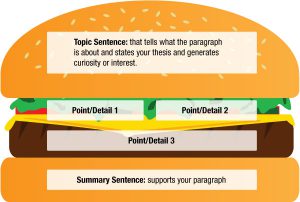
The “hamburger” scheme for organizing a paragraph.
Last night I was helping my daughter, who is in fourth grade, with her homework. We had completed a math worksheet, a geography worksheet and had moved onto writing. For her paragraph assignment, she was supposed to write about a special place. So I began drawing the concept map that we typically use to help her organize her thoughts. She stopped me before I could get started.
“No Mom, wait,” she grabbed the pencil and paper from my hands, “I have a better idea.”
She drew five shapes on the paper.
“We should write the paragraph like it’s a hamburger. The first sentence is the topic—it’s the top of the burger, tells you what is inside—it makes you hungry to read more. Next comes the juicy, meaty part. Three details—three sentences. Then the bottom bun, the summary that supports the whole paragraph. It’s the hardest to write.” She proudly sat down with her drawing and pencil.
“I LOVE that,” I exclaimed. “That’s a great way to organize a paragraph.”
“Yeah,” my husband looked up from his Suduko that he had been working on, “and the cheese goes right here.” He pointed to one of the three boxes my daughter had drawn underneath the bun.
“And the lettuce over here,” my daughter giggled.
“Well, I like mine with lettuce and tomato,” I chanted with no apologies to Jimmy Buffett, “Heinz 57 and French-fried potato..,”
“A big kosher pickle,” my daughter joined in, and the evening’s homework activities degenerated from there. (Sometimes it’s the parents who are easily distracted.)
My daughter’s hamburger graphic was new to me, but the concept wasn’t. It is a solid method for organizing a piece of writing, and it can be applied all kinds of writing—from a paragraph, to an essay, to a speech and even to a scientific article.
XWe use cookies and similar technologies to make our website work, run analytics, improve our website, and show you personalized content and advertising. Some of these cookies are essential for our website to work. For others, we won’t set them unless you accept them. To learn more about our approach to Privacy we invite you to Read More
By clicking “Accept All”, you consent to the use of ALL the cookies. However you may visit Cookie Settings to provide a controlled consent.
We use cookies and similar technologies to make our website work, run analytics, improve our website, and show you personalized content and advertising. Some of these cookies are essential for our website to work. For others, we won’t set them unless you accept them. To find out more about cookies and how to manage cookies, read our Cookie Policy.
If you are located in the EEA, the United Kingdom, or Switzerland, you can change your settings at any time by clicking Manage Cookie Consent in the footer of our website.
Necessary cookies are absolutely essential for the website to function properly. These cookies ensure basic functionalities and security features of the website, anonymously.
Cookie
Duration
Description
cookielawinfo-checbox-analytics
11 months
This cookie is set by GDPR Cookie Consent plugin. The cookie is used to store the user consent for the cookies in the category "Analytics".
cookielawinfo-checbox-functional
11 months
The cookie is set by GDPR cookie consent to record the user consent for the cookies in the category "Functional".
cookielawinfo-checbox-others
11 months
This cookie is set by GDPR Cookie Consent plugin. The cookie is used to store the user consent for the cookies in the category "Other.
cookielawinfo-checkbox-advertisement
1 year
The cookie is set by GDPR cookie consent to record the user consent for the cookies in the category "Advertisement".
cookielawinfo-checkbox-necessary
11 months
This cookie is set by GDPR Cookie Consent plugin. The cookies is used to store the user consent for the cookies in the category "Necessary".
cookielawinfo-checkbox-performance
11 months
This cookie is set by GDPR Cookie Consent plugin. The cookie is used to store the user consent for the cookies in the category "Performance".
gdpr_status
6 months 2 days
This cookie is set by the provider Media.net. This cookie is used to check the status whether the user has accepted the cookie consent box. It also helps in not showing the cookie consent box upon re-entry to the website.
lang
This cookie is used to store the language preferences of a user to serve up content in that stored language the next time user visit the website.
viewed_cookie_policy
11 months
The cookie is set by the GDPR Cookie Consent plugin and is used to store whether or not user has consented to the use of cookies. It does not store any personal data.
Analytical cookies are used to understand how visitors interact with the website. These cookies help provide information on metrics the number of visitors, bounce rate, traffic source, etc.
Cookie
Duration
Description
SC_ANALYTICS_GLOBAL_COOKIE
10 years
This cookie is associated with Sitecore content and personalization. This cookie is used to identify the repeat visit from a single user. Sitecore will send a persistent session cookie to the web client.
vuid
2 years
This domain of this cookie is owned by Vimeo. This cookie is used by vimeo to collect tracking information. It sets a unique ID to embed videos to the website.
WMF-Last-Access
1 month 18 hours 24 minutes
This cookie is used to calculate unique devices accessing the website.
_ga
2 years
This cookie is installed by Google Analytics. The cookie is used to calculate visitor, session, campaign data and keep track of site usage for the site's analytics report. The cookies store information anonymously and assign a randomly generated number to identify unique visitors.
_gid
1 day
This cookie is installed by Google Analytics. The cookie is used to store information of how visitors use a website and helps in creating an analytics report of how the website is doing. The data collected including the number visitors, the source where they have come from, and the pages visted in an anonymous form.
Advertisement cookies are used to provide visitors with relevant ads and marketing campaigns. These cookies track visitors across websites and collect information to provide customized ads.
Cookie
Duration
Description
IDE
1 year 24 days
Used by Google DoubleClick and stores information about how the user uses the website and any other advertisement before visiting the website. This is used to present users with ads that are relevant to them according to the user profile.
test_cookie
15 minutes
This cookie is set by doubleclick.net. The purpose of the cookie is to determine if the user's browser supports cookies.
VISITOR_INFO1_LIVE
5 months 27 days
This cookie is set by Youtube. Used to track the information of the embedded YouTube videos on a website.
Performance cookies are used to understand and analyze the key performance indexes of the website which helps in delivering a better user experience for the visitors.
Cookie
Duration
Description
YSC
session
This cookies is set by Youtube and is used to track the views of embedded videos.
_gat_UA-62336821-1
1 minute
This is a pattern type cookie set by Google Analytics, where the pattern element on the name contains the unique identity number of the account or website it relates to. It appears to be a variation of the _gat cookie which is used to limit the amount of data recorded by Google on high traffic volume websites.