Promega Partnering with UC-Davis Drought-Resistant Rice Project

The Foundation for Food and Agriculture Research (FFAR) announced on November 30 that they are awarding $1M to a project based at the University of California, Davis, to study protein kinases of rice plants. The team is led by Dr. Pamela Ronald, a leading expert in plant genetics who has engineered disease- and flood-resistant rice. This project aims to address the growing agricultural problem of water scarcity by gaining a better understanding of the role kinases play in enabling drought-resistance. Promega will be supporting this research by providing NanoBRET™ products to help characterize kinase inhibitors.
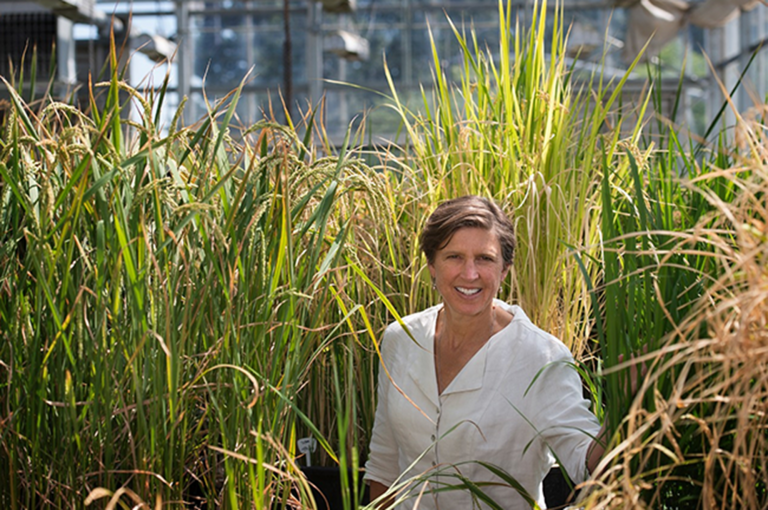
Principal Investigator Pamela Ronald, Ph.D. Photo Credit: Deanne Fitzmaurice

The research team will begin by screening over 1,000 human kinase inhibitors to determine which ones do interact with the plant kinome and, if applicable, which kinase(s) they inhibit. Once the compound library has been established, the team will assess the inhibitors’ phenotypic effects on rice to identify kinases that, when inhibited, positively impact root growth and development. The long-term goal is to use these findings to engineer drought-resistant rice.

Continue reading “Promega Partnering with UC-Davis Drought-Resistant Rice Project”

Ancient Images of Dogs Include Restraints?

This dog is wearing a leash.

You, like me, may occasionally find youself in need of a canine control device. While I’m not a fan of the dog tie out, I do walk dogs on leash—as is required by our county and city government here in Madison, WI.

If you have read Temple Grandin’s books about dogs, you might feel a tug at your heartstrings while enduring a tug on the leash. Aren’t dogs meant to run freely? Don’t we love to watch them run? Are leashes humane?

When walking dogs I feel the need to protect them, but also a desire to let them live like dogs, sniffing, marking and other behaviors that are all limited when the dog is leashed.

When a report in Science last week showed evidence that our ancient ancestors were using leashes 8,000-9,000 years ago I was: 1) surprised; and 2) felt vindicated from self-imposed dog owner guilt.

Continue reading “Ancient Images of Dogs Include Restraints?”

H7N9 Influenza Virus: A Perfect Pathogen?

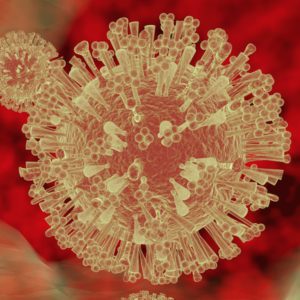
Artist’s rendition of a virus particle.

It’s late October and here in Wisconsin, like many of you, we are experiencing a change of seasons, with the associated drop in temperatures, changes in leaf color and later this week, Halloween.

Another thing that comes with fall is the start of cold and flu season. By “flu”, I mean influenza, caused by avian influenza viruses of the H-N type. Recent research results by teams at UWI-Madison and in Japan, makes the coming influenza season potentially more scary than usual.

In a recent Cell Host & Microbe paper, M. Imai et al. study a seemingly more virulent version of H7N9 avian influenza virus that is startling in its ability to spread from infected to healthy animal models. Based on a current epidemic of H7N9, human-to-human transmission with this strain is increasing.

Continue reading “H7N9 Influenza Virus: A Perfect Pathogen?”

Promega Third Party Forensic-Grade Certification

Promega has become the first major forensic manufacturer to achieve third party certification of the published ISO 18385 standard to minimize the risk of human DNA contamination in products used to collect, store and analyze biological material for forensic purposes.



On February 2, 2016, ISO 18385:2016 was published as the first international standard specific to the forensic manufacturing community. Since the standard was published, companies have begun to self-declare that they comply with the ISO standard. Some companies have gone a step further and reached out to Certification Bodies to provide an unbiased and independent assessment their compliance to ISO18385 through a third-party audit.

When consumers see an ‘ISO 18385 Forensic Grade’ labeled product, it should inspire confidence that the product was produced in accordance with a minimum set of criteria common to all manufacturers.

So what are you actually getting in a Forensic Grade labeled product? Continue reading “Promega Third Party Forensic-Grade Certification”

Searching for Secrets in Single Cells

There has been a lot of effort recently to perform whole genome sequencing, for humans and other species. The results yield new frontiers of data analysis that offer a lot of promise for groundbreaking scientific discoveries.

One objective of human genome sequencing has been to identify sources of disease and new therapeutic targets. This movement has opened the door to create personalized medicine for cancer, whereby the genetic makeup of an individual’s tumors can be used to determine the most effective drug intervention to administer.

Interest in studying the characteristics unique to individual cells seems obvious when considering the function of healthy cells versus tumor cells, or brain cells compared to heart cells. What has surprised scientists is the realization that two cells in the same tissue can be more different from each other, genetically, than from a cell in another organ.

For example, a small number of brain cells with a specific mutation can lead to some forms of epilepsy while healthy people may also carry cells with these mutations, but too few to cause disease. The lineage of a cell, where it came from and what events shaped its development, ultimately determines what diseases can exist.

Continue reading “Searching for Secrets in Single Cells”

Rapid DNA Act of 2017: What is It?

On May 16, 2017, the U.S House of Representatives and the U.S. Senate passed the Rapid DNA Act of 2017 (H.R.510 and S.139, respectively). The bill was sponsored by Senator Orrin Hatch (R-UT) and Representative James Sensenbrenner (R-Wis) and enjoyed bipartisan support, ending up with seven Republican and five Democratic cosponsors in the Senate, and seventeen Republican and seven Democratic cosponsors in the House. The bill was passed by unanimous consent voice votes in both chambers.

So what is the Rapid DNA Act of 2017 all about?

Simply put, the act will expand the use of rapid DNA technology in law enforcement departments by creating a way for them to use the results they get by connecting them to the FBIs Combined DNA Index System (CODIS). Still curious? Read on and you will learn much more about what the Rapid DNA Act of 2017 does and doesn’t do.

Continue reading “Rapid DNA Act of 2017: What is It?”

Creating ART from 3D Printed Ovaries

It is remarkable to me how quickly in vitro fertilization has gone from an experimental, controversial and prohibitively expensive procedure to becoming a mainstream option for those struggling with fertility issues. What was unheard of in my parents’ generation is nothing extraordinary among my friends who are having children.

My personal observations are supported by the CDC, which reported that 1.6% of all infants born in the U.S. in 2015 were the result of assisted reproductive technology (ART). This is a 33% increase since 2006, which can be attributed to rapid advances and refinements of the various technologies available to those seeking reproductive assistance.

It challenges the mind to imagine what reproductive technologies might be widespread when my children and their friends are adults. When experts speculate about the future of human reproduction, there always seems to be a lot of focus on provocative scenarios that portend a dystopian future, such as designer babies. What gets lost are some of the more general scientific advances that are being applied to ART in fascinating ways.

While improvements in reproductive technologies serve many, one group that remains underserved are pediatric cancer patients. As a result of treatment, these patients are often faced with impaired ovarian function that can prevent puberty and result in infertility. In vitro fertilization and ovarian transplants are currently used, but do not provide lasting solutions for all individuals.

In response to this need, researchers are working to develop an organ replacement that can provide long-term hormone function and fertility for all patients.  A recent study in Nature Communications presented encouraging results in mice using bioprosthetic ovaries that may further revolutionize the field of ART.

Continue reading “Creating ART from 3D Printed Ovaries”

In Healthy Eating Less is More: The Science Behind Intermittent Fasting

Mix a love of eating with a desire to live a long, healthy life what do you get? Probably the average 21st-century person looking for a way to continue enjoying food despite insufficient exercise and/or an age-related decline in caloric needs.

Enter intermittent fasting, a topic that has found its way into most news sources, from National Institutes of Health (NIH) and Proceedings of the National Academy of Sciences publications to WebMD and even the popular press. For instance, National Public Radio’s “The Salt” writers have tried and written about their experiences with dietary restriction.

While fasting has enjoyed fad-like popularity over the past several years, it is not new. Fasting, whether purposely not eating or eating a restricted diet, has been practiced for 1,000s of years. What is new is research studies from which we are learning the physiologic effects of fasting and other forms of decreased nutrient intake.

You may have heard the claims that fasting makes people smarter, more focused, and thinner. Researchers today are using cell and animal models, and even human subjects, to measure biochemical responses at the cellular level to restricted nutrient intake and meal timing, in part to prove/disprove such claims (1,2).

Continue reading “In Healthy Eating Less is More: The Science Behind Intermittent Fasting”

Making a Case for Basic Research Funding

The value of public funding for “basic” versus “applied” research has long been questioned. To address this debate, the authors of a recent report in Science performed a large-scale evaluation of the value of public investment in biomedical research. After analyzing the relationship between the U.S. National Institutes of Health (NIH) grants and private patents, they found that distinguishing research as basic or applied is not useful in determining the productivity of grant funding.

Genetic research at the laboratory

The $30 billion annual budget of the NIH makes it the largest source of life science funding in the world and provides a third of all US biomedical research and development. Although there has long been a strong argument for public investment in scientific research, attacks on the tangible benefits of this research persist. In particular, some opponents argue that “basic” research is too far removed from practical applications to be worthy of investment.

Continue reading “Making a Case for Basic Research Funding”

So NASA Found Some New Exoplanets…Now What?

34412848-March-8-Planets-600x600-WEB

You have probably heard a lot of excitement over NASA’s recent announcement about the discovery of seven earth-size planets found orbiting around the star TRAPPIST-1, which is part of the constellation Aquarius.

These exoplanets are notable because they exist within the habitable zone of the star (nicknamed Goldilocks planets because this area is not too hot and not too cold) and are probably rocky with the potential to contain water on their surface.

A lot of the enthusiasm revolves around the hope that one of these exoplanets might harbor extraterrestrial life or could be suitable for human inhabitants. Of course, many further observations must be made to determine if these scenarios are plausible, not to mention the huge advances in technology that would need to occur so we could actually verify the planetary conditions or send humans 40 light-years away.

Continue reading “So NASA Found Some New Exoplanets…Now What?”