Seeing the Potential

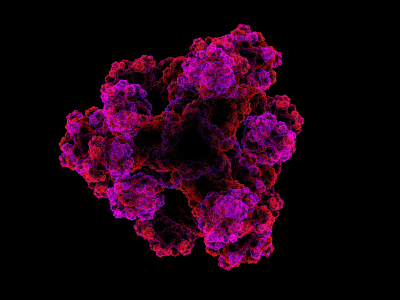
neuronal signalingI had never heard of Halorubrum sodomense until a few days ago. It’s name describes it pretty well, it is a salt-tolerant (Halophilic) organism that contains the red-colored photosynthetic pigment archaerhodopsin, and it was originally isolated from the region of Sodom near the Dead Sea. It’s an organism that is well-known only to those with reason to study it. Many of the rest of us will never have cause to say its name, or to even remember it, and may even occasionally wonder why it is studied at all.

Halorubrum sodomense was in the news recently because a genetically engineered form of its rhodopsin was used to create a method that lights up mammalian neurons as they fire. This exciting development was reported in a paper by Kralj et al, published in the Nov 27 issue of Nature Methods. Continue reading “Seeing the Potential”
Red Rover, Red Rover

[wpvideo j5SvPhHA]On November 26, NASA launched the Mars Science Laboratory from Cape Canaveral. The science laboratory contains the newest Mars rover, Curiosity. NASA has already received the first signal from the laboratory, shortly after it separated from the rocket. The Mars Science Laboratory is flying free toward the red planet.

NASA has a wonderful video describing how the science laboratory landing is planned. The video illustrates just how complex a mission this is. To think that we can even imagine, must less carry out, such a feat of technology and engineering is amazing. Enjoy the video, and let’s hope that on August 6, 2012, Curiosity will land safely and begin teaching us more about our neighboring planet.

If you have difficulty with the embedded video, here’s a link to the video on the NASA website.

A New Role for Reactive Oxygen Species: Can We be Aged and Thin?

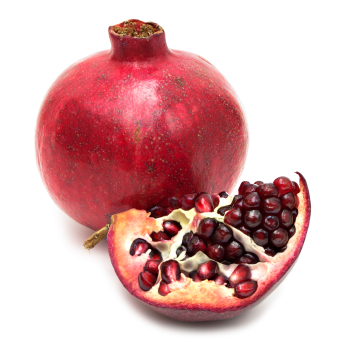
Add pomegranite to the list of so-called superfoods.

Since the 1980s, we’ve been told that aging can be accelerated by a build-up of free radicals in our cells. We’ve learned that to counteract the damage that free radicals (or reactive oxygen species, ROS) can wreak on our bodies, we should consume  antioxidants like vitamins C and E, and phytochemicals.

In fact, the term “superfood” was coined for foods that contain high levels of antioxidants, phytochemicals and vitamins, foods like blueberries and carrots, spinach and kale, to name a few.

 “Hold the phone”, as a pre-calculus professor of mine used to say.  Turn off the blender and put down that shot glass of beet-carrot-lemon grass juice. This research just in: “Free Radicals Crucial to Suppressing Appetite”.

The research was published August 28, 2011 in the advanced online edition of Nature Medicine.

In this study, Yale University researchers reported that elevated levels of ROS  in the brain activated satiety-generating neurons. Continue reading “A New Role for Reactive Oxygen Species: Can We be Aged and Thin?”

A New Method that Marks Proteins for Destruction

The ability to manipulate genes and proteins and observe the effects of specific changes is a foundational aspect of molecular biology. From the first site-directed mutagenesis systems to the development of knockout mice and RNA interference, technologies for making targeted changes to specific proteins to eliminate their expression or alter their function have made tremendous contributions to scientific discovery.

A recent paper highlights a novel application of HaloTag technology to enable the targeted destruction of specific HaloTag fusion proteins in vivo. The paper, published online in the July issue of Nature Chemical Biology, details a promising new method with application for validation of potential drug targets by specific in vivo inhibition, and for studying the function of specific genes in organogenesis or disease development. Continue reading “A New Method that Marks Proteins for Destruction”

Worms from Heaven and Hell

C. elegans were recently part of an experiment on the International Space Station.

Worms from the heights of space and the depths of the earth were in the news last week, one well-known species soaring to the heavens as part of a space flight experiment and a previously undiscovered species revealing the surprising extent of multicellular life in the hidden depths of earth.

The Worm from the Heavens
Caenorhabditis elegans perhaps qualifies as the most well-known of all worms. This 1mm roundworm, is a staple model organism in molecular biology. It’s easy to grow and store, possesses a simple neuronal network, and is transparent, making it easy to study cell differentiation and development. It was the first multicellular organism to have its genome sequenced, and the developmental fate of all its somatic cells has been studied. In some ways we know C. elegans better than we know ourselves.

Continue reading “Worms from Heaven and Hell”

Microbiome Studies: We Are More than the Sum of our Parts

What if you could help protect yourself from certain diseases by populating your gut with “good” bacteria, or selectively getting rid of “bad” ones? Two news articles suggesting this possibility caught my eye this week. The articles both summarized results from the microbiome project—a research effort geared towards developing a deep understanding of how the bacteria that live in and on our bodies influence our health. Analyses of these bacterial populations are providing new insights that suggest we are much more than the sum of our parts, and that our health may depend not only on our own genes and lifestyle but also on the contributions of the bacteria that colonize us.

Continue reading “Microbiome Studies: We Are More than the Sum of our Parts”

Lab Equipment Today: Kitchen Gadget Tomorrow?

The Latest in Cooking Equipment

My husband likes to cook and he also likes to collect kitchen gadgets. Mushroom slicers, blenders, numerous graduated vials and measuring devices, meat thermometers, etc., our kitchen drawers are overflowing with the essentials for precision cooking. For each culinary process, there is a unique device, and he uses them all. I do not even know what some of them are for. I only use knives and measuring cups. But his cooking is way better than mine so there is obviously some benefit to using the right tools well.

Some of the most sophisticated kitchen tools come straight from the laboratory. I was interested to read an article in the March 2011 issue of Scientific American describing how high-speed centrifuges are among the newest trends in fancy kitchen equipment. They are being used in restaurants to separate ingredients into their component parts and create potent flavorings. It turns out that centrifugation is a fast and convenient way to purify fat from various vegetables and nuts, creating interesting flavored butters and dairy-free creams (think pea butter or essence of carrot). Centrifugation is a fast alternative to straining or filtering as a means of separating components.

Continue reading “Lab Equipment Today: Kitchen Gadget Tomorrow?”

When a Cold, Wet, White Nose Isn’t a Good Thing

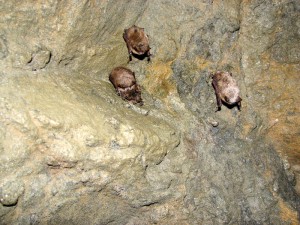
Affected bats in a cave in MA. Image courtesy of the U.S. Geological Survey.

On February 16, 2006, a recreational caver exploring Howes Cave in Albany, New York, photographed a bat with an unusual white growth on its muzzle. In the few years since that picture was snapped, hundreds of thousands of bats in North America have died from White-Nose Syndrome (WNS; 1,2).

The disease affects hibernating populations of bats, and has been found in the northeastern and eastern United States, as far south as Tennessee, as well as in the Canadian provinces of Quebec and Ontario (2).

Some suffering bats are emaciated with little or no body fat and have a characteristic white fungal growth on their wing membranes, ears and muzzles, hence the name “White-Nose Syndrome.” Instead of hibernating all winter, these bats can be seen active in the snow, when there is virtually no food available for them (1,2).

The white fungal growth observed on the bats is the result of infection with a previously undescribed cold-loving fungus,

Continue reading “When a Cold, Wet, White Nose Isn’t a Good Thing”

Human Microbiome Project

coliform bacteria

Did you know that the microorganisms living in and on the human body (most on the skin, in the gut, and in the mouth) outnumber all our human cells by a factor of ten? But read on before you grab the hand sanitizer and schedule a colonic, these “germs” may be an integral part of what makes you… well “you”. Indeed, the profile of microorganisms happily living in and on your body may be as unique a signature as your DNA profile or your fingerprints—perhaps more so.

Continue reading “Human Microbiome Project”

Finding the Next Generation of Antibiotics: Closthioamide

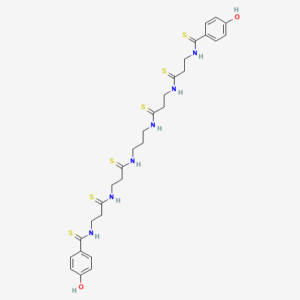
Closthioamide

Mention the word penicillin and it conjures up images of mold growing on bacterial culture plates and Dr. Alexander Fleming observing that the mold had killed the surrounding bacteria, ushering in the age of antibiotics. Bacterial infections could easily be treated with penicillin or any one of the bewildering array of new antibiotics continually being discovered. The result of using these antimicrobial drugs: numerous lives were saved and human health improved. However, bacteria are clever organisms and as quickly as humans developed an antibiotic to treat infection, the microbes would find a way around the bacteriostatic or bacteriocidal compound. It is a scary world where antibiotics are rendered impotent and fewer and fewer weapons are left in the arsenal to treat multidrug-resistant Staphylococcus aureus (MRSA) and hospital-acquired drug-resistant Gram-negative bacteria (e.g., Acinetobacter baumannii).

Continue reading “Finding the Next Generation of Antibiotics: Closthioamide”