Deck the Halls…and Cubes…and Desks

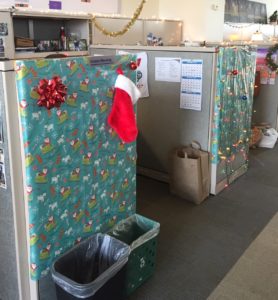
Every year around the beginning of December, a magical transformation begins in Promega offices in Madison and around the world. In Madison, even as our own Promega cookie elf is busily baking the last of her Holiday treats, employees are donning their own elf hats and bedecking our halls and cubes with their own form of Holiday magic.

Different teams put different spins on their decorating; from an all-out coordinated effort, to individualized decorations that reflect the personality of the decorator . It is fun to see how different areas get into the Holiday spirit. Continue reading “Deck the Halls…and Cubes…and Desks”

Secrets of the Promega Cookie Elf

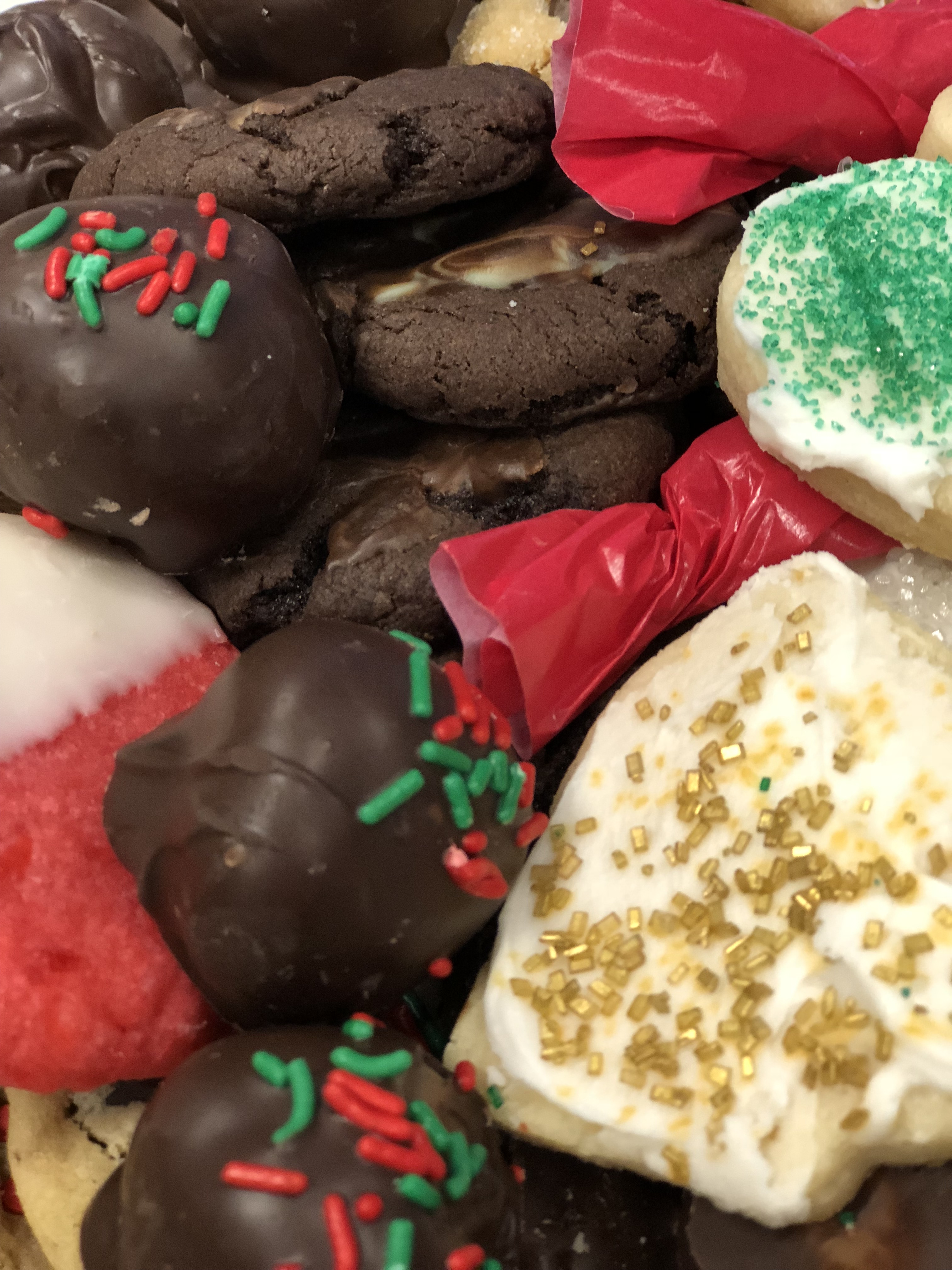
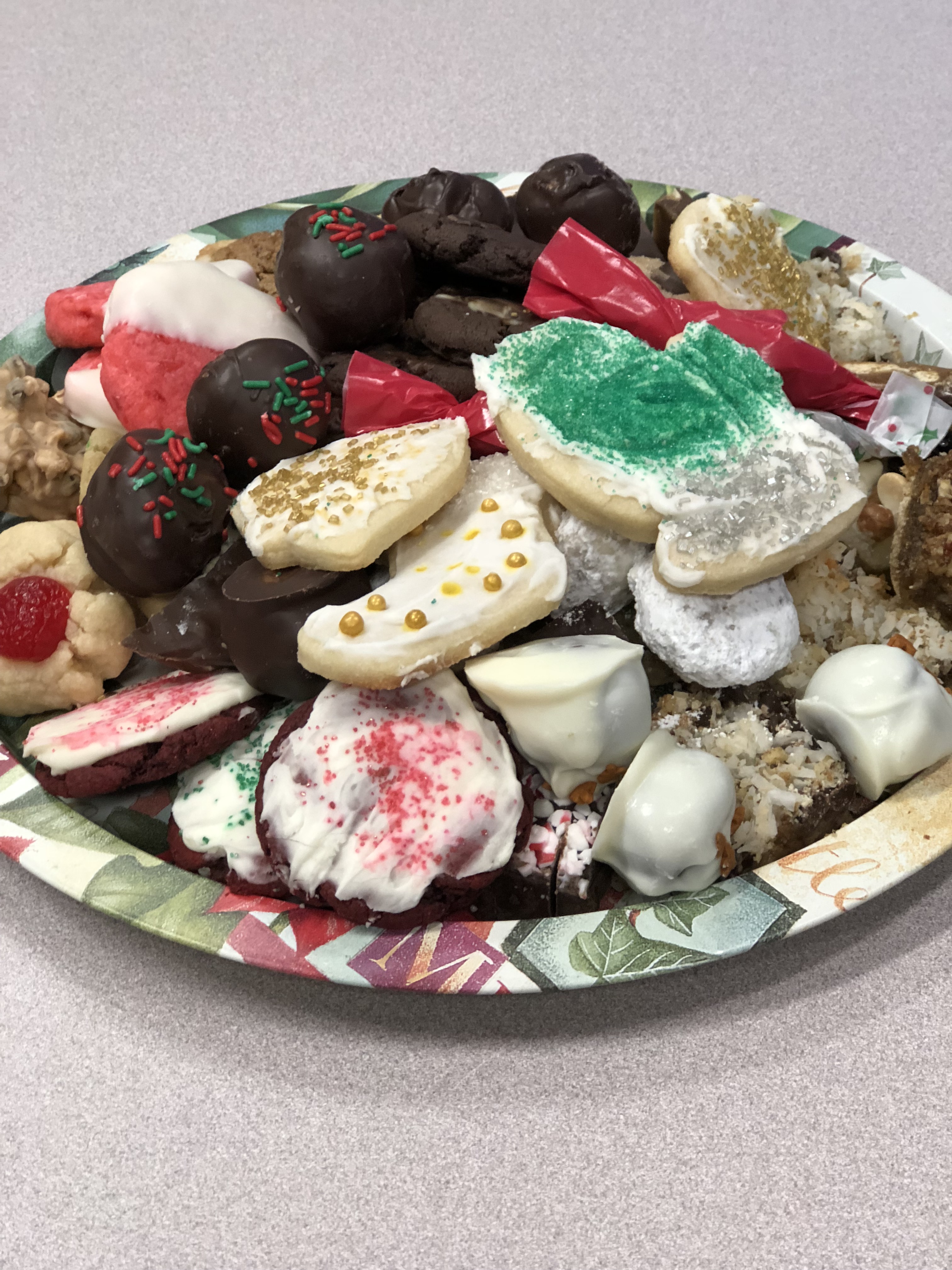
Working at a manufacturing company like Promega means quite a few people here spend their days obsessing (rightly so) over things like bulk production, product finishing and quality assurance. As the holiday season approaches, however, many Promega Madison employees also begin obsessing (rightly so) over some extremely important manufacturing going on in Elaine Yorkโ€™s Wisconsin kitchen.

Elaine is married to Chuck York, Vice President of Manufacturing Operations at Promega. Each Christmas, she bakes thousands (yes, thousand with an โ€œsโ€) of made-from-scratch Christmas cookies of every variety, artfully arranged on around 50 platters, which Chuck then brings to work to share with his lucky coworkers.

Today was that wonderful day at Promega!

โ€œI enjoy doing it and he enjoys giving them,โ€ says Elaine, an avid baker who has been creating delectable treats for over 40 years. Continue reading “Secrets of the Promega Cookie Elf”

Glycosyltransferases: Whatโ€™s New in GT Assays?

In his 2014 blog, โ€œWhy We Care About Glycosyltransferasesโ€ Michael Curtin, Promega Global Product Manager for Cell Signaling, wrote:

โ€œGlycobiology is the study of carbohydrates and their role in biology. Glycans, defined as โ€˜compounds consisting of a large number of monosaccharides linked glycosidicallyโ€™ are present in all living cells; They coat cell membranes and are integral components of cell walls. They play diverse roles, including critical functions in cell signaling, molecular recognition, immunity and inflammation. They are the cell-surface molecules that define the ABO blood groups and must be taken into consideration to ensure successful blood transfusions.

The process by which a sugar moiety is attached to a biological compound is referred to as glycosylation. Protein glycosylation is a form of post-translational modification, which is important for many biological processes and often serves as an analog switch that modulates protein activity. The class of enzymes responsible for transferring the sugar moiety onto proteins is called a glycosyltransferase (GT).โ€

Continue reading “Glycosyltransferases: Whatโ€™s New in GT Assays?”

Choosing a Better Path for Your NGS Workflow

Imagine you are traveling in your car and must pass through a mountain range to get to your destination. Youโ€™ve been following a set of directions when you realize you have a decision to make. Will you stay on your current route, which is many miles shorter but contains a long tunnel that cuts straight through the mountains and obstructs your view? Or will you switch to a longer, more scenic route that bypasses the tunnel ahead and gets you to your destination a bit later than you wanted?
Choosing which route to take illustrates a clear trade-off that has to be consideredโ€”which is more valuable, speed or understanding? Yes, the tunnel gets you from one place to another faster. But what are you missing as a result? Is it worth a little extra time to see the majestic landscape that you are passing through?

Considering this trade-off is especially critical for researchers working with human DNA purified from formalin-fixed paraffin-embedded (FFPE) or circulating cell-free DNA (ccfDNA) samples for next-generation sequencing (NGS). These sample types present a few challenges when performing NGS. FFPE samples are prone to degradation, while ccfDNA samples are susceptible to gDNA contamination, and both offer a very limited amount of starting material to work with.

Continue reading “Choosing a Better Path for Your NGS Workflow”

Ancient Images of Dogs Include Restraints?

This dog is wearing a leash.

You, like me, may occasionally find youself in need of a canine control device. While Iโ€™m not a fan of the dog tie out, I do walk dogs on leashโ€”as is required by our county and city government here in Madison, WI.

If you have read Temple Grandinโ€™s books about dogs, you might feel a tug at your heartstrings while enduring a tug on the leash. Arenโ€™t dogs meant to run freely? Donโ€™t we love to watch them run? Are leashes humane?

When walking dogs I feel the need to protect them, but also a desire to let them live like dogs, sniffing, marking and other behaviors that are all limited when the dog is leashed.

When a report in Science last week showed evidence that our ancient ancestors were using leashes 8,000-9,000 years ago I was: 1) surprised; and 2) felt vindicated from self-imposed dog owner guilt.

Continue reading “Ancient Images of Dogs Include Restraints?”

Elephant Endotheliotropic Herpesvirusโ€”A Tiny Virus Threatens the Worldโ€™s Elephants

My favorite ice-breaker of all time is: โ€œList one fact about you that no one would guessโ€. It is my favorite because I have an awesome answer (if I do say so myself). My go-to answer is: I spent a summer working with elephants.

It was the summer before I graduated from college, and it was really only one elephant, a five-year-old African elephant named Connie. Connie was intelligent, curious and mischievousโ€”her favorite game with me was trying to untie my shoelaces (hint: double knotting is important). Working with her was one of the most amazing experiences of my life and left me with an abiding love for these creatures.

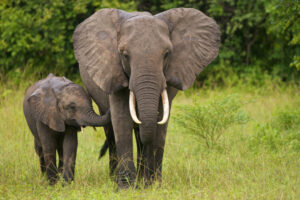
African elephant mother and child
Young African elephant touches his mother

Understandably, I was excited last year when one of my fellow bloggers wrote about Promega helping support the work of Virginia Riddle Pearson, who was working to identify and track strains of elephant endotheliotropic herpesvirus (EEHV) in African Elephant populations.ย EEHV is associated with the lethal elephant hemorrhagic disease (EHD) (1). This disease is a serious threat to the captive breeding programs of these endangered creatures. Between 1962 and 2007, it accounted for 58% of the deaths of North American captive-born Asian elephants between 4 months and 15 years of age (1). These deaths include the first Asian elephant calves born at the National, Oakland and Bronx Zoos. EHD also claimed the first live-born Asian elephant calves conceived by artificial insemination in both North America and Europe.

Continue reading “Elephant Endotheliotropic Herpesvirusโ€”A Tiny Virus Threatens the Worldโ€™s Elephants”

H7N9 Influenza Virus: A Perfect Pathogen?

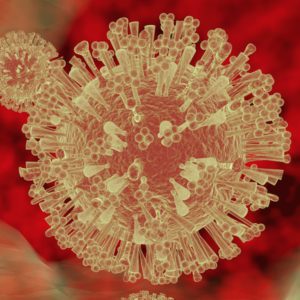
Artist’s rendition of a virus particle.

Itโ€™s late October and here in Wisconsin, like many of you, we are experiencing a change of seasons, with the associated drop in temperatures, changes in leaf color and later this week, Halloween.

Another thing that comes with fall is the start of cold and flu season. By โ€œfluโ€, I mean influenza, caused by avian influenza viruses of the H-N type. Recent research results by teams at UWI-Madison and in Japan, makes the coming influenza season potentially more scary than usual.

In a recent Cell Host & Microbe paper, M. Imai et al. study a seemingly more virulent version of H7N9 avian influenza virus that is startling in its ability to spread from infected to healthy animal models. Based on a current epidemic of H7N9, human-to-human transmission with this strain is increasing.

Continue reading “H7N9 Influenza Virus: A Perfect Pathogen?”

Coffee and Scienceโ€“A Cartoon Perspective

Although never actually on the lab bench,  coffee makers have had a prominent place in every laboratory I have worked in. It is because of my laboratory coffee experiences that I am able to drink coffee at any temperature and at any time of the day. The credit for my preference for really strong coffee (with cream, I confess)  goes to two Russian labmates who insisted on making the coffee every morning and went through two bags of beans a week (we had a very wide awake lab).

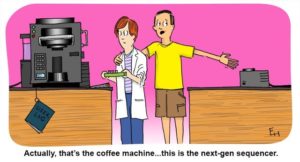
Cartoon depicting a coffee machine next to a next-generation sequencer.

In all the labs, keeping track of whose turn it was to buy the coffee supplies was just as important as keeping track of whose turn it was to defrost the freezers. I am sorry to say we never thought of a log book because that might have saved me some frantic early morning trips to the store.

Does your lab have coffee rules or traditions? I’d love to hear what they are.

Rwanda – Africa’s Next Biotech Hub

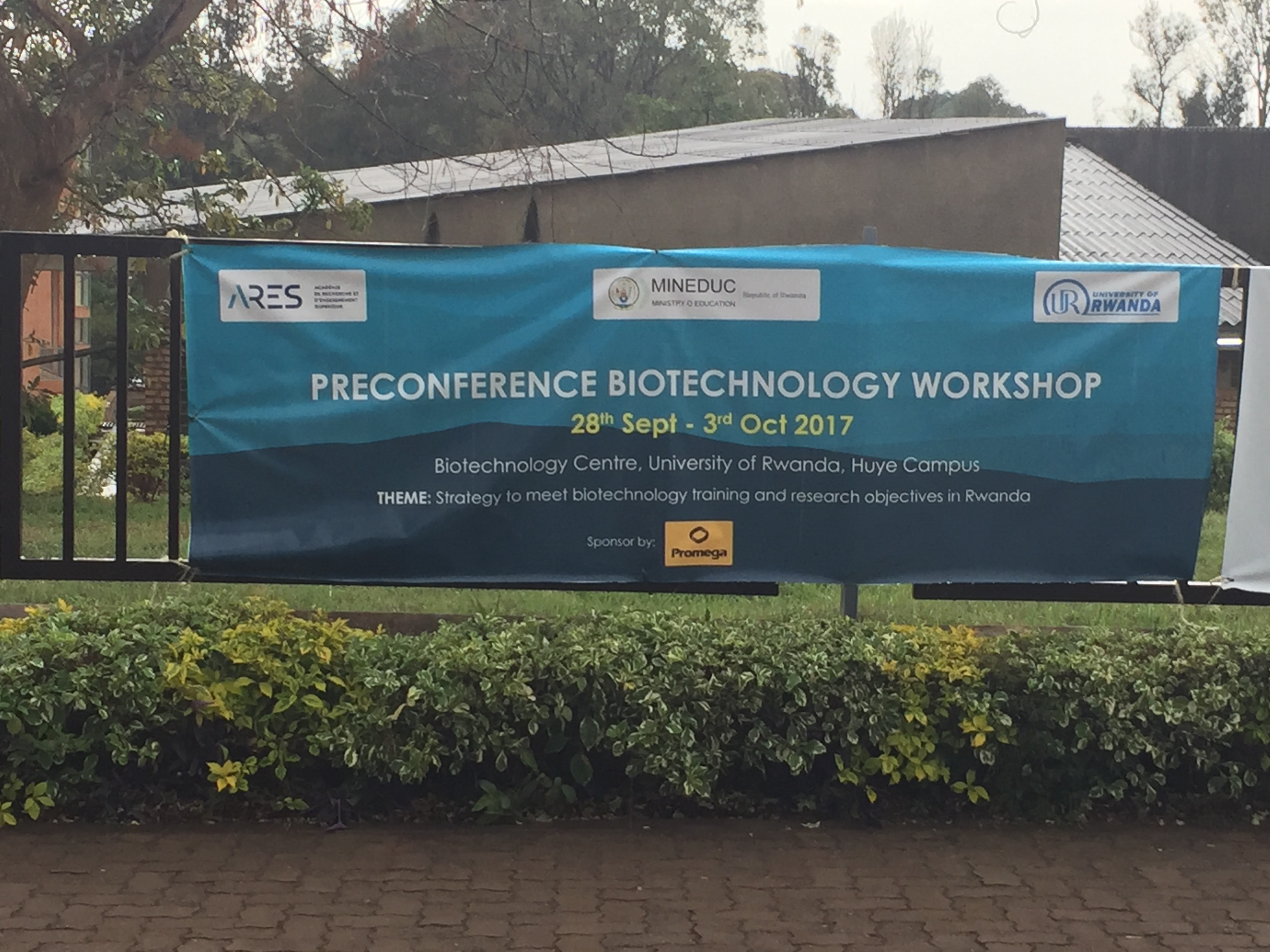
Promega sponsored a preconference workshop for grad and undergrad students at the University of Rwandaโ€™s biotechnology campus in Huye, the capital city of Rwandaโ€™s Southern Province.

More than twenty years after the Rwandan genocide when some 800,000 people were killed in just 100 days by ethnic extremists, Rwanda is on a path to not only healing and order, but also technological advancement. Now politically and functionally stable, which is an exception to the rule in east Africa, the country is recognizing that biotechnology is one of the key drivers to help improve the health and well being of its citizens. Rwanda is focusing on providing the resources and training needed to grow its capabilities in biotechnology, and could be on track to become an African biotech hub.

Rwanda, and its biotech push, caught the attention of Promega by way of customers working with its Belgium-Netherlands-Luxembourg (BNL) branch office. Researchers who are also African ex-patriots working at Universitรฉ libre de Bruxelles (ULB), a French-speaking private research university in Brussels, Belgium, invited Promega to attend a conference in Rwanda earlier this month organized by the Society for the Advancement of Science in Africa (SASA) and the Rwanda Biotechnology Association focusing on translational science and biotechnology advances in Africa. Promega was a main sponsor of the conference along with US medical device manufacturer Medtronic.

Continue reading “Rwanda – Africa’s Next Biotech Hub”

The Bones Didnโ€™t Lie: DNA Proves Viking Warrior was a Woman

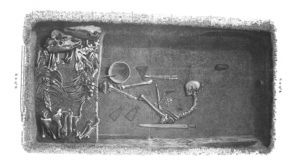
There is a grave near the Swedish town of Birka that was the final resting place of a Viking warrior. The grave, called Bj 581, was filled with weapons, including a sword, battle knife, axe, armor-piercing arrows, a spear and two shields as well as a full set of gaming pieces with a board, and the skeletons of two horsesโ€”a mare and a stallion. First described in the late 1800s, this grave has been held up as the example of what a Viking warrior burial site would look like because it was so well furnished.

Illustration by Evald Hansen based on the original plan of grave Bj 581 drawn by Hjalmar Stolpe; published in 1889. From Hedenstierna-Jonson, C. et al. (2017) Am. J. Phys. Anthropol. 2017, 1โ€“8.
Continue reading “The Bones Didnโ€™t Lie: DNA Proves Viking Warrior was a Woman”