In 2017, Bolivian biologist Paola Nogales-Ascarrunz got a call from a wildlife sanctuary about what she later described to National Geographic as “a weird cat.” A local man had found it as a kitten near Bolivia’s Yungas region, taken it home, and spent about a year trying to feed it noodles, rice, and eggs before realizing this was no housecat. The animal was tiny, smaller than a domestic cat, with a scrunched-up face, round ears, and a coat covered in leopard-like spots.
Nogales-Ascarrunz, who leads Bolivia’s Felid Research Program, went to visit the cat and photographed it extensively. At the time, she assumed it was an unusual-looking member of Leopardus tigrinus, a species of small spotted tiger cat commonly found in Central and South America. It wasn’t until 2019, while preparing a guide to Bolivia’s cat species, that Nogales-Ascarrunz noticed something was different. The rosettes, or ring-shaped spots on its coat, were much larger than anything in her reference photos.
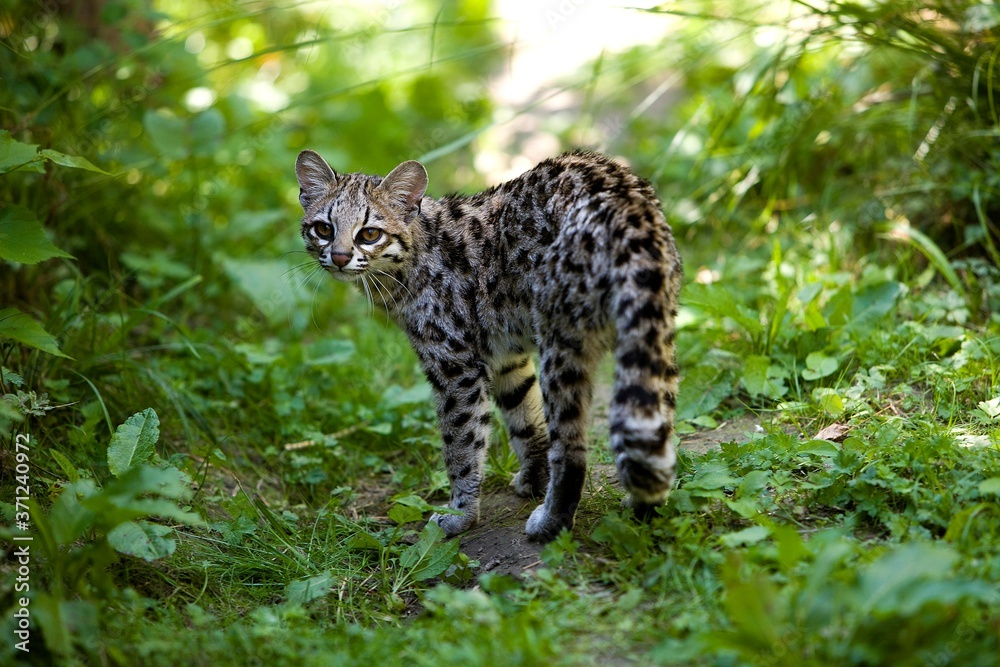
Nearly a decade later, a study co-led by Nogales-Ascarrunz and published in Current Biology has described this cat as a new species1. The cat has been named Leopardus tilcayo, honoring the name local Bolivians have passed down for generations. When the researchers asked locals why they called it “tilcayo,” Nogales-Ascarrunz told National Geographic the answer from locals was simple: “My grandpa called it tilcayo, so I call it tilcayo.”
L. tilcayo is the first living cat species formally described in over a century. Describing a new species highlights the importance of genomic analysis paired with phenotypic data like coat markings. To understand how researchers were able to describe this cat as a new species, we pull from both the National Geographic interview and the publication in Current Biology for this compelling story.
Splitting One Species Into Six
For most of modern taxonomy, species classification relied heavily on physical characteristics. If animals looked alike, they were assumed to be the same species. Under that framework, small spotted tiger cats across Central and South America were grouped as a single species: Leopardus tigrinus. But as genomic tools have advanced, researchers have begun uncovering genetic diversity that physical appearance alone could never reveal. In 2013, researchers used DNA profiles to split off the southern tiger cat as a distinct species2. Since then, additional genetically distinct populations have been proposed as separate species3. Now, this latest study makes five.
To untangle the tiger cat family tree, Nogales-Ascarrunz teamed up with geneticist Eduardo Eizirik at the Pontifical Catholic University of Rio Grande do Sul in Brazil and evolutionary biologist Jonas Lescroart at the University of Antwerp. Together, the team compiled complete genomes for 38 individuals across the Leopardus genus. Genus Leopardus includes tiger cats along with other small wild cats like the ocelot and margay. Nogales-Ascarrunz et al. sequenced 26 of genomes for this study, while the remaining 12 genomes were sequenced in previously published data. Sampling included eight historical museum specimens, which became crucial to the classification process. Among those museum samples were skull fragments from Guyana, providing the first-ever genetic data from the Guiana Shield, the broader region that includes the type locality where Leopardus tigrinus—the species Nogales-Ascarrunz originally assumed her mystery cat belonged to—was first described more than 250 years ago
That genetic data turned out to be more revealing than anyone expected. When the team built family trees from the genomes, six genetically distinct lineages of tiger cat emerged, each lineage a separate branch that hadn’t been mixing genetically with other cats. The earliest split among these tiger cat units happened around 2.3 million years ago, not long after cats first crossed into South America from the north. From there, the branches kept splitting. The lineage that would become the tilcayo broke away roughly 1.4 million years ago, followed by several more divergences over the next million years.
The genomes also revealed something researchers hadn’t expected: signs of ancient interbreeding between branches that are now considered separate species. The tilcayo nuclear genome, for instance, carries about 15% of its genetic material from the Peruvian tiger cat lineage, a leftover signature of hybridization deep in its evolutionary past. And when the team compared nuclear DNA to mitochondrial DNA (which is inherited only through the maternal line), the two told noticeably different stories in several lineages, a mismatch that’s common in cats with a history of interbreeding, and a reminder of how much can get scrambled and overwritten as species diverge, hybridize, and diverge again.
Perhaps the most puzzling result had nothing to do with new species at all. The Peruvian tiger cats, samples of which the team collected thousands of kilometers from Guyana, turned out to be genetically closer to the Guiana Shield population than to their geographic neighbors in the northern Andes. It’s a strange pairing with no obvious explanation in the modern landscape. The two regions aren’t connected by anything resembling continuous tiger cat habitat today. It’s the kind of result that raises more questions than it answers, hinting at some ancient route connecting these cats’ ranges long before the modern Amazon rainforest took the shape we know now.
Cat Conservation Gets More Complicated
Beyond the thrill of finding a new species, the study carries an urgent message: when scientists believed tiger cats were one widespread species, the population looked large and secure. But splitting that single species into six distinct lineages changes the math entirely. Each group now has a smaller range, fewer individuals, and its own risk profile. The genomic data show it, too: nearly every lineage has been in long-term decline, with the tilcayo down an estimated 63% from historical highs and the clouded tiger cat down 80%. Most are still lumped together under a single IUCN listing, which the researchers say likely underestimates just how precarious some of these populations really are.
For the tilcayo specifically, that uncertainty is compounded by how little is known. So far, its range is limited to Bolivia’s Yungas forest, an area under pressure from deforestation, gold mining, and agricultural expansion. Scientists don’t yet know how many tilcayos exist in the wild, what they eat, or how they reproduce. The genome can tell us the species exists and how it’s related to its neighbors, but we haven’t yet learned how the cat behaves.
The researchers believe the approach of combining whole-genome sequencing with DNA pulled from museum specimens, or “museomics”, could uncover more hidden cat species across South America, Africa and Asia. As Nogales-Ascarrunz put it in the National Geographic interview: most of the world isn’t nearly as well understood as we assume.
References
- Lescroart, J., Nogales-Ascarrunz, P. et al. Phylogenomics and museomics reveal five distinct species of tiger cats in South America. Current Biology (2026). https://doi.org/10.1016/j.cub.2026.08.059 ↩︎
- Trigo, T.C., Schneider, A., de Oliveira, T.G., Lehugeur, L.M., Silveira, L., Freitas, T.R.O., and Eizirik, E. (2013). Molecular Data Reveal Complex Hybridization and a Cryptic Species of Neotropical Wild Cat. Curr. Biol. 23, 2528–2533. ↩︎
- de Oliveira, T.G., Fox-Rosales, L.A., Ramírez-Fernández, J.D., Cepeda-Duque, J.C., Zug, R., Sanchez-Lalinde, C., Oliveira, M.J.R., Marinho, P.H.D., Bonilla-Sánchez, A., Marques, M.C., et al. (2024). Ecological modeling, biogeography, and phenotypic analyses setting the tiger cats’ hyperdimensional niches reveal a new species. Sci. Rep. 14, 2395. ↩︎

Anna Bennett
Latest posts by Anna Bennett (see all)
- The Tilcayo: A Tiny, Scrunch-Faced Cat With a Complicated Family Tree - September 24, 2026
- Midges on the Move: Tracking The Oropouche Virus Into New Territory - August 20, 2026
- The Calcium-Platelet Connection in Cancer Metastasis - July 14, 2026