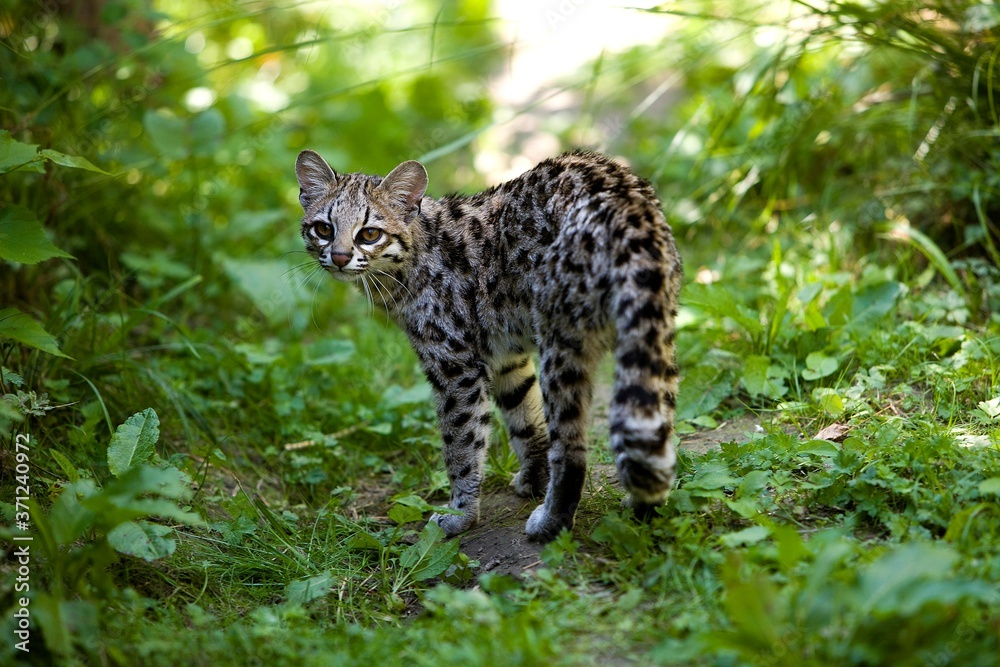
In 2017, Bolivian biologist Paola Nogales-Ascarrunz got a call from a wildlife sanctuary about what she later described to National Geographic as “a weird cat.” A local man had found it as a kitten near Bolivia’s Yungas region, taken it home, and spent about a year trying to feed it noodles, rice, and eggs before realizing this was no housecat. The animal was tiny, smaller than a domestic cat, with a scrunched-up face, round ears, and a coat covered in leopard-like spots.
Nogales-Ascarrunz, who leads Bolivia’s Felid Research Program, went to visit the cat and photographed it extensively. At the time, she assumed it was an unusual-looking member of Leopardus tigrinus, a species of small spotted tiger cat commonly found in Central and South America. It wasn’t until 2019, while preparing a guide to Bolivia’s cat species, that Nogales-Ascarrunz noticed something was different. The rosettes, or ring-shaped spots on its coat, were much larger than anything in her reference photos.