This blog is written by guest blogger Ben Rushton, Application Specialist/Territory Manager at Promega Australia.
When you’re monitoring marine biodiversity at scale, every drop of seawater tells a story. At Minderoo OceanOmics Centre at the University of Western Australia, scientists are uncovering that story through environmental DNA (eDNA)—and automation is helping them listen more clearly.
Laura Missen, a Scientific Officer at OceanOmics Centre, shares how automating their DNA extraction workflow with the Maxwell® RSC 48 system has transformed how they gather and interpret data from marine ecosystems.
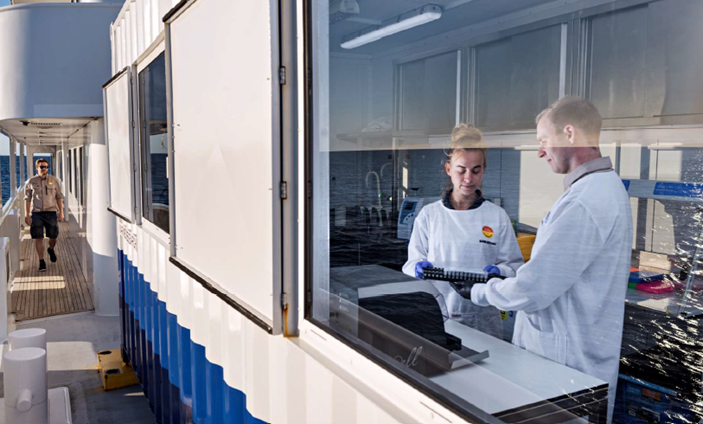
From Manual Bottlenecks to Marine Monitoring at Scale
Working with seawater samples filtered through cellulose membranes, Laura and the OceanOmics team extract eDNA to build biodiversity datasets that inform conservation and management strategies. Their focus? Marine vertebrates in Australian and neighboring waters.
But before adopting the Maxwell RSC, their ability to scale was limited by traditional, hands-on extraction methods.
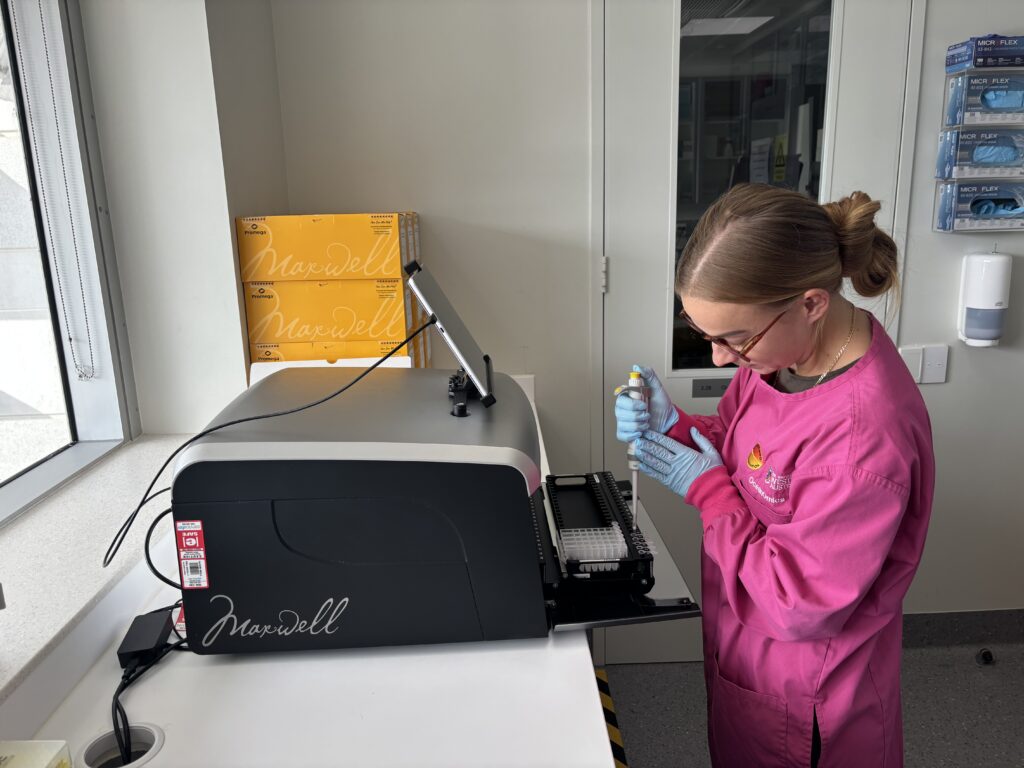
“Manual eDNA extractions limited our capacity to scale,” says Laura. “Protocols were low throughput, time-consuming, and labor intensive.”
The challenges extended beyond throughput. More manual steps introduced a greater risk of contamination—a critical concern when working with trace DNA in large-scale monitoring studies.
“Maintaining clean, consistent workflows is essential in eDNA research. The more manual the process, the more chances for cross-contamination.”
Enter the Maxwell RSC 48
The transition to the Maxwell RSC® 48 brought immediate improvements.
“It has enabled us to extract DNA at scale, with greater consistency, and significantly reduced hands-on-time.”
The team now uses Promega’s pre-filled, cartridge-based chemistry to automate DNA extraction and minimize manual handling. This shift has not only streamlined their lab work but also strengthened data quality.
“The cartridge-based system reduces the potential for cross-contamination, giving us confidence in the quality of our data.”
By adopting automation, the OceanOmics Centre has scaled up to processing thousands of samples. The reproducible results are critical for long-term biodiversity monitoring, where data integrity directly impacts environmental policy and conservation action.
A Future-Proof Platform for Ocean Research
The shift to automation has helped the OceanOmics team meet the growing demands of marine biodiversity programs—positioning them to contribute meaningfully to global efforts in ocean conservation.
Are you facing challenges with consistency or throughput in your DNA extractions? Tools like the Maxwell RSC can help you scale your workflows without compromising data quality—so you can focus on discovery, not bottlenecks.
Learn more about the Maxwell automated DNA and RNA purification systems.



Latest posts by Promega (see all)
- Accelerating Drug Discovery at Grove Biopharma with MyGlo® and ProNect® - December 9, 2025
- From Mt. Fuji to the Lab Bench: A UW-Madison Student’s Summer in Japan - December 3, 2025
- Promega Fc Effector Assays: Measure Every Mechanism - November 26, 2025