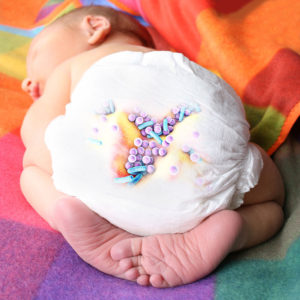
Predicting the Future with Dirty Diapers

Microbiome research is booming right now, with more and more evidence that our personal health and environment are shaped and influenced by the microbes we harbor and encounter. One area of study I find particularly interesting is how the microbiome we acquire at birth affects our long-term health.

A flood of new findings have emerged related to infant microbiome research, leaving parents like me scratching their heads about whether the secrets to our children’s future health may exist in the seemingly endless stream of dirty diapers we change.

The human microbiome evolves and develops in utero and then during and after delivery is colonized by bacteria encountered during exposure to the external environment. The initial composition of microbes an infant is populated with influences their lifelong microbiome signature and can be influenced by many factors along the way, including the microbiome community of the mother, use of antibiotics or other antibacterial substances, breastfeeding, C-section birth. These variables have been correlated with disruption of the infant microbiome and associated with differences in cognitive development and the development of disease, such as asthma and allergies.

In general, these correlations are discovered by taking a fecal sample from an infant and analyzing the DNA sequences of the bacteria present. The microbiome composition of the individual is then compared against different individual characteristics (such as presence or absence of a disease) at the time of the sample and/or at later points in time. Finally researchers look for statistically significant patterns among individuals with similar characteristics or microbiome communities. This type of study can reveal associations between the microbiome and individual traits, but further experiments are needed to show causation.

Continue reading “Predicting the Future with Dirty Diapers”
Revealing Time of Death: The Microbiome Edition

Forensic analysts have long sought precision when determining time of death. While on crime scene investigation television shows, the presence of insects always seems to reveal when a person died, there are many elements to account for, and the probable date may still not be accurate. Insects arrive days after death if at all (e.g., if the body is found indoors or after burial), and the stage of insect activity is influenced by temperature, weather conditions, seasonal variation, geographic location and other factors. All this makes it difficult to estimate the postmortem interval (PMI) of a body discovered an unknown time after death. One way to make estimating PMI less subjective would be to have calibrated molecular markers that are easy to sample and are not altered by environmental variabilities.

Bacterial communities called microbiomes have been frequently in the news. The influence of these microbes encompass living creatures and the environment. Not surprisingly, research has focused on the influence of microbiomes on humans. For example, changes in gut microbiome seem to affect human health. Intriguingly, microbiomes may also be a key to determining time of death. The National Institute of Justice (NIJ) has funded several projects focused on the forensic applications of microbiomes. One focus involves the necrobiome, the community of organisms found on or around decomposing remains. These microbes could be used as an indicator of PMI when investigating human remains. Recent research published in PLOS ONE examined the bacterial communities found in human ears and noses after death and how they changed over time. The researchers were interested in developing an algorithm using the data they collected to estimate of time of death.

Continue reading “Revealing Time of Death: The Microbiome Edition”

Unexpected connections: Gut bacteria influence immunotherapy outcomes

Over the last few years, human microbiome studies have revealed fascinating connections between our colonizing microorganisms and ourselves—including associations between gut bacterial populations and obesity, disease susceptibility, and even mood. The relationship between us and our microbial colonists—once considered completely benign, is now being revealed as an intricate, complicated partnership with the potential to redefine who “we” are in fundamental ways.

Two papers published back-to-back in the November 27 issue of Science add further to this growing body of knowledge—reporting a new and unexpected connection between gut bacterial species and the effectiveness of cancer immunotherapies in mice. The work suggests one reason why such treatments are effective in some circumstances, but not others. Both papers report that the presence of specific bacterial populations may be required for the efficacy of certain treatments, and raise the intriguing question “Could the composition of bacteria in the gut be manipulated to enhance the effectiveness of cancer treatments?”

Continue reading “Unexpected connections: Gut bacteria influence immunotherapy outcomes”

Christensenellaceae—A Natural Way to Stay Thin?

microbiome studies show how bacterial colonists influence healthA study published in the Nov 6 issue of Cell outlined results suggesting that an obscure family of bacteria colonizing the human gut may be inherited and may also have a direct influence on body weight. The paper is the first to identify such an association and to link a particular microbial colonist with lower BMI. Continue reading “Christensenellaceae—A Natural Way to Stay Thin?”

About the Wild Life in Our Homes (at least the single-celled kind)

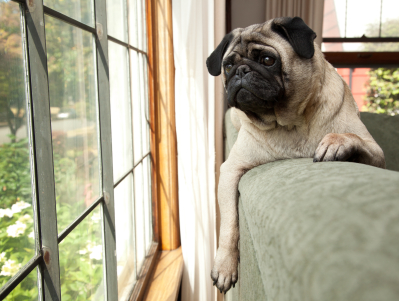
The initial paper from the Wild Life in Our Homes study by Dunn et al. found a correlation between the presence of dogs and specific bacterial communities on pillowcases and TV screens.

Back in the fall, I received a sampling kit, an Informed Consent form and instructions for collecting samples for the Wild Life In Our Homes citizen science project. I carefully swabbed the requested surfaces: exterior and interior door trim, kitchen counter tops, pillowcases, etc., and sent my samples in. I later received confirmation that my samples had been received and again later confirmation that they were being analyzed.

The first paper from this project has been published by Dunn et al. in PLOS ONE (Home Life: Factors Structuring the Bacterial Diversity Found within and between Homes). This initial report covers the first 40 homes sampled, all from the Raleigh-Durham, NC, USA area. Volunteers sampled their homes in the Fall of 2011, collecting specimens from nine areas: cutting boards, kitchen counters, refrigerator, toilet seat, pillowcase, door handle, TV screen, and interior and exterior door trim. The scientists used direct PCR and high-throughput sequencing to sequence the bacterial 16S rRNA gene from the submitted samples. By doing this they were able to estimate the diversity within each sample—they did not distinguish between live and dead organisms, and they did not sequence anything other than the bacterial 16SrRNA, so this study is limited to bacteria. Continue reading “About the Wild Life in Our Homes (at least the single-celled kind)”

My Microbiome Made Me Do It

When I was in school I learned that there were two different kinds of bacteria, the nasty ones (pathogens) that could make you sick and the nice ones (commensals), which simply colonized you and did nothing much except occupy a spot that could otherwise be taken up by a pathogen. Any role for those commensal bacteria in health and disease was assumed to be no more than that of a harmless squatter. In recent years, studies of this benign microbial population (microbiome studies) have begun to reveal many more intriguing details about how they affect our health and wellbeing. Maybe it’s not so surprising that “good” bacteria could be good for our health—but could they actually affect how we behave? A review in Science summarized findings that indicate that this is indeed the case—at least for certain animal populations. Could it be true for humans as well? Could our colonizing organisms actually influence how we feel and what we do?

Continue reading “My Microbiome Made Me Do It”