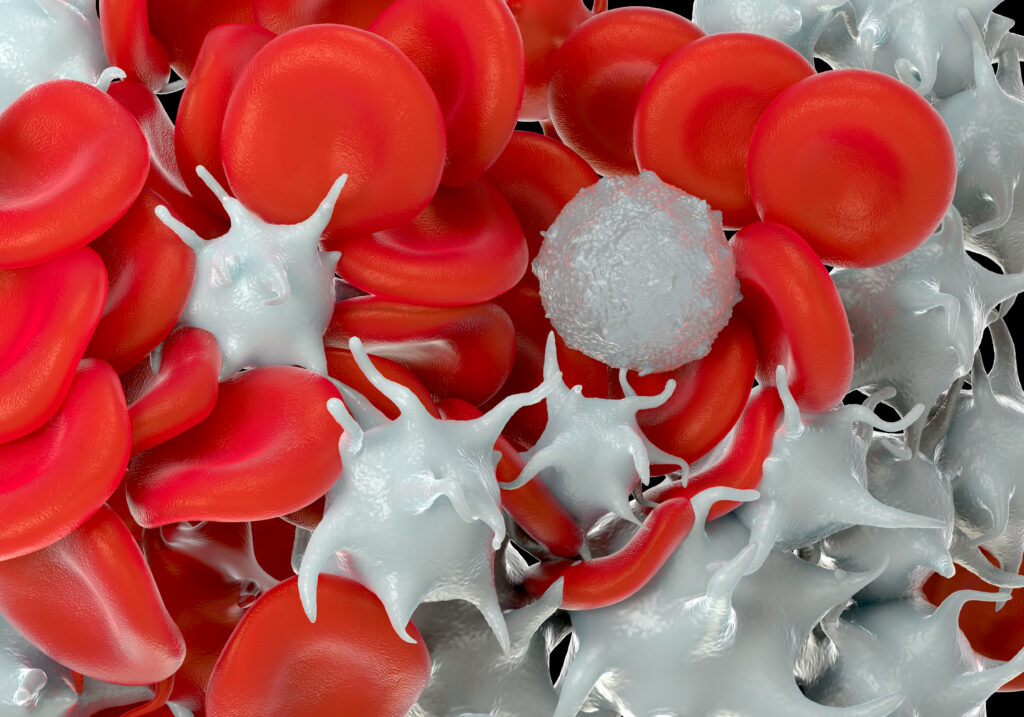
Most cancer-related deaths from solid tumors aren’t caused by the primary tumor itself, but are the result of metastasis. Metastasis is the process by which cancer cells break away from the primary tumor, travel through the bloodstream and establish new tumors in distant tissues. This is a complex, multi-step process and cancer researchers have spent decades trying to understand and disrupt the metastatic cascade. What is known: platelets and calcium play important roles in metastasis. What is unknown: How do these two factors interact?
Here, we explore a recent study published in Scientific Reports by researchers at George Washington University1. They investigate how calcium levels influence platelet-cancer cell interactions and what happens when both factors converge.
At the American Association for Cancer Research meeting in April 2016, then Vice President of the United States, Joe Biden, revealed the Cancer Moonshot℠ initiative— a program with the goals of accelerating scientific discovery in cancer research, fostering greater collaboration among researchers, and improving the sharing of data (1,2). The Cancer Moonshot is part of the 21st Century Cures Act, which earmarked $1.8 billion for cancer-related initiatives over 7 years. The National Cancer Institute (NCI) and the Cancer Moonshot program have supported over 70 programs and consortia, and more than 250 research projects. According to the NCI, the initiative from 2017 to 2021 resulted in over 2,000 publications, 49 clinical trials and more than 30 patent filings. Additionally, the launch of trials.cancer.gov has made information about all cancer research trials accessible to anyone who needs it (3).
“We will build a future where the word ‘cancer’ loses its power.”
First Lady, Dr. Jill Biden
In February 2022, the Biden White House announced a plan to “supercharge the Cancer Moonshot as an essential effort of the Biden-Harris administration” (4). Biden noted in his address that, in the 25 years following the Nixon administration’s enactment of the National Cancer Act in 1971, significant strides were made in understanding cancer. It is now recognized not as a single disease, but as a collection comprising over 200 distinct diseases. This period also saw the development of new therapies and enhancements in diagnosis. However, despite a reduction in the cancer death rate by more than 25% over the past 25 years, cancer continues to be the second leading cause of death in the United States [4].
The Cancer Moonshot is a holistic attempt to improve access to information, support and patient experiences, while fostering the development of new therapeutics and research approaches to studying cancer. In this article, we will focus on research, diagnostics and drug discovery developments.
Solving for Undruggable Targets
KRAS , a member of the RAS family, has long been described as “undruggable” in large part because it is a small protein with a smooth surface that does not present many places for small molecule drugs to bind. The KRAS protein acts like an off/on switch depending upon whether it has GDP or GTP bound. KRAS mutations are associated with many cancers including colorectal cancer (CRC), non-small cell lung cancer (NSCLC), and pancreatic ductal adenocarcinoma (PDAC). The G12 position in the protein is the most commonly mutated; G12C accounts for 13% of the mutations at this site, and is the predominant substitution found in NSCLC, while G12D is prevalent in PDAC (5).
In April 2018, a series of 27 papers representing the most comprehensive genomic analysis of human cancers to date was published in Cell Press journals.
The collection constitutes the final outputs from the Cancer Genome Atlas (TCGA) project, a collaboration between the National Cancer Institute (NCI) and the National Human Genome Research Institute (NHGRI) involving analysis of over 11,000 tumors representing 33 different cancers. The many research teams involved analyzed tumor DNA, mRNA, miRNA and chromatin, comparing them to matched normal cellular genomes to perform a complete molecular characterization of cancer-specific changes. The results have been presented with much hope that open access to this type of comprehensive analysis will build on recent advances in understanding tumor biology and spur further progress in developing new approaches to treatment. (See this news item for more detail).
The Pan-Cancer Atlas results are collected on a cell.com portal, where they are presented in three collections grouped by topic: Cell of Origin, Oncogenic Processes and Signaling Pathways. Each collection is accompanied by a “Flagship” paper introducing the topic and summarizing the findings. It seems fitting that these findings have been published in #HumanGenomeMonth. This comprehensive analysis of the genomic and metagenomic profiles of tumors illustrates one powerful application of the type of genomic analysis pioneered by the original Human Genome Project, and shows just how much has been made possible since the initial publication of the human genome fifteen years ago.
At first glance, the biology of magnetic, underwater-dwelling, oxygen-averse bacteria may seem of little relevance to our most pressing human health problems. But science is full of surprises. A paper published in Nature Nanotechnology presents an inspired use of these bacteria to deliver anti-cancer drugs to tumors, specifically targeting the oxygen-starved regions generated by aggressively proliferating cells.
HeLa cells stained with Hoechst 33258. By TenOfAllTrades (From English wiki 1.) [Public domain], via Wikimedia CommonsScientists look in unusual places for potential anticancer treatments. I have reviewed papers that investigated the possibility that dandelion root may harbor anticancer treatments, milk fat may moderate cancer metastasis and the effects of chemotherapy, and black raspberry extract may even prevent cancer. Sometimes, research avenues come down to an observation about what a tumor cell needs to grow and exploring the idea that molecular analogs might be a tool to block cancer growth. For the work reported in Drug Design, Development and Therapy, analogs of the amino acid glycine, specifically glyphosate and aminomethylphosphonic acid (AMPA), the degradation product of glyphosate, were used to explore this idea in cancer cell lines. Continue reading “Amino Acid Analogs as Possible Cancer Drugs”
Search the PubMed database for “dual-luciferase” and citations abound. The Dual-Luciferase® Reporter Assay is a powerful tool that allows researchers to ask a multitude of questions about gene control and expression in a system that itself could be normalized and internally controlled. For more than 15 years, firefly and Renilla luciferases have formed the basis of a range of powerful assays and research tools for scientists who are asking questions about the deep and complex genetic and cellular story associated with cancer. Here we talk a bit of about bioluminescent chemistries, some of the newest bioluminescent tools available, and how some of these tools can be used to probe the deeper questions of cell biology, including cancer biology.
XWe use cookies and similar technologies to make our website work, run analytics, improve our website, and show you personalized content and advertising. Some of these cookies are essential for our website to work. For others, we won’t set them unless you accept them. To learn more about our approach to Privacy we invite you to Read More
By clicking “Accept All”, you consent to the use of ALL the cookies. However you may visit Cookie Settings to provide a controlled consent.
We use cookies and similar technologies to make our website work, run analytics, improve our website, and show you personalized content and advertising. Some of these cookies are essential for our website to work. For others, we won’t set them unless you accept them. To find out more about cookies and how to manage cookies, read our Cookie Policy.
If you are located in the EEA, the United Kingdom, or Switzerland, you can change your settings at any time by clicking Manage Cookie Consent in the footer of our website.
Necessary cookies are absolutely essential for the website to function properly. These cookies ensure basic functionalities and security features of the website, anonymously.
Cookie
Duration
Description
cookielawinfo-checbox-analytics
11 months
This cookie is set by GDPR Cookie Consent plugin. The cookie is used to store the user consent for the cookies in the category "Analytics".
cookielawinfo-checbox-functional
11 months
The cookie is set by GDPR cookie consent to record the user consent for the cookies in the category "Functional".
cookielawinfo-checbox-others
11 months
This cookie is set by GDPR Cookie Consent plugin. The cookie is used to store the user consent for the cookies in the category "Other.
cookielawinfo-checkbox-advertisement
1 year
The cookie is set by GDPR cookie consent to record the user consent for the cookies in the category "Advertisement".
cookielawinfo-checkbox-necessary
11 months
This cookie is set by GDPR Cookie Consent plugin. The cookies is used to store the user consent for the cookies in the category "Necessary".
cookielawinfo-checkbox-performance
11 months
This cookie is set by GDPR Cookie Consent plugin. The cookie is used to store the user consent for the cookies in the category "Performance".
gdpr_status
6 months 2 days
This cookie is set by the provider Media.net. This cookie is used to check the status whether the user has accepted the cookie consent box. It also helps in not showing the cookie consent box upon re-entry to the website.
lang
This cookie is used to store the language preferences of a user to serve up content in that stored language the next time user visit the website.
viewed_cookie_policy
11 months
The cookie is set by the GDPR Cookie Consent plugin and is used to store whether or not user has consented to the use of cookies. It does not store any personal data.
Analytical cookies are used to understand how visitors interact with the website. These cookies help provide information on metrics the number of visitors, bounce rate, traffic source, etc.
Cookie
Duration
Description
SC_ANALYTICS_GLOBAL_COOKIE
10 years
This cookie is associated with Sitecore content and personalization. This cookie is used to identify the repeat visit from a single user. Sitecore will send a persistent session cookie to the web client.
vuid
2 years
This domain of this cookie is owned by Vimeo. This cookie is used by vimeo to collect tracking information. It sets a unique ID to embed videos to the website.
WMF-Last-Access
1 month 18 hours 24 minutes
This cookie is used to calculate unique devices accessing the website.
_ga
2 years
This cookie is installed by Google Analytics. The cookie is used to calculate visitor, session, campaign data and keep track of site usage for the site's analytics report. The cookies store information anonymously and assign a randomly generated number to identify unique visitors.
_gid
1 day
This cookie is installed by Google Analytics. The cookie is used to store information of how visitors use a website and helps in creating an analytics report of how the website is doing. The data collected including the number visitors, the source where they have come from, and the pages visted in an anonymous form.
Advertisement cookies are used to provide visitors with relevant ads and marketing campaigns. These cookies track visitors across websites and collect information to provide customized ads.
Cookie
Duration
Description
IDE
1 year 24 days
Used by Google DoubleClick and stores information about how the user uses the website and any other advertisement before visiting the website. This is used to present users with ads that are relevant to them according to the user profile.
test_cookie
15 minutes
This cookie is set by doubleclick.net. The purpose of the cookie is to determine if the user's browser supports cookies.
VISITOR_INFO1_LIVE
5 months 27 days
This cookie is set by Youtube. Used to track the information of the embedded YouTube videos on a website.
Performance cookies are used to understand and analyze the key performance indexes of the website which helps in delivering a better user experience for the visitors.
Cookie
Duration
Description
YSC
session
This cookies is set by Youtube and is used to track the views of embedded videos.
_gat_UA-62336821-1
1 minute
This is a pattern type cookie set by Google Analytics, where the pattern element on the name contains the unique identity number of the account or website it relates to. It appears to be a variation of the _gat cookie which is used to limit the amount of data recorded by Google on high traffic volume websites.