 Cerebrospinal fluid (CSF) is a bodily fluid present around the brain and in the spinal cord. It acts as a protective cushion against shocks and participates in the immune response in the brain. Analysis of total CSF protein can be used for diagnostic purposes, as, for instance, a sign of a tumor, bleeding, inflammation, or injury. Considering the high value of CSF as a source of potential biomarkers for brain-associated damages and pathologies, the development of robust automated platform for CSF proteomics is of great value.
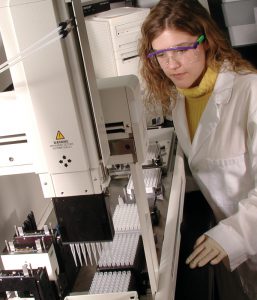
The scalable automated proteomic pipeline (ASAP2) was initially developed with the purpose of (i) discovering protein biomarkers in plasma (1). A summary of the ASAP2 process is as follows:As a first step, abundant-protein immuno-affinity depletion is performed with antibody-based columns and LC systems equipped with a refrigerated autosampler and fraction collector. This block is linked to and followed by buffer exchange performed in a 96-well plate format by manual operations that require <1 h to be completed. The rest of the process is fully automated and includes (i) reduction, alkylation, enzymatic digestion.; (ii) tandem mass tag (TMT) labeling and pooling (processing time of ); (iii) RP solid-phase extraction (SPE) purification ; and (iv) strong cation-exchange (SCX) SPE purification.
A recent reference (2) validated the use of ASAP2 for sample preparation and proteomic analysis of human CSF samples was performed. CSF samples were first depleted from abundant proteins by multiplexed immuno-affinity. Subsequently, reduction, alkylation, protein digestion (using Trypsin/Lys-C), TMT 6-plex labeling, pooling, and sample cleanup were performed in a 96-well-plate format using a liquid-handling robotic platform. Ninety-six identical CSF samples were prepared using the highly automated ASAP2 procedure. Proteome coverage consistency, quantitative precision, and individual protein variability, were determined. Results indicated that, ASAP2 is efficient in analyzing large numbers of human CSF samples and would be a valuable tool for biomarker discovery.
References
- Dayon, L et al. (2014) Comprehensive and Scalable Highly Automated MS-Based Proteomic Workflow for Clinical Biomarker Discovery in Human Plasma. J of Proteome Res. 13, 3837–45
- Galindo, M-N. et al. (2015) Proteomics of Cerebrospinal Fluid: Throughput and Robustness Using a Scalable Automated Analysis Pipeline for Biomarker Discovery. Anan. Chem. 87, 10755–61



Latest posts by Promega (see all)
- Internships at Promega: What Did You Learn? - September 1, 2026
- Under Pressure: The Nuclear Choreography upon Replicative Stress - August 11, 2026
- What Do Floods Leave Behind? Research on Waterborne Pathogens in Soil after Flooding - July 7, 2026