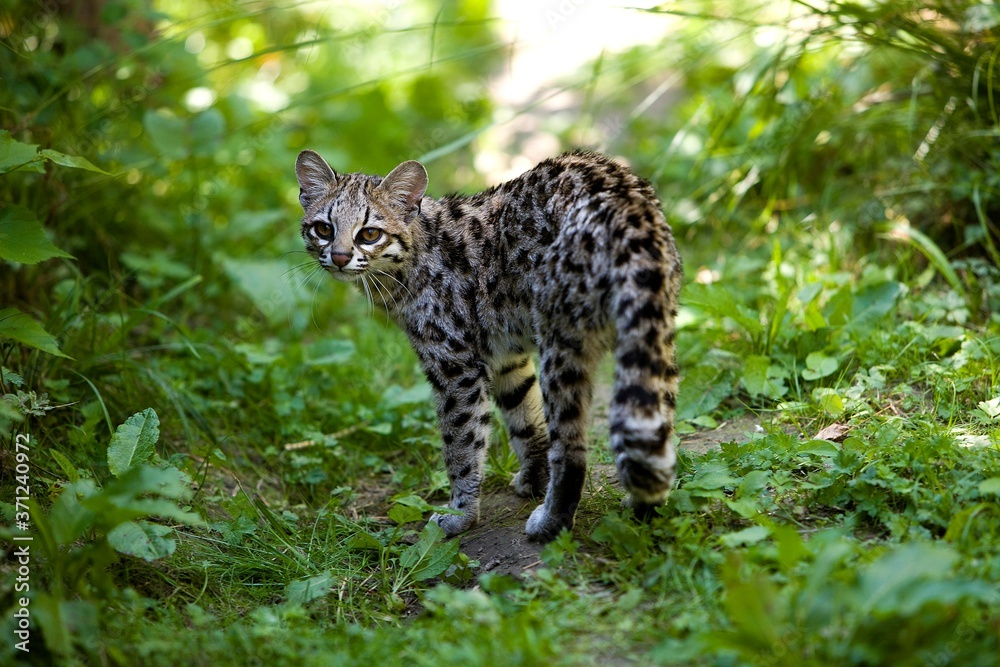
In 2017, Bolivian biologist Paola Nogales-Ascarrunz got a call from a wildlife sanctuary about what she later described to National Geographic as “a weird cat.” A local man found it as a kitten near Bolivia’s Yungas region, took it home, and spent about a year trying to feed it noodles, rice, and eggs before realizing this was no housecat. The animal was tiny, smaller than a domestic cat, with a scrunched-up face, round ears, and a coat covered in leopard-like spots.
Nogales-Ascarrunz, who leads Bolivia’s Felid Research Program, went to visit the cat and photographed it extensively. At the time, she assumed it was an unusual-looking member of Leopardustigrinus, a species of small spotted tiger cat commonly found in Central and South America. It wasn’t until 2019, while preparing a guide to Bolivia’s cat species, that Nogales-Ascarrunz noticed something was different. The rosettes, or ring-shaped spots on its coat, were much larger than anything in her reference photos.
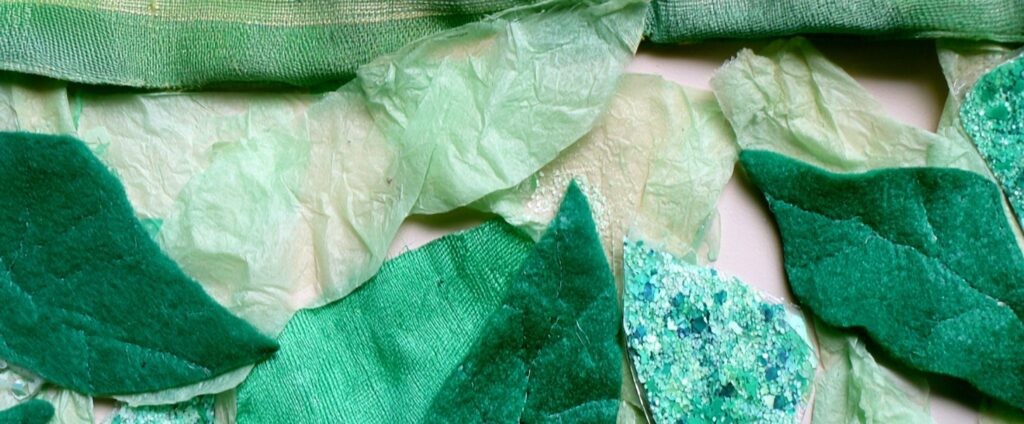
In elementary school, I spent an art class layering greens. Jungle green fabric with a subtle coordinating stripe, delicate spring green tissue paper so translucent you could see through it, pieces of chunky emerald felt cut into the shape of leaves, sparkling seafoam and teal glitter, all of it pressed and glued onto a piece of tagboard in what my teacher called a monochromatic collage. All shades of one color. Mono: one. Chroma: color. I didn’t think about the word at the time because I was too busy glittering.
That same week, I took a science quiz on monocots and dicots and got the answer wrong. I couldn’t remember which plants had one seed leaf and which had two. When I got the test back and saw my error, it clicked. Of course a monocot has one seed leaf. I’d been using mono in art class while missing it on a science quiz down the hall. The root moved between rooms, but I hadn’t learned yet that it could.
That stuck with me. Although my formal education is in English and linguistics, my mind naturally sought out scientific connections. Greek and Latin roots were the place where those two interests didn’t have to compete. They had the precision of formulas, a combinatorial logic where twenty roots could unlock hundreds of words, and they worked on both sides of the hallway.
I write about science now, and the roots have remained my constant companion. A few weeks ago I was researching an organism called Rapaza viridis for a blog post on endosymbiosis. I’d never heard of it, but since viridis is Latin for green (the same root that gives us “verdant”), I already guessed this creature had something to do with photosynthesis. It does. R. viridis is a single-celled predator that steals chloroplasts from the algae it hunts and uses them to photosynthesize.
Learning more about the organism, I came across the term “transient chimerism.” Also new to me, but also immediately legible. The trans in “transient” is the same as in “transparent” and “transport”: ‘across,’ ‘through.’ Something passing through. Chimera: the Greek monster stitched together from a lion, a goat, and a serpent. Put together: a temporary state of being made from parts of more than one organism. The roots came through for me once again.
This keeps happening. I’ll hit a term I’ve never seen, and its pieces already feel familiar. I could spend this entire blog walking through terms and showing you their roots, but definitions only stay interesting for so long (and my family already compares me to the father in My Big Fat Greek Wedding). What I’ve become more interested in is something the roots do beyond defining. The roots that end up in a name tend to carry more than a definition. They carry an interpretation, an argument about the thing itself.
For years, I wondered about apoptosis. I knew apo meant ‘away from.’ I could see ptosis maybe shared something with “asymptote,” but I couldn’t figure out what cell death had to do with calculus. In 1972, John Kerr, an Australian pathologist, had been studying a form of cell death that looked nothing like anything he’d seen before. For most of pathology’s history, the only cell death anyone studied was the kind that showed up when something had gone wrong: a cell damaged by injury or infection or toxins, dying violently. That kind of death had a name: necrosis, from the Greek nekros (‘corpse’). The cell swells, ruptures, spills its contents, and triggers inflammation. Studying liver tissue, Kerr noticed a second kind of death happening quietly alongside it, in cells that hadn’t been damaged at all. The cell death he was watching was the opposite. The cell shrank, and its contents condensed. It broke apart into tidy packages that neighboring cells quietly absorbed. No mess. The body had planned this.
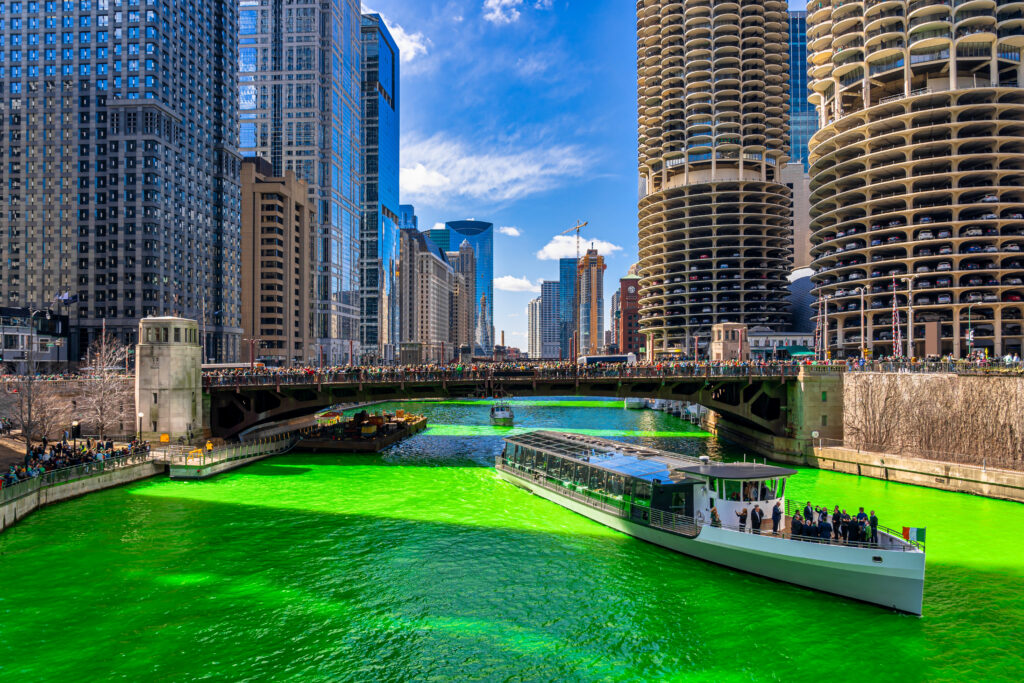
St. Patrick’s Day means different things depending on where you are in the world. In Ireland, it’s a national holiday steeped in culture and tradition: parades, traditional music sessions and, for many, a pint of Guinness accompanied by a hearty “Sláinte” are all part of the day. Here in the American Midwest, we tend to turn that same spirit into a full spectacle. Green everything as far as the eye can see, including somehow an entire river.
Whatever your version of the holiday looks like, there is a lot of fun science behind it. Here is a look at Midwest St. Patrick’s Day through a lab lens.
The Chicago River: Where Orange Becomes Green
Every St. Patrick’s Day, the Chicago Journeymen Plumbers Local 130 heads out on the river and, in roughly 45 minutes, turns a stretch of the Chicago River a surreal emerald green (7, 11). The twist: the dye goes in orange.
The tradition dates to the early 1960s, rooted in a practical idea. Dye had been used to trace leaks and flow in the city’s waterways and someone realized the same concept could be repurposed into a public spectacle (7,11). The exact formula has been kept secret ever since, described only as environmentally friendly and designed to fade after a few hours (1,7,11).
Last spring, my niece and I made a trip to a home improvement store to put together a Mother’s Day planter for my sister. My niece had a clear vision: my sister’s favorite color is blue, so we were going to buy blue flowers. We walked every aisle of the garden center. We checked the annuals, the perennials, and the hanging baskets then left with purple, red, and a grumpy 7-year-old.
It turns out we were not up against a bad selection. We were up against biology.
The Problem with Blue
Blue is one of the rarest colors in the natural world. The food industry is currently finding that out the hard way. There is a good chance you have eaten something blue today. Maybe it was the frosting on a birthday cake, the coating on some M&M’s® candies, or the sports drink in your refrigerator. That blue almost certainly came from a petroleum-based synthetic dye, and for the first time in decades, the food industry is being asked to find something better.
The FDA banned Red Dye No. 3 in January 2025, and pressure has been building around the remaining synthetic dyes ever since, including Blue No. 1 and Blue No. 2. Major food brands have begun announcing plans to reformulate.
There is just one problem. Blue is genuinely, stubbornly hard to make in nature. It turns out that blue has almost nothing to do with color, and almost everything to do with light.
Festival season is here—and apparently, mosquitoes got tickets too.
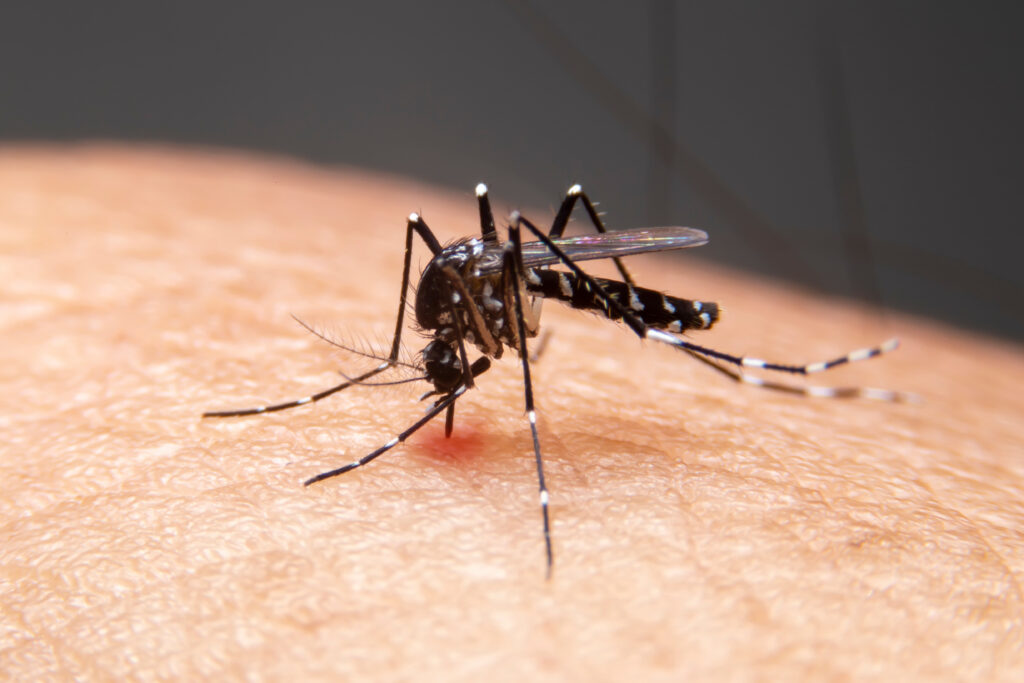
If you have ever been the person in your friend group who ends a summer concert covered in large, itchy welts while everyone else goes home bite-free, you are not imagining things. Some people really are mosquito magnets.
A new study, aptly titled “Blood, Sweat, and Beers,” set out to uncover what makes certain humans irresistible to mosquitoes. But instead of a sterile lab or a rainforest expedition, this experiment took place at one of the Netherlands’ biggest music festivals; Lowlands, a three-day party with 65,000 attendees, questionable hygiene and plenty of beer. In other words: the perfect breeding ground for this science experiment.
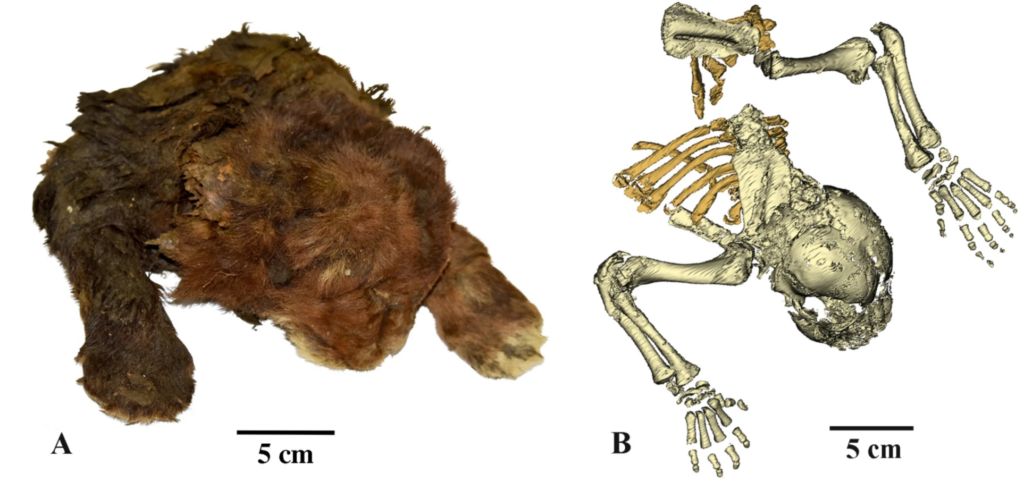
In the permafrost of Siberia, a remarkable discovery has been made—a mummified juvenile sabretooth cat, Homotherium latidens, frozen in time for over 35,000 years. This discovery, made along the Badyarikha River in the Indigirka River Basin of Yakutia, Russia, offers an exciting glimpse into a species that has no modern analog (a living equivalent of something extinct) (1). For paleontologists and evolutionary biologists, it provides an unprecedented look at an ancient predator that roamed the Earth during the Ice Age. So, how is this cub mummy truly fascinating scientists?
A Rare Find
The frozen mummy of Homotherium latidens: (A) external appearance; (B) skeleton, CT-scan, dorsal view (1).
The permafrost of Siberia is a treasure trove of Ice Age fossils, but the discovery of a mummified Homotherium cub stands out for its rarity and significance. While bones can tell us a lot about the history of an extinct species, mummies—where the animal’s soft tissues, such as fur, skin and sometimes internal organs, are preserved—offer far more detailed information. ‘Mummies’ refer to animals (or humans) that have been preserved with their soft tissues intact, often through natural or intentional processes like drying or embalming. This preservation allows scientists to gain insights into the organism’s diet, health, development and adaptations—details that bones alone can’t reveal!
With Thanksgiving just around the corner, kitchens across the country will soon be alive with the sights, smells and sounds of cooking. But what if we dove deeper into those recipe books and looked beyond the instructions? You might find you’re more than just a cook; you’re quite the chemist!
Inspired by the popular show Lessons in Chemistry, an adaptation of Bonnie Garmus’s bestselling novel, cooking is presented as applied science, encouraging viewers to think critically about their cooking and the chemical reactions that create the flavors and textures they love. In this blog, we’ll explore the chemistry behind Thanksgiving cooking, revealing how different techniques bring out the best in each dish.
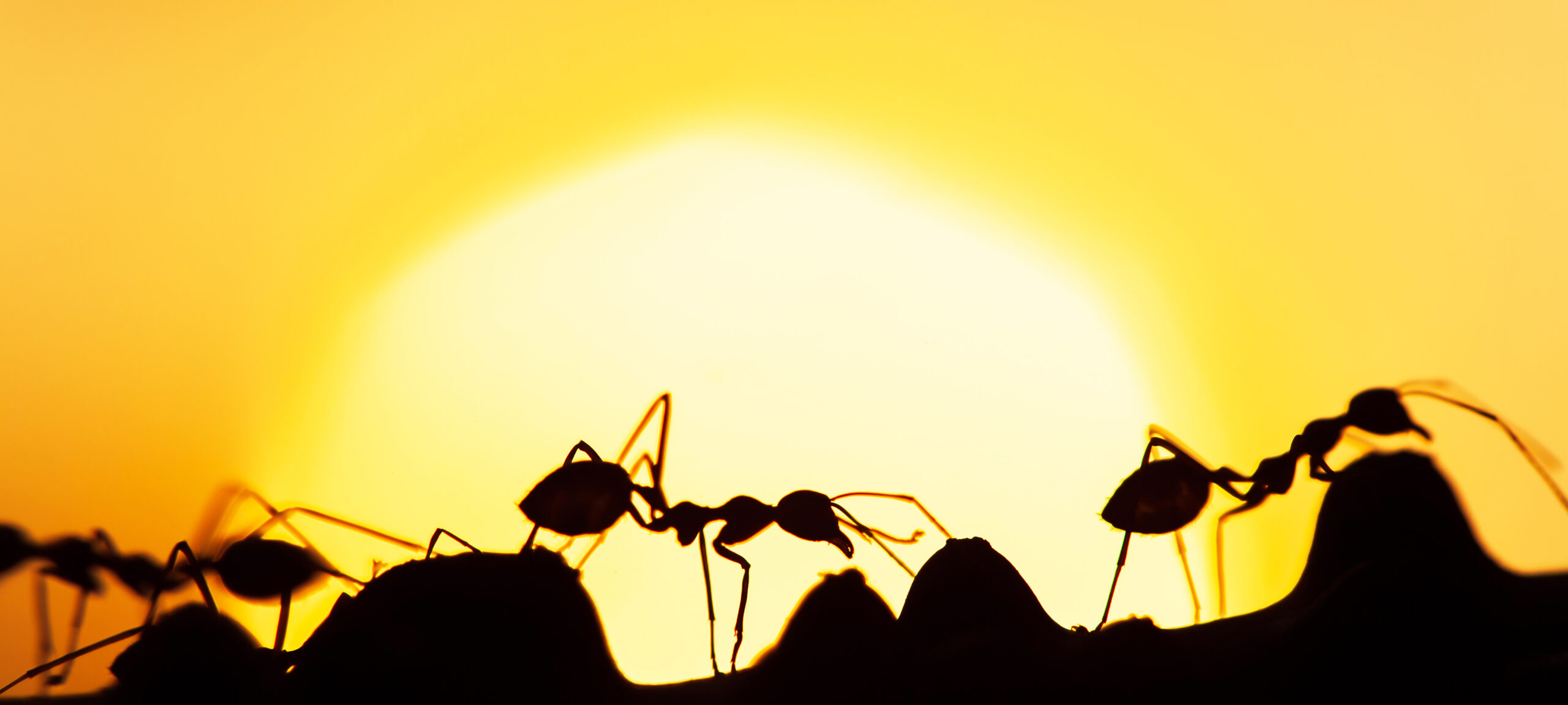
Imagine if your first instinct during an epidemic wasn’t to wear a mask or stock up on groceries, but instead to start rearranging and remodeling your house. As it turns out, researchers have found that black garden ants (Lasius niger) do exactly that when confronted with the threat of disease. These tiny architects instinctively spring into action, redesigning their nests in various ways to slow the spread of infection and protect their crowded colonies where diseases can easily spread.
Read more about the research and see how these findings offer insights into how spatial changes – both in ants and potentially in human environments – can help limit the risks of infection.
What would the Olympics be without a little controversy? From spy drones to air conditioning battles and debates over the bronze medal in women’s floor exercises, the 2024 Games had their fair share. Yet, amidst all the drama, one story stood out—the transformation of the Seine River. After being off-limits to swimmers since 1923, the Seine made a historic comeback this summer, hosting Olympic swimming events for the first time in modern history, including a 10K marathon, the aquatic portion of the triathlon and a Paralympic swimming event (4). With nearly 1 billion people watching, the Seine needed to be more than just swimmable – it had to be media-ready, as even a small misstep could have tarnished the river’s new image.
At the end of July, many people across the globe were preparing to tune into the two-week, 2024 Olympic Games in Paris, France. The Olympics were slated to feature several high-profile athletes—including Simone Biles (USA, artistic gymnastics), Eluid Kipchoge (Kenya, marathon) and Marta Vieira da Silva (Brazil, football). However, in the lead-up to the Games, the International Olympic Committee (IOC) focused on a secondary player: Artificial Intelligence (AI). The IOC laid out an ambitious AI agenda aimed to enhance athlete performance, ensure fairness and optimize operations. The 2024 Paris Olympics represent a significant leap forward in integrating AI into the world of sports.
“Together, we can unlock AI’s full potential to promote solidarity, further digitalization, improve sustainability and resilience, and reinforce the role of sport in society.” – Olympic AI Agenda
Here, we explore several applications of AI in the 2024 Paris Olympics.
XWe use cookies and similar technologies to make our website work, run analytics, improve our website, and show you personalized content and advertising. Some of these cookies are essential for our website to work. For others, we won’t set them unless you accept them. To learn more about our approach to Privacy we invite you to Read More
By clicking “Accept All”, you consent to the use of ALL the cookies. However you may visit Cookie Settings to provide a controlled consent.
We use cookies and similar technologies to make our website work, run analytics, improve our website, and show you personalized content and advertising. Some of these cookies are essential for our website to work. For others, we won’t set them unless you accept them. To find out more about cookies and how to manage cookies, read our Cookie Policy.
If you are located in the EEA, the United Kingdom, or Switzerland, you can change your settings at any time by clicking Manage Cookie Consent in the footer of our website.
Necessary cookies are absolutely essential for the website to function properly. These cookies ensure basic functionalities and security features of the website, anonymously.
Cookie
Duration
Description
cookielawinfo-checbox-analytics
11 months
This cookie is set by GDPR Cookie Consent plugin. The cookie is used to store the user consent for the cookies in the category "Analytics".
cookielawinfo-checbox-functional
11 months
The cookie is set by GDPR cookie consent to record the user consent for the cookies in the category "Functional".
cookielawinfo-checbox-others
11 months
This cookie is set by GDPR Cookie Consent plugin. The cookie is used to store the user consent for the cookies in the category "Other.
cookielawinfo-checkbox-advertisement
1 year
The cookie is set by GDPR cookie consent to record the user consent for the cookies in the category "Advertisement".
cookielawinfo-checkbox-necessary
11 months
This cookie is set by GDPR Cookie Consent plugin. The cookies is used to store the user consent for the cookies in the category "Necessary".
cookielawinfo-checkbox-performance
11 months
This cookie is set by GDPR Cookie Consent plugin. The cookie is used to store the user consent for the cookies in the category "Performance".
gdpr_status
6 months 2 days
This cookie is set by the provider Media.net. This cookie is used to check the status whether the user has accepted the cookie consent box. It also helps in not showing the cookie consent box upon re-entry to the website.
lang
This cookie is used to store the language preferences of a user to serve up content in that stored language the next time user visit the website.
viewed_cookie_policy
11 months
The cookie is set by the GDPR Cookie Consent plugin and is used to store whether or not user has consented to the use of cookies. It does not store any personal data.
Analytical cookies are used to understand how visitors interact with the website. These cookies help provide information on metrics the number of visitors, bounce rate, traffic source, etc.
Cookie
Duration
Description
SC_ANALYTICS_GLOBAL_COOKIE
10 years
This cookie is associated with Sitecore content and personalization. This cookie is used to identify the repeat visit from a single user. Sitecore will send a persistent session cookie to the web client.
vuid
2 years
This domain of this cookie is owned by Vimeo. This cookie is used by vimeo to collect tracking information. It sets a unique ID to embed videos to the website.
WMF-Last-Access
1 month 18 hours 24 minutes
This cookie is used to calculate unique devices accessing the website.
_ga
2 years
This cookie is installed by Google Analytics. The cookie is used to calculate visitor, session, campaign data and keep track of site usage for the site's analytics report. The cookies store information anonymously and assign a randomly generated number to identify unique visitors.
_gid
1 day
This cookie is installed by Google Analytics. The cookie is used to store information of how visitors use a website and helps in creating an analytics report of how the website is doing. The data collected including the number visitors, the source where they have come from, and the pages visted in an anonymous form.
Advertisement cookies are used to provide visitors with relevant ads and marketing campaigns. These cookies track visitors across websites and collect information to provide customized ads.
Cookie
Duration
Description
IDE
1 year 24 days
Used by Google DoubleClick and stores information about how the user uses the website and any other advertisement before visiting the website. This is used to present users with ads that are relevant to them according to the user profile.
test_cookie
15 minutes
This cookie is set by doubleclick.net. The purpose of the cookie is to determine if the user's browser supports cookies.
VISITOR_INFO1_LIVE
5 months 27 days
This cookie is set by Youtube. Used to track the information of the embedded YouTube videos on a website.
Performance cookies are used to understand and analyze the key performance indexes of the website which helps in delivering a better user experience for the visitors.
Cookie
Duration
Description
YSC
session
This cookies is set by Youtube and is used to track the views of embedded videos.
_gat_UA-62336821-1
1 minute
This is a pattern type cookie set by Google Analytics, where the pattern element on the name contains the unique identity number of the account or website it relates to. It appears to be a variation of the _gat cookie which is used to limit the amount of data recorded by Google on high traffic volume websites.