 Forgetting. Forgetting your address; your spouse; your children; your friends; your life. It is something that none of us want to think about, but it hangs over some of us like a specter. Can’t remember if you fed the cat? Where you put your car keys? Did you forget to pack your lunch or return a phone call? Maybe you are trying to do too many things at once, or maybe you are tired. There are lots of perfectly normal reasons why we all forget things from time to time, but every time I forget something there is a nagging voice in my head saying, “Maybe it is something else.” Continue reading “Remembering Not to Forget”
Cell Biology
Considerations for Successful Cell-Based Assays I: Choosing Your Cells
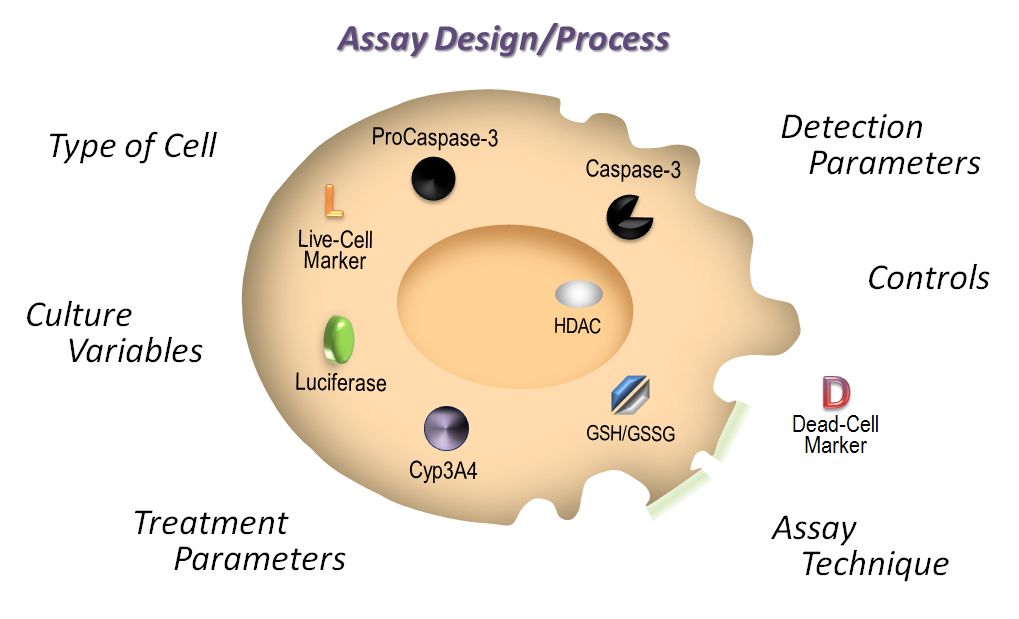
For those of us entering the world of cell-based assays from a classical or molecular genetics background, the world of cell culture can be daunting. Yet to truly understand how the genetic mutation behind a particular phenotype works, we need to look at the biochemistry and cell biology where it all occurs: the cell.
This series of blogs will cover several topics to consider when designing your cell-based assays. In this first installment, we discuss the basics of choosing the cell type for your assay.
Continue reading “Considerations for Successful Cell-Based Assays I: Choosing Your Cells”Therapeutic Manipulation of N-glycan Branching: Promise in the Fight against MS?
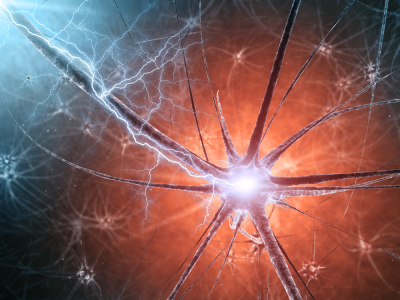
Multiple Sclerosis (MS) is a horrible, debilitating disease that affects an estimated 3 million people world wide. My friend “Liz” is one of those 3 million. When I first met Liz, she was a bright bubbly young woman who loved crafts and entertaining. She had a huge room in her basement filled with rubber stamps, paper and other craft supplies. The first Christmas I knew her, she and her husband had four Christmas trees in their house. Liz decorated each tree with a different theme. Then abruptly she stopped appearing at the social functions she never missed. A year or so later came the news that she had been diagnosed with Multiple Sclerosis. Continue reading “Therapeutic Manipulation of N-glycan Branching: Promise in the Fight against MS?”
When the Writing Gets Tough, the Tough Write about Semicarbazide-Sensitive Amine Oxidases

However, when I was asked to write about a new assay for semicarbazide-sensitive amine oxidases (SSAOs), my enthusiasm waned. This is a subject about which I know nothing, so I searched the literature to learn as much as I could. After reading several review articles I was able to write this scintillating paragraph: Continue reading “When the Writing Gets Tough, the Tough Write about Semicarbazide-Sensitive Amine Oxidases”
A New Role for Reactive Oxygen Species: Can We be Aged and Thin?
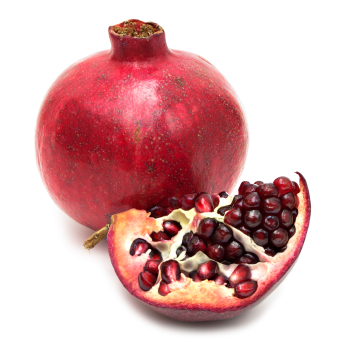
Since the 1980s, we’ve been told that aging can be accelerated by a build-up of free radicals in our cells. We’ve learned that to counteract the damage that free radicals (or reactive oxygen species, ROS) can wreak on our bodies, we should consume antioxidants like vitamins C and E, and phytochemicals.
In fact, the term “superfood” was coined for foods that contain high levels of antioxidants, phytochemicals and vitamins, foods like blueberries and carrots, spinach and kale, to name a few.
“Hold the phone”, as a pre-calculus professor of mine used to say. Turn off the blender and put down that shot glass of beet-carrot-lemon grass juice. This research just in: “Free Radicals Crucial to Suppressing Appetite”.
The research was published August 28, 2011 in the advanced online edition of Nature Medicine.
In this study, Yale University researchers reported that elevated levels of ROS in the brain activated satiety-generating neurons. Continue reading “A New Role for Reactive Oxygen Species: Can We be Aged and Thin?”
The Makings Of A Cerebral Music Decoder
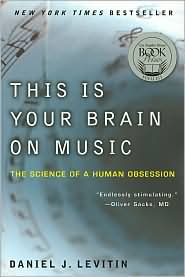
A Review Of Daniel Levitin’s This Is Your Brain On Music
ISBN: 978-0-452-28852-2
Physicist Emerson Pugh once quipped, “if the human brain were so simple that we could understand it, we would be so simple that we couldn’t” [1]. In his book This Is Your Brain On Music neuroscientist Daniel Levitin notes how the number of ways that brain neurons can connect is so vast that we will never fully comprehend all the thought processes that we are capable of.
In recent years, mapping techniques have revealed a lot about the functional regions of the brain. Wernicke’s area is responsible for language processing, the motor cortex for physical movement and frontal lobes for generating personalities. Both encephalography and MRI have given us key spatial-temporal data about brain function in these regions. But we also find that activities such as listening to music contravene such a simplistic compartmentalization.
In fact the perception of pitch, tempo, the emotions invoked by a piece of music and the lyrics of a song all use different parts of the brain albeit simultaneously. Levitin repeatedly emphasizes the multi-faceted aspects of the music ‘experience’ noting how a, “precision choreography of neurochemical release and uptake” leads to our appreciation of music. The brain is thus a massively parallel device, capable of carrying out several different tasks at once.
This is Your Hippocampus on Cortisol

Research published by Dr. Joyce Yau et al. in the Journal of Neuroscience earlier this year examined whether negative effects of cortisol on memory could be blocked using antagonists for brain receptors for cortisol.
The researchers noted that local brain amplification of glucocorticoids (cortisol) by 11beta-hydroxysteriod dehydrogenase type 1 (11beta-HSD1) is “pivotal” in age-related memory loss.
Cortisol acts by binding to cell receptors. In their research, Yau and colleagues found that when levels of cortisol are low, a particular cortisol receptor is bound. However, at higher concentrations, cortisol has a spillover effect and binds a second receptor. Binding to this second receptor activates cellular processes in the brain that cause memory impairment.
The receptors studied were the high-affinity mineralocorticoid receptor (MR) and low-affinity glucocorticoid receptor (GR). As models for memory impairment, they used aged C57BL/6J mice as controls. Also studied were 11beta-HSD1-deficient mice (-/-), which ordinarily show no age-related memory deficits. Mouse memory was tested with a spatial memory task, a Y maze.
Continue reading “This is Your Hippocampus on Cortisol”Insight into DICER1 Revealed in Macular Degeneration Research

There were encouraging findings into the etiology of AMD in the March 11 issue of Nature by Kaneko et al., entitled “DICER1 Deficit Induces Alu RNA Toxicity in Age-Related Macular Degeneration”. The authors not only proposed a molecular mechanism leading to AMD, but also described a new function for the role of the microRNA processing-enzyme, DICER1. Continue reading “Insight into DICER1 Revealed in Macular Degeneration Research”
The Link Between Childhood Adversity and Cellular Aging
 Adversity and stress are known risk factors for psychiatric disorders, cardiovascular and immune disease, cognitive decline and other health problems. The long-term negative effects of adversity seem to be greatest if the traumatic events were experienced during childhood, when the brain and other biological systems are developing and maturing. Researchers are working to identify the mechanisms involved and have identified telomere shortening as one possible mechanism by which adversity increases morbidity and mortality. Continue reading “The Link Between Childhood Adversity and Cellular Aging”
10 Surprising Facts About Hallucinogens, Psychedelics and “Magic Mushrooms”
The BioPharmaceutical Technology Center Institute, which is located at Promega Corporation in Madison, Wisconsin, recently hosted the 10th Annual International Bioethics Forum titled “Manifesting the Mind”. Several notable speakers gave presentations on a rather unexpected subject matter: the use of hallucinogens such as psilocybin (i.e., magic mushrooms) to better understand the nature of consciousness and to even treat neuropsychological disorders such as depression, anxiety and drug addiction. I was one of the lucky participants that attended this forum.
Continue reading “10 Surprising Facts About Hallucinogens, Psychedelics and “Magic Mushrooms””Unlike scientism, science in the true sense of the word is open to unbiased investigation of any existing phenomena.
-Stanislav Grof