When Being Dense is Good: Mindfulness, Meditation and Increasing Gray Matter

When my my Mother’s sister, Pat, was seven years old, she was in a car-bicycle accident that resulted in some very serious brain trauma. She spent better than a year learning to walk and talk again, and although there were some lasting personality changes, she went on to earn a nursing degree and live an independent life. When I think of My Aunt Pat, I can’t help but marvel at what the human brain can do. Damaged brain tissue does not re-grow, but still the brain can find a way to rewire itself to circumvent damaged areas.

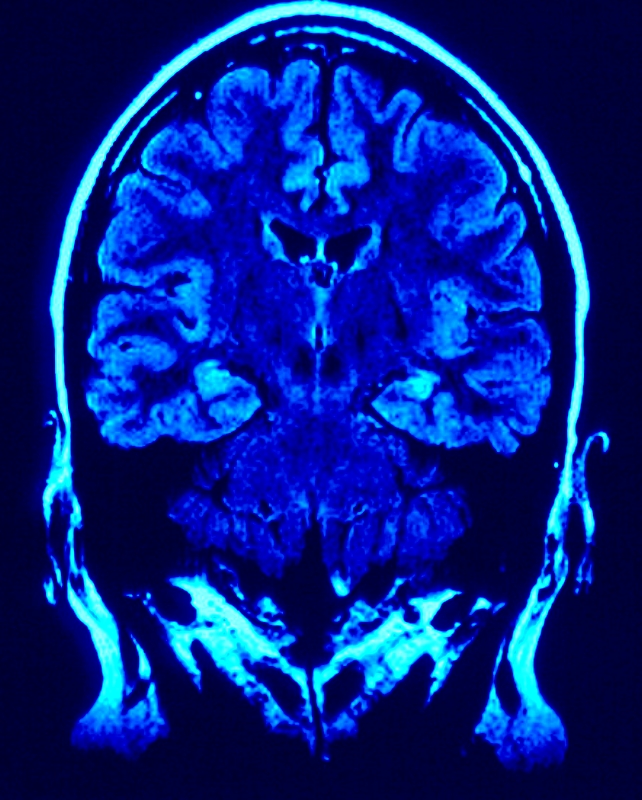
Fortunately, it doesn’t take trauma to the brain for it to demonstrate its plasticity. Our neural structures can be modified with the right training. Studies have shown task-specific increases in gray matter as a result of things such as learning an abstract skill or increasing aerobic activity. Cross-sectional studies have established that differences in performance abilities are associated with differences in regional gray matter. To me this begs the question: Can we consciously increase gray matter in specific regions of the brain?  Continue reading “When Being Dense is Good: Mindfulness, Meditation and Increasing Gray Matter”

Writing Your Worries Away

Experiencing sweaty palms, a rapid heart rate and nausea shouldn’t be the standard response before taking an important exam. However, for many students this has become a debilitating reaction when the pressure to perform academically affects their test scores.

I became more aware of this situation when my 13-year- old niece started “choking under pressure” on her math exams. She did well at solving problems in class. She completed her homework on time and received good scores. But when it came to the day of a math test, she would become anxious, her stomach would hurt and she failed to complete all the questions on the test. Consequently, her parents focused on personally sitting down to help her with homework assignments, assuming this would overcome her anxieties.

So it was just by chance that I picked up the January 14, 2011, issue of Science to read over lunch, when I came across the title “Writing About Testing Worries Boosts Performance in the Classroom”.  The title seemed counterintuitive though. Writing about fears makes them disappear? But as I’ll convey here, timing is everything. Continue reading “Writing Your Worries Away”

Are we finally smart enough to learn from the gloomy octopus?

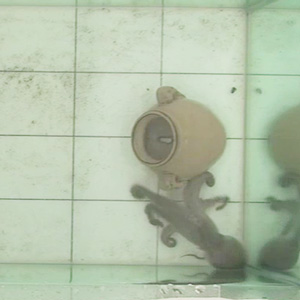
Test octopus responding to stimulus. See blog for link to videos.

The octopus is a fascinating creature and probably the smartest invertebrate known. It has an extremely well developed visual system with high acuity, and although it cannot distinguish color, it can see polarized light. Scientists have proposed that octopuses communicate with each other by polarizing the light that reflects from their scales, creating a messaging system that could not be observed, much less understood by other creatures in their realm who have much less sophisticated visual systems (1).

Many animals rely on visual stimuli for recognizing predators, food and other members of their species. And scientists have used pictures, models and videos to attempt to understand how visual cues affect animal behavior. Pictures and models lack the movement aspect of live stimuli, so video playback presents the best, controllable method, for presenting visual stimuli. However, video has been designed for the human visual system, not that of the octopus, and until recently no video study has managed to elicit a biologically appropriate response from cephalopods (octopus, cuttlefish or squid). Continue reading “Are we finally smart enough to learn from the gloomy octopus?”