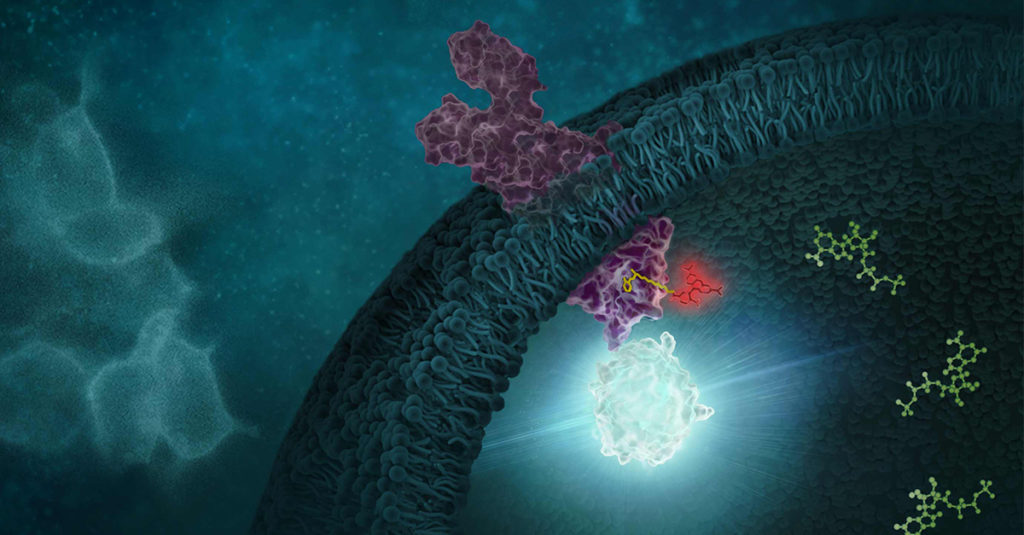
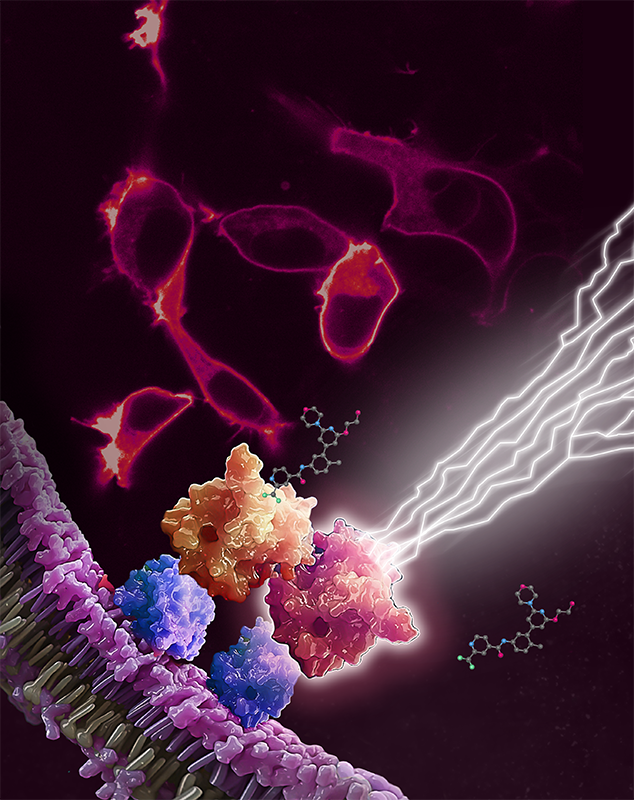
In biologics, cell therapy, and targeted protein degradation, the science is moving fast—and so are the tools. From GPCR-targeted therapies to real-time CAR-T manufacturing tools, new techniques are reshaping how scientists approach drug development, live-cell imaging, and protein degradation.
The “Bringing Light to Science”Discover Glo 2025 speaker series brought together researchers from across academia and industry to share real-world examples of how bioluminescent technologies are helping them advance their research. Now available on demand, these sessions offer fresh perspectives and actionable takeaways on the future of therapeutic development, cellular analysis and assay design.
We’ve distilled five key takeaways from the sessions—practical insights you can apply to your own work or use to stay current with where the field is heading.
This post is written by Kai Hillman, PhD, Promega Corporation.
Every day, scientists push the boundaries of what’s possible with monoclonal antibodies (mAbs)—from targeting cancer cells to calming autoimmune-driven inflammation. These therapies rely not only on binding but on engineering the desired immune response. The suite of Promega Fc Effector Assays helps you understand these interactions from receptor binding and function, through bridging studies. With consistency, sensitivity, and scalability, these assays support teams from early discovery through lot release.
This article draws on real-world publications and product insights to show how Promega assays are powering next-generation immunotherapies—and redefining how we measure immune engagement.
This blog was written by guest contributor Tian Yang, Associate Product Manager, Promega, in collaboration with Kristin Huwiler, Manager, Small Molecule Drug Discovery, Promega.
Determining the selectivity of a compound is critical during chemical probe or drug development. In the case of chemical probes, having a clearly defined mechanism of action and specific on-target activity are needed for a chemical probe to be useful in delineating the function of a biological target of interest in cells. Similarly, optimizing a drug candidate for on-target potency and reducing off-target interactions is important in the drug development process (1,2). A thorough understanding of the selectivity profile of a drug can facilitate drug repurposing, by enabling approved therapeutics to be applied to new indications (3). Interestingly, small molecule drugs do not necessarily require the same selectivity as a chemical probe, since some drugs may benefit from polypharmacology to achieve their desired clinical outcome.
Selectivity profiling panels based on biochemical methods have commonly been used to assess compound specificity for established target classes in drug discovery and chemical probe development. Biochemical assays are target-specific and often quantitative, enabling direct measurements of compound affinities for targets of interest and facilitate comparison of compound engagement to a panel of targets. As an example, several providers offer kinase selectivity profiling services using different assay formats and kinase panels comprised of 100 to 400 kinases (4). However, just as biochemical target engagement does not always translate to cellular activity, selectivity profiles based on biochemical platforms may not reflect compound selectivity in live cells (5).
This blog was written in collaboration with Tian Yang, Associate Product Manager at Promega.
Cancer is often driven not only by genetic mutations, but by changes in how genes are turned on or off—epigenetic alterations. Two key players in this space are bromodomain and extra-terminal (BET) proteins and histone deacetylases (HDACs).
BET proteins help activate gene expression by recognizing acetylated lysines on histones, while HDACs remove these acetyl groups, repressing transcription. When these mechanisms become dysregulated, they can promote tumor growth or silence tumor suppressors.
To counteract this dysregulation, researchers have developed inhibitors that target BET proteins and HDACs. While combinations of these drugs have shown synergy, using two separate compounds introduces challenges with dosing, toxicity and pharmacokinetics. Recent efforts have focused on designing multitarget inhibitors—single molecules that can simultaneously block BET and HDAC activity.
For decades, the concept of “undruggable” targets has presented one of the most significant challenges in drug discovery. At our recent virtual event, Illuminating New Frontiers: Cracking the Undruggable Code, leading researchers and industry experts gathered to showcase cutting-edge technologies and fresh perspectives that are expanding the boundaries of therapeutic development. Over three engaging days, participants explored groundbreaking advances in targeting RAS signaling, leveraging protein degradation and induced proximity strategies, and exploring RNA as a therapeutic target.
Every dog owner fears the day they might hear the word “cancer” from their vet. This devastating disease affects not only humans but our canine companions as well. Veterinary scientists and clinicians are now employing the same methods as researchers studying human cancer, bringing the tools of personalized cancer treatment and drug research and development to bear on canine cancer, and in the not-too-distant future the treatment for a dog’s cancer may become as personalized as the bond they share with their owner.
Developing and testing new drugs and therapies is crucial to improving cancer treatments for canines. One of the most powerful tools in the drug development toolbox is the bioassay. Bioassays enable scientists to measure the biological activity of a potential treatment compound to determine if it might be effective as a therapeutic agent. For researchers focused on advancing canine cancer therapies, bioassays are indispensable. They offer precise insights into how new drugs interact with cancer cells and the immune system.
Some of our most advanced medicines today rely on components derived from living organisms. These therapeutics, called biologics, include things like vaccines, blood products like Human Blood Clotting Factor VIII (FVIII), antibodies and stem cells. Biologics are incredibly temperature sensitive, which means they need to be kept cold during production, transport and storage, a process collectively called the cold chain. The stringent transport and storage temperature requirements for biologics create a barrier to accessing these lifesaving options; particularly for those in remote or underdeveloped regions, where maintaining a cold chain is logistically difficult and costly.
But what if we could break the cold chain? Inspired by one of the most resilient creatures on Earth – the tardigrade – scientists at the University of Wyoming are exploring ways to do just that.
Immunotherapy in veterinary medicine is a rapidly evolving field that leverages the immune system to fight diseases. These therapies are particularly effective in treating various cancers, including lymphomas, mast cell tumors, melanomas, and osteosarcomas. Beyond cancer, immunotherapies are also being explored for their potential in managing chronic inflammatory diseases, such as autoimmune disorders where the immune system mistakenly attacks the body’s own tissues. While traditionally, veterinary treatments have focused on surgery, chemotherapy, and radiation, the advent of immunotherapy offers a more targeted approach, particularly for conditions like cancer.
This targeted approach not only minimizes collateral damage to healthy tissues but also offers the potential for longer-lasting protection by training the immune system to recognize and fight off recurrence of the disease. The interest in immunotherapies has grown in tandem with advancements in human oncology, leading to a crossover of technologies and methodologies into veterinary applications.
Contraception, or birth control, is an important tool in family planning. Given the fourfold increase in population over the last century1 there is a clear need for more affordable, reversible, and safe methods of contraception. At present, the responsibility of takingcontraceptives falls largely on people with female reproductive organs as there is no current method of birth control for people with male reproductive organs. The search for a non-hormonal, male birth control has been an elusive goal in the field of reproductive health.
Recently, a group of scientists from Baylor College of Medicine with contributions from Promega scientists identified a novel compound that 1) inhibits a specific kinase and 2) functions as a reversible male contraceptive. The kinase targeted in this study is the serine/threonine kinase 33 (STK33); a genetic knockout of this gene in male mice is known to cause sterility. The team published their work in Science and utilized a suite of approaches—including DNA-Encoded Libraries (DELs), crystallography, and cellular NanoBRET™ Target Engagement Kinase Assays—to discover a potent inhibitor of STK33 (CDD-2807). The CDD-2807 inhibitor has shown promising results in inducing reversible contraception in male mice, marking a significant milestone in the development of non-hormonal contraceptive options. Let’s dive into the foundation, novel methodology, collaboration, and implications for this work.
At the American Association for Cancer Research meeting in April 2016, then Vice President of the United States, Joe Biden, revealed the Cancer Moonshot℠ initiative— a program with the goals of accelerating scientific discovery in cancer research, fostering greater collaboration among researchers, and improving the sharing of data (1,2). The Cancer Moonshot is part of the 21st Century Cures Act, which earmarked $1.8 billion for cancer-related initiatives over 7 years. The National Cancer Institute (NCI) and the Cancer Moonshot program have supported over 70 programs and consortia, and more than 250 research projects. According to the NCI, the initiative from 2017 to 2021 resulted in over 2,000 publications, 49 clinical trials and more than 30 patent filings. Additionally, the launch of trials.cancer.gov has made information about all cancer research trials accessible to anyone who needs it (3).
“We will build a future where the word ‘cancer’ loses its power.”
First Lady, Dr. Jill Biden
In February 2022, the Biden White House announced a plan to “supercharge the Cancer Moonshot as an essential effort of the Biden-Harris administration” (4). Biden noted in his address that, in the 25 years following the Nixon administration’s enactment of the National Cancer Act in 1971, significant strides were made in understanding cancer. It is now recognized not as a single disease, but as a collection comprising over 200 distinct diseases. This period also saw the development of new therapies and enhancements in diagnosis. However, despite a reduction in the cancer death rate by more than 25% over the past 25 years, cancer continues to be the second leading cause of death in the United States [4].
The Cancer Moonshot is a holistic attempt to improve access to information, support and patient experiences, while fostering the development of new therapeutics and research approaches to studying cancer. In this article, we will focus on research, diagnostics and drug discovery developments.
Solving for Undruggable Targets
KRAS , a member of the RAS family, has long been described as “undruggable” in large part because it is a small protein with a smooth surface that does not present many places for small molecule drugs to bind. The KRAS protein acts like an off/on switch depending upon whether it has GDP or GTP bound. KRAS mutations are associated with many cancers including colorectal cancer (CRC), non-small cell lung cancer (NSCLC), and pancreatic ductal adenocarcinoma (PDAC). The G12 position in the protein is the most commonly mutated; G12C accounts for 13% of the mutations at this site, and is the predominant substitution found in NSCLC, while G12D is prevalent in PDAC (5).
XWe use cookies and similar technologies to make our website work, run analytics, improve our website, and show you personalized content and advertising. Some of these cookies are essential for our website to work. For others, we won’t set them unless you accept them. To learn more about our approach to Privacy we invite you to Read More
By clicking “Accept All”, you consent to the use of ALL the cookies. However you may visit Cookie Settings to provide a controlled consent.
We use cookies and similar technologies to make our website work, run analytics, improve our website, and show you personalized content and advertising. Some of these cookies are essential for our website to work. For others, we won’t set them unless you accept them. To find out more about cookies and how to manage cookies, read our Cookie Policy.
If you are located in the EEA, the United Kingdom, or Switzerland, you can change your settings at any time by clicking Manage Cookie Consent in the footer of our website.
Necessary cookies are absolutely essential for the website to function properly. These cookies ensure basic functionalities and security features of the website, anonymously.
Cookie
Duration
Description
cookielawinfo-checbox-analytics
11 months
This cookie is set by GDPR Cookie Consent plugin. The cookie is used to store the user consent for the cookies in the category "Analytics".
cookielawinfo-checbox-functional
11 months
The cookie is set by GDPR cookie consent to record the user consent for the cookies in the category "Functional".
cookielawinfo-checbox-others
11 months
This cookie is set by GDPR Cookie Consent plugin. The cookie is used to store the user consent for the cookies in the category "Other.
cookielawinfo-checkbox-advertisement
1 year
The cookie is set by GDPR cookie consent to record the user consent for the cookies in the category "Advertisement".
cookielawinfo-checkbox-necessary
11 months
This cookie is set by GDPR Cookie Consent plugin. The cookies is used to store the user consent for the cookies in the category "Necessary".
cookielawinfo-checkbox-performance
11 months
This cookie is set by GDPR Cookie Consent plugin. The cookie is used to store the user consent for the cookies in the category "Performance".
gdpr_status
6 months 2 days
This cookie is set by the provider Media.net. This cookie is used to check the status whether the user has accepted the cookie consent box. It also helps in not showing the cookie consent box upon re-entry to the website.
lang
This cookie is used to store the language preferences of a user to serve up content in that stored language the next time user visit the website.
viewed_cookie_policy
11 months
The cookie is set by the GDPR Cookie Consent plugin and is used to store whether or not user has consented to the use of cookies. It does not store any personal data.
Analytical cookies are used to understand how visitors interact with the website. These cookies help provide information on metrics the number of visitors, bounce rate, traffic source, etc.
Cookie
Duration
Description
SC_ANALYTICS_GLOBAL_COOKIE
10 years
This cookie is associated with Sitecore content and personalization. This cookie is used to identify the repeat visit from a single user. Sitecore will send a persistent session cookie to the web client.
vuid
2 years
This domain of this cookie is owned by Vimeo. This cookie is used by vimeo to collect tracking information. It sets a unique ID to embed videos to the website.
WMF-Last-Access
1 month 18 hours 24 minutes
This cookie is used to calculate unique devices accessing the website.
_ga
2 years
This cookie is installed by Google Analytics. The cookie is used to calculate visitor, session, campaign data and keep track of site usage for the site's analytics report. The cookies store information anonymously and assign a randomly generated number to identify unique visitors.
_gid
1 day
This cookie is installed by Google Analytics. The cookie is used to store information of how visitors use a website and helps in creating an analytics report of how the website is doing. The data collected including the number visitors, the source where they have come from, and the pages visted in an anonymous form.
Advertisement cookies are used to provide visitors with relevant ads and marketing campaigns. These cookies track visitors across websites and collect information to provide customized ads.
Cookie
Duration
Description
IDE
1 year 24 days
Used by Google DoubleClick and stores information about how the user uses the website and any other advertisement before visiting the website. This is used to present users with ads that are relevant to them according to the user profile.
test_cookie
15 minutes
This cookie is set by doubleclick.net. The purpose of the cookie is to determine if the user's browser supports cookies.
VISITOR_INFO1_LIVE
5 months 27 days
This cookie is set by Youtube. Used to track the information of the embedded YouTube videos on a website.
Performance cookies are used to understand and analyze the key performance indexes of the website which helps in delivering a better user experience for the visitors.
Cookie
Duration
Description
YSC
session
This cookies is set by Youtube and is used to track the views of embedded videos.
_gat_UA-62336821-1
1 minute
This is a pattern type cookie set by Google Analytics, where the pattern element on the name contains the unique identity number of the account or website it relates to. It appears to be a variation of the _gat cookie which is used to limit the amount of data recorded by Google on high traffic volume websites.