Reliable molecular research starts with reliable sample preparation. Two recently published cancer biology studies illustrate this well, and both studies relied on the Maxwell® RSC platform to extract RNA from formalin-fixed, paraffin-embedded (FFPE) tissue, the archival format that makes up the bulk of clinical pathology material.
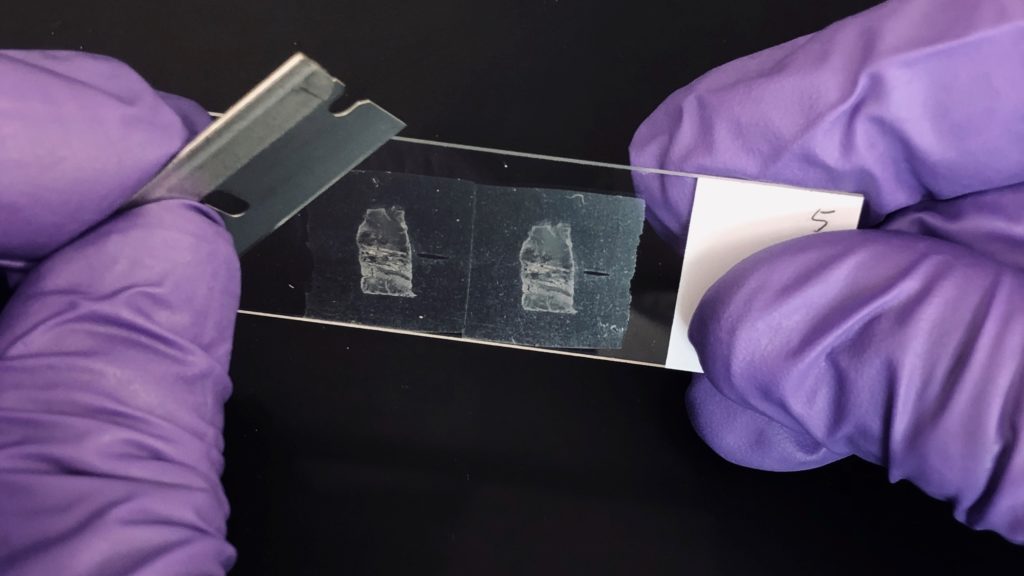
Mapping Molecular Targets in a Rare Thyroid Cancer
A 2025 study published in Endocrine Pathology focused on poorly differentiated thyroid carcinoma (PDTC), a rare and aggressive thyroid cancer subtype with limited treatment options once surgery is no longer curative (1). The research question was straightforward but clinically urgent: how many PDTC cases harbor mutations that could be targeted with existing or emerging therapies?
The team analyzed 84 FFPE tumor samples using a broad targeted next-generation sequencing (NGS) panel covering DNA mutations, copy number changes, and RNA gene fusions, alongside immunohistochemical testing for mismatch repair (MMR) protein loss. The molecular picture that emerged clustered PDTC into three distinct subgroups based on NRAS and TP53 mutation status. Notably, 47% of cases carried mutations in genes involved in tyrosine kinase signaling pathways — established drug targets — and nearly 12% showed MMR protein loss, a feature that may indicate candidates for immunotherapy. Two cases also harbored a TBL1XR1::PIK3CA gene fusion never previously described in thyroid cancer, pointing to novel driver events worth further investigation.
RNA extraction from FFPE samples was performed using the Maxwell® RSC RNA FFPE Kit and Maxwell® RSC Instrument, with nucleic acid quantification carried out on the Quantus™ Fluorometer using QuantiFluor® dye systems.
Understanding CAR-T Cell Resistance in B Cell Lymphoma
The second study, published in Cancer Cell in 2025, tackled a major challenge in oncology: why do roughly 60% of patients with relapsed or refractory aggressive B cell lymphoma (B-NHL) fail to achieve durable benefit from CAR-T cell therapy? Researchers at the University of Cologne applied high-dimensional molecular profiling to patient specimens collected before and after CAR-T cell infusion (2). Techniques used in their analyses included bulk RNA sequencing, single-cell RNA sequencing, imaging mass cytometry, and spatial proteomics.
The study identified a distinct population of immunosuppressive cells in the lymphoma tumor microenvironment, termed lymphoma-associated myeloid-monocytic (LAMM) cells, marked by expression of CSF1R, CD14, and CD68. High LAMM cell infiltration before treatment correlated strongly with poor response and shorter survival. Mechanistic work revealed that LAMM cells suppress CAR-T cell function through a prostaglandin signaling axis, and that blocking CSF1R in a mouse lymphoma model reprogrammed the tumor microenvironment and significantly improved CAR-T cell expansion and survival outcomes in mice. The findings provide a rationale for combining CAR-T cell therapy with CSF1R inhibitors in clinical trials.
RNA extraction from FFPE lymphoma specimens was performed using the Maxwell® RSC RNA FFPE Kit on the Maxwell® RSC instrument.
Why Quality RNA Matters
Both studies depended on archival FFPE material, preserved tumor tissue from pathology archives, sometimes stored for years or decades. FFPE preservation is chemically harsh: formalin crosslinks proteins and fragments nucleic acids, making RNA particularly difficult to recover in a form suitable for downstream sequencing. The consistency and reliability of the extraction workflow directly affects whether a research team can draw meaningful conclusions from their data. Both groups chose the Maxwell® RSC RNA FFPE Kit to meet that challenge, enabling the high-quality RNA sequencing analyses that drove their findings.
As molecular characterization of tumors becomes increasingly central to treatment decisions — from identifying druggable mutations in rare cancers to predicting which patients will respond to immunotherapy — the integrity of the biological material feeding those analyses carries real clinical weight.
Literature Reviewed
Zambelli, V. et al. (2025) High prevalence of potential molecular therapeutic targets in poorly differentiated thyroid carcinoma. Endocrine Pathology 36:38 https://doi.org/10.1007/s12022-025-09883-y
Stahl, D. et al. (2025) CSF1R+ myeloid-monocytic cells drive CAR-T cell resistance in aggressive B cell lymphoma. Cancer Cell 43, 1476–94.e10 https://doi.org/10.1016/j.ccell.2025.05.013



Latest posts by Promega (see all)
- ISO 14001 in Biotech: What It Means for Life Science Researchers - April 2, 2026
- When Cancer Research Depends on Quality RNA: Maxwell® RSC in the Lab - March 30, 2026
- Accelerating Drug Discovery at Grove Biopharma with MyGlo® and ProNect® - December 9, 2025