Why Metabolism Matters in T-Cell Expansion
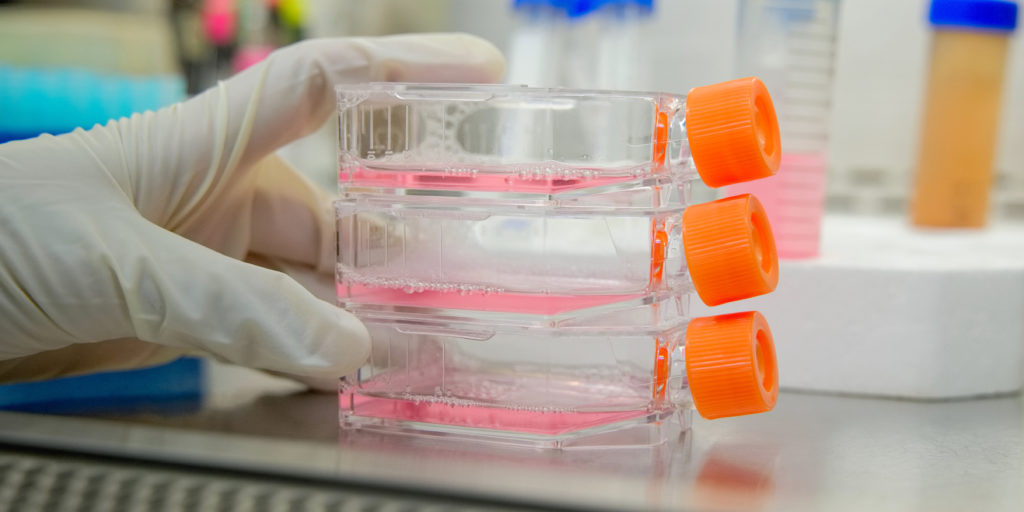
Adoptive T-cell therapies rely on generating metabolically fit, functional cells during ex vivo expansion—but this process often pushes T cells toward highly glycolytic, terminally differentiated states that limit their persistence and therapeutic potential. These metabolic programs begin shifting within hours of activation, therefore understanding early metabolic remodeling is essential for designing culture conditions that support durable, cytotoxic, and memory-enriched T-cell populations.
Researchers at Promega set out to address this challenge by systematically mapping how media composition and activation strength shape T-cell metabolism during the first 72 hours after stimulation. Using a suite of bioluminescent assays, they profiled intracellular energy cofactors, redox balance, and extracellular metabolites across several conditions. This approach revealed distinct, media-driven metabolic states that not only emerged early but also predicted downstream expansion, proliferation, and cytotoxic function.
Their work demonstrates how integrating metabolic profiling into in vitro expansion workflows can provide a more informed framework for optimizing T-cell manufacturing strategies.
Study Design and Measurement
The authors were interested in integrating metabolic profiling into in vitro T-cell development. To model how culture conditions influence early T-cell metabolism, the researchers activated primary human T cells across a range of commonly used expansion environments. This included three media types (ICXF, TexMACS, and RPMI+FBS), and one of several CD3/CD28-based activators (TransAct, ImmunoCult, and Dynabeads). By combining media, activators, and cytokine regimens, the team generated 48 unique activation conditions that allowed them to systematically compare metabolic responses.
On Day 3 after activation, before substantial proliferation had occurred, cells and culture supernatants were collected for metabolic profiling. The researchers used a suite of bioluminescent assays to quantify intracellular energy status and redox balance, including ATP levels (CellTiter-Glo 2.0) , NAD+ and NADH (NAD/NADH-Glo), and total NADP(H) (NADP/NADPH-Glo). Real-time changes in metabolic reducing potential were monitored using a non-lytic viability assay that reports NAD(P)H-dependent reductase activity (RealTime-Glo™ MT Cell Viability Assay). Extracellular metabolites were also measured to assess nutrient consumption and byproduct release. Glucose depletion (Glucose-Glo™ Assay), lactate secretion (Lactate-Glo™ Assay), and malate accumulation (Malate-Glo™ Assay) were quantified using the culture supernatants to capture glycolytic activity and mitochondrial engagement. These measurements provided insight into how each culture environment shaped nutrient utilization during early activation.
To link metabolic remodeling with functional outcomes, the team used luminescent immunoassays to measure cytokine secretion of IFN-γ (Lumit® IFN-γ (Human) Immunoassay ) and TNF-α (Lumit® TNF-α (Human) Immunoassay). Metabolic inhibitors (2-deoxyglucose, rotenone, and antimycin A) were introduced to validate glycolytic and mitochondrial dependencies.
Together, these measurements created a comprehensive metabolic and functional fingerprint for each activation condition, enabling the researchers to identify distinct metabolic phenotypes and understand how early metabolic signatures predict downstream expansion and T-cell fate.
Discoveries in Media-Driven Metabolic States
Across all activation conditions, the researchers identified clear, media-driven metabolic states that emerged within the first 72 hours of T-cell activation. Their analysis revealed four distinct metabolic clusters representing a unique combination of glycolytic activity, redox balance, and nutrient utilization.
ICXF-supported cultures consistently showed the strongest glycolytic signatures, with elevated glucose consumption, lactate secretion, and NAD(P)(H) levels. These early metabolic patterns aligned with rapid proliferation and expansion later in culture, demonstrating that high glycolytic flux predicts robust expansion. For example, Conditions that promoted high lactate secretion at Day 3 were the same ones that drove the greatest fold expansion by Day 7. By contrast, TexMACS-supported cultures displayed lower glycolytic rates and higher mitochondrial-associated metabolite signatures, which corresponded to slower expansion but the enrichment of T cells with stem cell–like memory (TSCM) characteristics.
When metabolic inhibitors were introduced, the functional consequences of these metabolic states became clear. ICXF-expanded cells were highly sensitive to glycolytic disruption, confirming their dependence on glycolysis for both ATP production and expansion. Compare this to TexMACS-expanded cells, which were more vulnerable to mitochondrial inhibition, consistent with a more oxidative metabolic profile.
These metabolic differences even translated into function: TexMACS-expanded cells, which favored oxidative metabolism, generated a higher proportion of TSCM-like (Stem Cell Memory) cells and demonstrated superior cytotoxic activity. These T cells exhibited superior cytolytic activity against targeted cells. Meanwhile, ICXF-expanded cells skewed toward more differentiated memory TCM-like (Central Memory) phenotypes.
Why Media-Driven Metabolic Differences Matter for Therapeutic Development
This study highlights how early metabolic cues that are established within just three days of activation set the trajectory for T-cell expansion, differentiation, and functional potency. The integrated use of Promega bioluminescent assays for metabolite detection and viability and Lumit® cytokine assays for functional outcomes provided a sensitive and scalable way to track metabolic remodeling in both cells and culture media.
Through this work, the Promega team showed that culture conditions imprint distinct metabolic programs that persist into later expansion and shape key characteristics such as glycolytic reliance, memory phenotype, and cytotoxic activity. These findings reinforce the importance of incorporating metabolic monitoring into T-cell manufacturing workflows and demonstrate the suite of metabolic profiling tools offered by Promega.
Visit our website to learn more about our metabolic activity and inflammation assays.
Read the full paper here: Frontiers | Defined metabolic states shape T cell fate and function across culture conditions

Latest posts by Simon Moe (see all)
- Your Media Choice Might Be Designing Your T-Cell Fate - January 15, 2026
- Insights from 3D Liver Models: Rethinking Fatty Liver Disease with Hormone Correction - October 29, 2025
- Top 5 Luciferase Reporter Vectors You Didn’t Know You Needed (But Now Can’t Live Without) - October 21, 2025
