Liver disease is a global health challenge, affecting millions each year. The liver has a remarkable ability to regenerate; however, chronic damage arising from obesity, alcohol, or metabolic dysfunction can lead to irreversible failure. At the University of Edinburgh’s Centre for Regenerative Medicine, Professor David Hay’s lab is developing innovative ways to study liver function and disease using a lab-grown mini-organ. In this blog, we highlight how Dr. Hay’s lab is redefining liver disease research through 3D models that reveal how hormones influence metabolic health.
Building the Human Liver in 3D
The Hay Lab uses human pluripotent stem cells (PSCs) to generate 3D liver tissue that behaves much like a human organ. These spherical liver models contain multiple interacting cell types and exhibit key liver functions, including drug metabolism and detoxification. This platform has opened new possibilities for modeling diseases such as Metabolic Dysfunction–Associated Steatotic Liver Disease (MASLD), previously known as Nonalcoholic Fatty Liver Disease (NAFLD). MASLD is marked by the buildup of triglycerides in hepatocytes, and in severe cases, can progress to inflammation, fibrosis, and cirrhosis.
To model MASLD in the liver, Dr. Hay’s lab exposes their 3D liver tissues to a combination of lactate, pyruvate, and octanoate to induce macrovesicular steatosis. This treatment induces fat accumulation like that seen in early-stage MASLD, alongside gene expression changes associated with inflammation and fibrosis. While previously relying on Oil red O staining or other traditional methods to assess lipid levels, assays developed by Promega provided a novel and sensitive way to measure specific lipid and metabolite levels without organic solvents or complicated imaging.
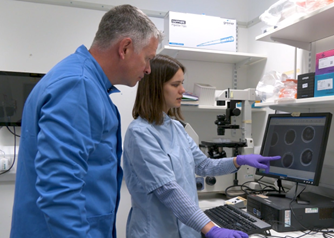
“We were looking for something that was quick, quantitative, and could be used for multiplexing, and we found this [Promega] assay” – Alvile Kasarinaite
The resulting 3D model and assay combination provides a dynamic system for investigating how environmental or biological factors influence lipid processes and, importantly, how these factors differ between males and females.
Hormones Correct Metabolic Gene Expression
In their recent publication, the Hay Lab explored how sex hormones impact the development of MASLD, and attempted to tease apart if sex-specific heterogeneity arises from sex hormone signaling (Kasarinaite et al., 2025). The authors treated female spheres with 17β-estradiol (E2) and male spheres with testosterone (T) prior to the induction of steatosis and measured what effects these hormones had on development of MASLD.
To validate steatosis induction upon metabolite exposure, metabolite assays (Promega) were used to measure the intracellular and extracellular levels of 3-hydroxybutyrate (BHB-Glo™ (Ketone Body) Assay), isocitrate (Metabolite-Glo™ Detection System), and pyruvate (Pyruvate-Glo™ Assay). These results were normalized using the CellTiter-Fluor™ Cell Viability Assay. Treatment resulted in significantly increased intracellular 3-hydroxybutyrate and pyruvate, alongside increased 3-hydroxybutyrate, isocitrate, and pyruvate in the media. These increases in metabolites are consistent with prior work conducted in Dr. Hay’s lab, showing a preference towards pyruvate and metabolites that pyruvate can be converted into macrovesicular steatosis induction (Sinton et al., 2021).
Following this, gene expression changes were measured using transcriptomic profiling and benchmarked against a clinical database of MASLD. In female-derived liver spheres, pretreatment with E2 shifted the transcriptomic profile from a severe disease signature (stage F4 of MASLD disease) toward a healthier state. In male-derived tissues, testosterone conferred a similar but less pronounced protective effect than that seen within the E2 pre-treated female spheres. These results revealed that hormone treatment influenced gene activity and through the restoration of metabolic balance can potentially reverse disease-like gene expression patterns induced by metabolic stress.
Toward More Predictive Liver Models
These findings highlight the importance of incorporating sex as a biological variable in disease modeling. The Hay Lab’s system shows how hormonal regulation can influence metabolic health at both the molecular and cellular level, highlighting the continual need in science to distinguish sex differences in personalized therapies.
Beyond MASLD research, their 3D liver tissue platform could support drug discovery and regenerative medicine, providing a renewable source of human liver tissue for testing therapeutic compounds or exploring liver regeneration.
“The bigger picture is to try and find new medicines to treat disease in humans by modeling them in the dish, and also to generate plantable liver tissue that could be used within the clinic to help patients with failing liver function” – Dr. David Hay
Want to hear more from Dr. Hay and his students about this work? Watch the full case study interview: https://promega.widen.net/s/hfhdxbzrsp/university-of-edinburgh-case-study
Learn More
Explore tools for measuring metabolic activity and additional obesity research solutions at Promega.com
Citations
Kasarinaite, A., et al (2025). Hormone correction of dysfunctional metabolic gene expression in stem cell-derived liver tissue. Stem Cell Research and Therapy , 16(1). https://doi.org/10.1186/s13287-025-04238-0
Sinton, M. C., et al (2021). A human pluripotent stem cell model for the analysis of metabolic dysfunction in hepatic steatosis. IScience, 24(1). https://doi.org/10.1016/j.isci.2020.101931