Uncovering the Life and Death of a Mummy

Frontal view of the mummy
Panel A of Figure 1 shows the frontal view of the mummy. Panzer, S. et al. (2014) Reconstructing the Life of an Unknown (ca. 500 Years-Old South American Inca) Mummy – Multidisciplinary Study of a Peruvian Inca Mummy Suggests Severe Chagas Disease and Ritual Homicide. PLoS ONE 9(2): e89528. doi:10.1371/journal.pone.0089528

Deciphering how an ancient person lived and died is based heavily on the context of the buried body or mummy, including the soil around the gravesite, artifacts present in the grave and if nothing else, the location of the remains. What happens when there is no context? With skeletal remains or even bone fragments, which is primarily what is found at many burial sites, there is some information that can be derived but mummies that include tissue as well as bone offer a greater opportunity to learn about a deceased individual’s life. A recently published PLOS ONE article of a bog body identified using analyses across several scientific fields demonstrates how we can uncover the story of a person who lived several centuries ago based on her mummified remains.

Continue reading “Uncovering the Life and Death of a Mummy”
Fun with Chemistry for Valentine’s Day

Image credit: Morguefile

Looking for last-minute gift ideas? Wondering what chemistry has to do with Valentine’s Day? The chemists of the American Chemical Society (ACS) have curated a web page called Valentine’s Day Chemistry that offers gift ideas (for example, make a crystal heart using pipe cleaners, borax and hot water), explains the chemistry behind chocolate and flowers, shows a video that equates chemical bonding to people interacting at a party and more. The links and videos offer something for everyone, whether you want to have fun with friends and family of all ages or just want to learn something new about chemistry.

Happy Valentine’s Day!

Amino Acid Analogs as Possible Cancer Drugs

HeLa cells stained with Hoechst 33258. By TenOfAllTrades (From English wiki 1.) [Public domain], via Wikimedia Commons
Scientists look in unusual places for potential anticancer treatments. I have reviewed papers that investigated the possibility that dandelion root may harbor anticancer treatments, milk fat may moderate cancer metastasis and the effects of chemotherapy, and black raspberry extract may even prevent cancer. Sometimes, research avenues come down to an observation about what a tumor cell needs to grow and exploring the idea that molecular analogs might be a tool to block cancer growth. For the work reported in Drug Design, Development and Therapy, analogs of the amino acid glycine, specifically glyphosate and aminomethylphosphonic acid (AMPA), the degradation product of glyphosate, were used to explore this idea in cancer cell lines. Continue reading “Amino Acid Analogs as Possible Cancer Drugs”

When Did Cats Become Companion Animals?

Is that a mouse? Image source: morgueFile.

I am unabashedly a cat person, heavily influenced, I suspect, by the ever-fluctuating population of cats that roamed the family farm. Most of these outdoor cats were skittish around humans, but sometimes there were friendly female cats with a litter of kittens that were fun to chase, pick up and stroke. While the farm’s clowder of cats would eagerly await table scraps my mom would put out in the evening, there was plenty of opportunity for the felines to hunt vermin around the farm. It is this function—rodent control—that may be the reason that many of us share our homes with cats. One hypothesis to explain the association between cats and humans is rodents were stealing from human grain stores and cats could control rodent populations. However, there was not much data to confirm this hypothesis. Recent archeological evidence from China seems to support this view of cat domestication as reported in the Proceedings of the National Academy of Sciences. Continue reading “When Did Cats Become Companion Animals?”

Methods for Quantitating Your Nucleic Acid Sample

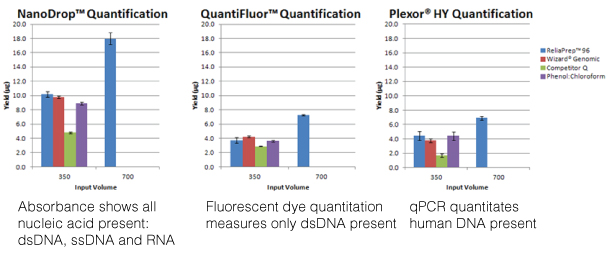
Nucleic acid quanitation webinar

For most molecular biology applications, knowing the amount of nucleic acid present in your purified sample is important. However, one quantitation method might serve better than another, depending on your situation, or you may need to weigh the benefits of a second method to assess the information from the first. Our webinar “To NanoDrop® or Not to NanoDrop®: Choosing the Most Appropriate Method for Nucleic Acid Quantitation” given by Doug Wieczorek, one of our Applications Scientists, discussed three methods for quantitating nucleic acid and outlined their strengths and weaknesses.

Continue reading “Methods for Quantitating Your Nucleic Acid Sample”

Successful Ligation and Cloning of Your Insert

Ligation and cloning
Cloning PCR product.

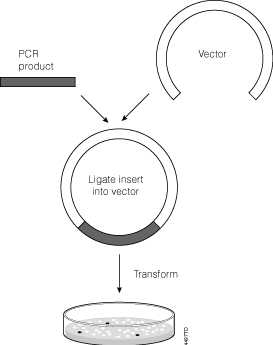
You have PCR amplified your insert of interest, made sure the PCR product is A tailed and are ready to clone into a T vector (e.g., pGEM®-T Easy Vector). The next step is as simple as mixing a few microliters of your purified product with the cloning vector in the presence of DNA ligase, buffer and ATP, right? In fact, you may need to consider the molar ratio of T vector to insert.

Continue reading “Successful Ligation and Cloning of Your Insert”

Can We Have Healthy Bees and Green Lawns?

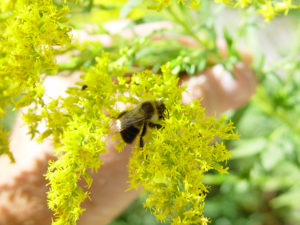
bumble bee pollinating golden rod at the Promega Madison campus
Bumblebee on the prairie at Promega headquarters in Madison, WI. Copyright Promega Corporation.

Some people like a perfectly green carpet of grass; I welcome the biodiversity of clover, dandelions and other weeds (although I could do without the painful thistles). Of course, I also notice many pollinating insects including bumblebees seem to enjoy visiting the flowers that bloom in the lawn. However, concerns have arisen over the use of insecticides and the health of our pollinators. There has been extensive talk about the collapse of honeybee colonies and declining populations of native pollinators like bumblebees. One area of research is the use of insecticides, especially neonicotinoids, and how they affect bees but most studies were done in lab environments, not in a lawn where the bees would collect nectar from flowering plants. Larson, Redmond and Potter decided to study both clothianidin, a neonicotinoid insecticide, and chlorantraniliprole, an anthranilic diamide, and examine how the insecticides affected bumblebees that foraged on treated lawns.

Neonicotinoids are systemic insecticides that are potent selective agonists of nicotinic acetylcholine receptors in insects, and are applied as sprays or granules during the spring for control of root-feeding grubs and other pests. Anthranilic diamides are a new class of insecticides that activate insect ryanodine (calcium channel) receptors and cause lethal paralysis in sensitive species. Chlorantraniliprole shows low acute bee toxicity, a promising development, but this anthranilic diamide has not been tested in the field.

Continue reading “Can We Have Healthy Bees and Green Lawns?”

Ancient Samples Confirm the Cause of the 6th Century Plague Pandemic

When I started writing about research on Yersinia pestis and the Black Death, I was amazed at the ability to recover 14th century bacterial DNA from human remains, show Y. pestis was the caustive agent of the Black Death and then sequence the strain to compare to modern Y. pestis strains. The publications I read always mentioned the three waves of pandemics that devastated human populations in the introduction, and the Black Death was not the oldest one. The putative first pandemic was the Plague of Justinian in the 6th century, named after the Byzantine emperor. Like with the Black Death, there is debate about whether Y. pestis is the causative agent of the Plague of Justinian. The research published in PLOS Pathogens built on earlier work to isolate and genotype the suspected Y. pestis causative agent from human remains in 6th century graves, but this time with more stringent protocols enacted to answer critics who questioned the authenticity of earlier results.

Yersinia pestis by A.Myasnikov for Wiki (Self made work) [CC0], via Wikimedia Commons
Continue reading “Ancient Samples Confirm the Cause of the 6th Century Plague Pandemic”

Peering into the History of Leprosy

Abbot Richard Wallingford
By user:Leinad-Z [Public domain], via Wikimedia Commons
What is it about the UK and graves and dead people to identify or bacteria to sequence? First, there are Black Death graves, then Richard III under a car park and now a leprosy grave site. While we do know leprosy has been a scourge of human beings for centuries, tracking the different strains and origins of the disease is relatively new. Taylor et al. were interested in this grave site near Winchester, located in southern Britain, north of Southampton and southwest of London, because little is known about the disease organism Mycobacterium leprae during this early medieval period (late 11th to 12th century). What could they learn about the strains that caused leprosy and the possible spread of the disease? Continue reading “Peering into the History of Leprosy”

It Isn’t Spring Until the Birds Arrive

With spring finally gaining a foothold in the upper Midwest as temperatures rose above 60 degrees Fahrenheit this weekend, everyone including myself has been spending more time outdoors. Like my fellow blogger Karen, I am a gardener and have been digging and planting everything from raspberries to currants to apple and peach trees.

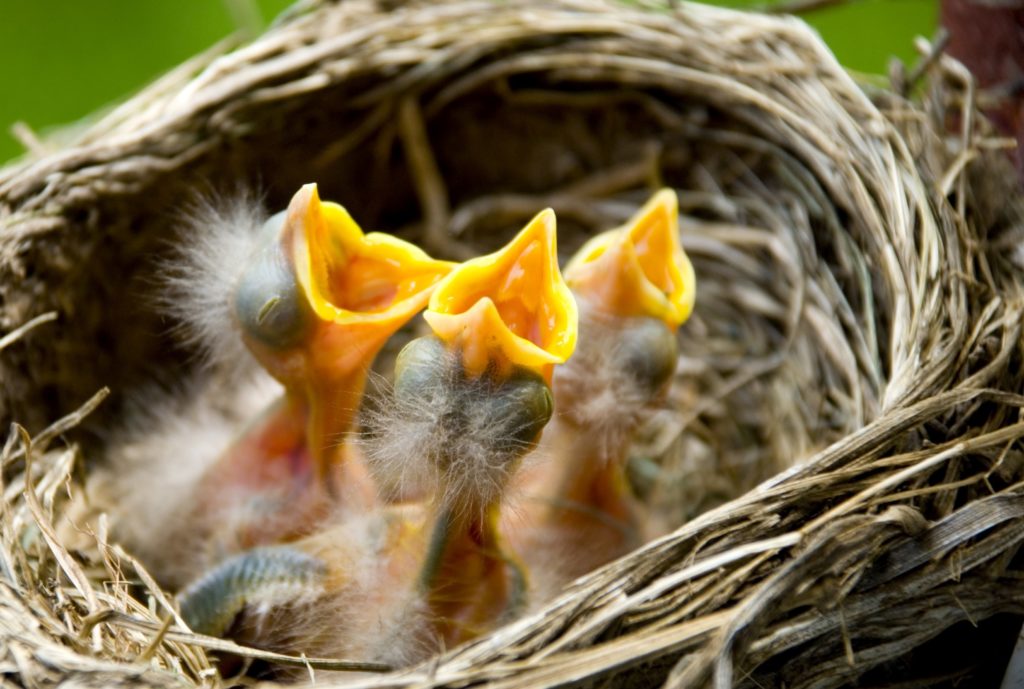
However, one of my favorite parts of spring is hearing and seeing all the birds that flit around my property. Ironically, I was outside in a hat, gloves and coat when I heard my first redwing blackbirds of the season but since then, robins have taken up residence, and the house sparrows have returned, stealing the grass seed I scattered on my rather thin lawn. Nuthatchers are entertaining to watch as they peck at tree bark upside down while they hunt for food. An eastern bluebird has taken up residence nearby, and I enjoy spotting him every day, sitting in a tree or resting on my shepherd’s hook. The chickadees are fun to spot as they switch branches on a tree. Crows occasionally stop by especially if I have left out some pizza crusts for them. Turkeys have even hung around my front lawn, and I startled them (and they, me) as I opened my front door and they quickly flew away. I was up early one morning before most birds were active and all I could hear was “gobble, gobble, gobble”.

I’m still learning about all the different birds that stop over on my property as I expect there are more I have not identified. Which birds do you enjoy spotting in the spring?