For some scientists, words like “undrugged protein” are almost a personal challenge. That simple phrase sparks a fire that fuels an intense drive to characterize the protein, solve its structure and develop a molecule that will bind it and produce a beneficial phenotype.
That’s how Dr. Val Watts feels about adenylyl cyclases. These GPCR-activated enzymes are promising targets for efforts related to chronic pain and many other health conditions. While more than 50% of approved drugs in the United States target GPCRs, there are currently no therapeutics targeting the downstream adenylyl cyclases.
“The fact that they are undrugged today…I take this challenge so seriously that I have a tattoo of adenylyl cyclase on my arm,” Val says. “I want to drug them before my time in academia is over.”
Val Watts is the Associate Dean for Research and a Professor of Medicinal Chemistry and Molecular Pharmacology at Purdue University. The Promega Academic Access Program has helped him bring technologies like NanoBRET® protein interaction assays into his lab at reduced costs. Technologies acquired through the program help Val’s team generate unique insights into adenylyl cyclase behavior in live cells, monitor critical molecules and much more. Their participation in the Academic Access Program and their growing relationships with Promega scientists have helped the lab navigate financial constraints while still pushing their research forward.
Adenylyl Cyclase: New Strategy for Pain Management?
Adenylyl cyclases are enzymes that play a major role in regulating cellular responses to stimuli such as hormones and neurotransmitters. When adenylyl cyclase is activated by a GPCR, it converts ATP into cyclic AMP (cAMP), which in turn activates protein kinase A. This leads to many different cellular effects including changes in gene expression or metabolism.
The adenylyl cyclase pathway is relevant to many health conditions, including general pain responses. In fact, opioid pain relievers act through GPCRs that inhibit adenylyl cyclase.
“When you activate an opioid receptor, three things happen and two of them are bad,” Val explains. “First, it inhibits adenylyl cyclase, which is the good thing. It also causes respiratory depression, and it causes tolerance to opioids. Directly targeting adenylyl cyclase only causes the beneficial effect of relieving the pain.”
Val believes that targeting adenylyl cyclases for pain relief instead of GPCRs could eliminate some of the negative consequences of opioid use. However, the journey to developing a drug begins with generating an extensive understanding of the target protein – its structure, interactions, localization and more.
Val and his team use NanoBRET® technology to investigate how adenylyl cyclase interact with each other to form dimers. This technology is based on energy transfer from a NanoLuc® luciferase-tagged protein to a fluorescently labeled HaloTag® fusion protein. When the two proteins interact in the presence of a NanoLuc® substrate, HaloTag will produce a fluorescent signal. The assay enables researchers to measure protein interactions in live cels with full-length proteins, with increased signal and reduced background.
“We’ve used other methods to measure these interactions, but even with traditional BRET assays, we just don’t see the robust signals that we produce with the NanoBRET® technology.”
Academic Access to Emerging Technology
Unfortunately, grant money isn’t unlimited, and many academic labs are finding their budgets getting much tighter. To offset the costs of the vital NanoBRET® assays, his sales rep Katie Glowacki recommended that Val, as a key opinion leader in his field, enroll in the Promega Academic Access Program. This program gives Val a comfortable discount on some of the more expensive technologies he wanted to experiment with, helping him to offset the cost of the NanoBRET® assays he’s now using in large quantities. The lab also recently adopted HaloTag® mammalian protein purification technology for purifying adenylyl cyclases. They aim to resolve its full structure, providing insights into potential binding sites. Val says they love the simplicity of the HaloTag® method for protein purification, which gave them success even in their first attempts.
“The technology just works, that’s why I like it.”
In addition to special pricing, the Academic Access Program gives the lab early access to pre-launch technology developed by Promega. For example, Val’s lab became early testers for a new Lumit® assay that measures cAMP. While the kit hasn’t been commercially launched yet, they’ve had the opportunity to run experiments and share their data and feedback with the development team.
“The Academic Access Program takes down barriers to trying something new,” Val says. “Our grant resources are very limited, but this makes me less hesitant to buy a reagent. It puts my mind at ease. And the expectations are pretty low – they just ask that you communicate with your sales rep and talk about your experience with the product.”
(“There’s really no burden except for doing this interview,” he jokes.)
Biotech Industry Connections
“I love new technologies,” Val says. “For me, this is all part of being a scientist. I like to see the latest, greatest, coolest technology. That’s part of what drew me to Promega.”
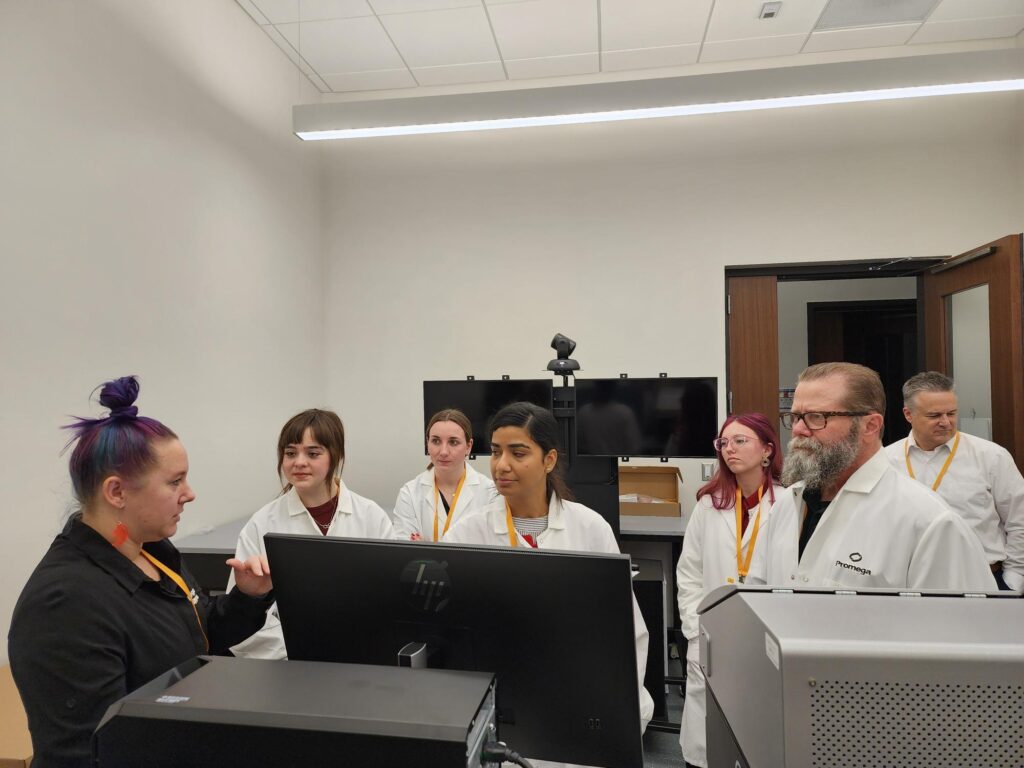
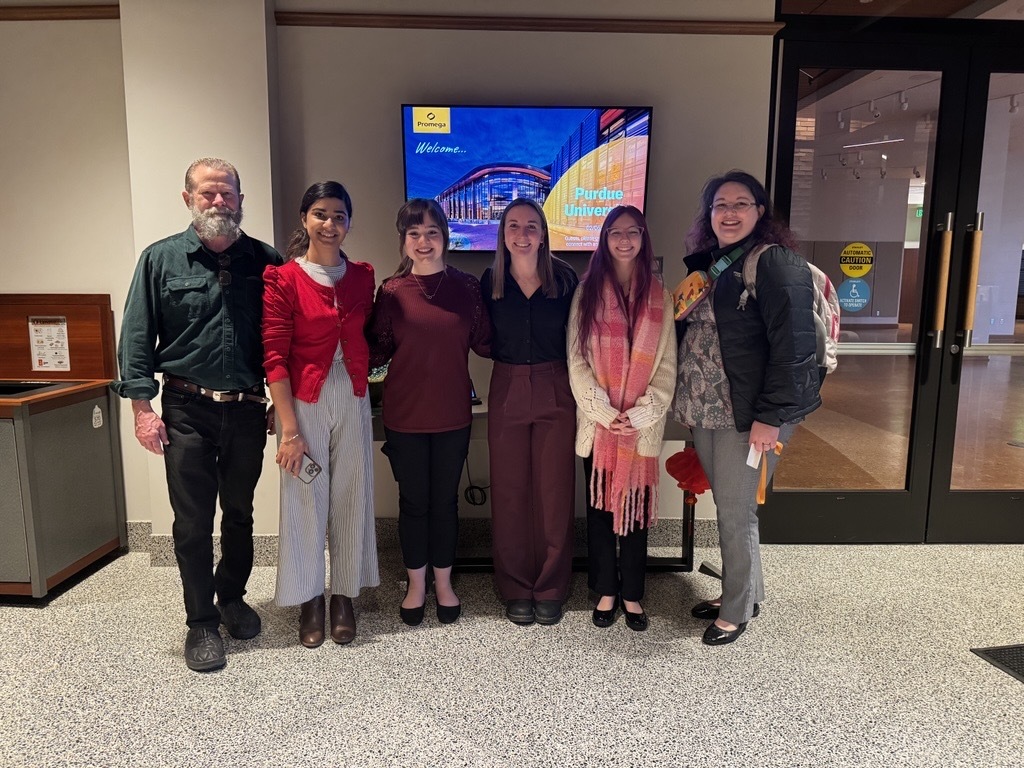
Perhaps the most unique opportunity for experiencing new technology popped up in February 2024. Val and several of his lab members traveled to Madison, WI to tour Promega, meet with R&D scientists and participate in a hands-on demo and training session with the GloMax® Galaxy Bioluminescence Imager. This new instrument, launched in October 2024, is equipped to visualize NanoLuc technologies in living and fixed cells and tissues. Val believes it could help them document where notable interactions are taking place within the cell.
“It was nice to see the instrument live and have my students put their hands on it. I think we have a handle on how we can use this technology for our research – it seems like it’s going to help us answer some big questions.”
Val admits that it’s a big deal for his students to go on a trip like this – leaving the lab and flying to another state to go behind the scenes of one of their suppliers. Beyond the scientific focus of the visit, Val says he hopes the experience helps them gain confidence in interacting with vendors and industry scientists. And, he explains, it’s a recognition of their hard work in the lab.
“When they work hard, I want to show them the love,” Val says. “Inviting them to join me on this trip to Promega is part of showing them how much I appreciate the work they do in the lab.”
Learn more about the Promega Academic Access Program at https://www.promega.com/global/the-academic-access-program/