This blog is written by guest blogger Ben Rushton, Application Specialist/Territory Manager at Promega Australia.
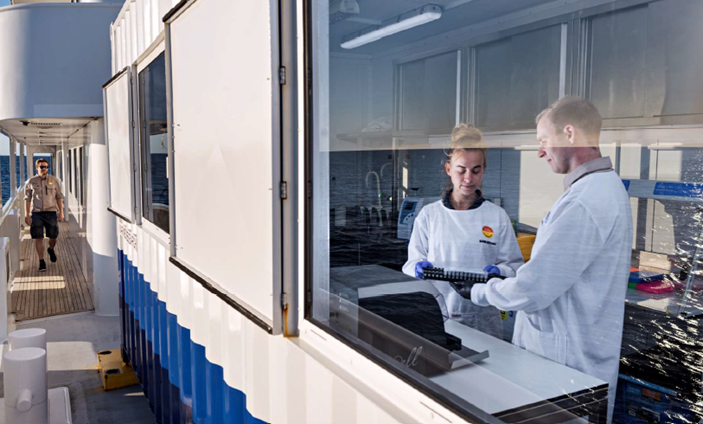
When you’re monitoring marine biodiversity at scale, every drop of seawater tells a story. At Minderoo OceanOmics Centre at the University of Western Australia, scientists are uncovering that story through environmental DNA (eDNA)—and automation is helping them listen more clearly.
Laura Missen, a Scientific Officer at OceanOmics Centre, shares how automating their DNA extraction workflow with the Maxwell® RSC 48 system has transformed how they gather and interpret data from marine ecosystems.
This review summarizes Valto Biocontrol’s move toward a high-throughput (HT) nucleic acid extraction solution utilizing Promega Maxwell® HT simplyRNA Kit, Custom. This project was initiated by Dr. Menno Westerdijk, Head of Laboratories at Valto Biocontrol, who established a molecular laboratory onsite. The Promega Field Support Scientist team assisted Dr. Westerdijk to develop an automated nucleic acid solution using their existing KingFisher™ Flex robot. Dr. Westerdijk’s extensive experience working with KingFisher robots in the agricultural sector combined with expert guidance from Promega Field Support enabled a seamless implementation of the Maxwell® HT chemistry for his laboratory.
In oncology, tissue biopsies are commonly fixed in formalin and embedded in paraffin (FFPE). These FFPE samples can be used with immunohistochemical or molecular analysis for identifying biomarkers that guide the diagnosis and therapeutic management of patients. This fixation technique allows long-term storage of samples but impacts the integrity of nucleic acids. This makes extracting DNA and RNA from FFPE tissues in sufficient quantity and quality for molecular analysis techniques such as NGS analyses challenging for molecular oncology laboratories.
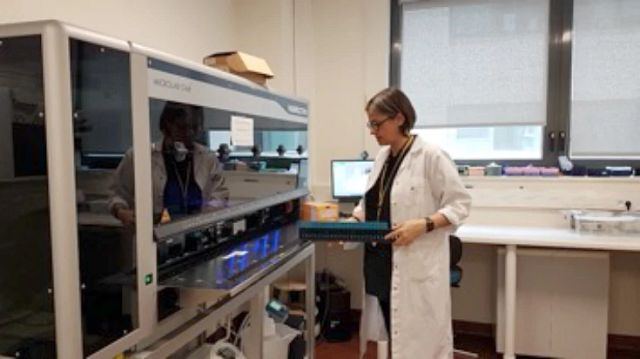
“At Rennes University Hospital, we receive many lung cancer samples with little material available, or samples of poor quality. The nucleic acid extraction step is therefore critical to get good yield. We have seen that it had a direct impact on the success of downstream analysis,” said Dr. Alexandra Lespagnol. Lespagnol is the Technical Manager of the Molecular Genetics of Cancer core lab at the University Hospital of Rennes in France.
In order to accommodate the increasing number of samples that needed to be analyzed, the Molecular Genetics of Cancer core lab of the University Hospital of Rennes initiated an automation project for extracting DNA from FFPE tissues. The lab also wanted to improve sample tracking and reproducibility of their results.
Nucleic acid extraction is a time-consuming, resource-intensive process, but it doesn’t have to be. Automated systems are becoming more and more accessible and often can be operated with simple “plug and play” kits, freeing valuable resources
With these systems increasingly within reach, perhaps you’re thinking about introducing automated nucleic acid extraction into your lab. As you consider your options, here’s eight reasons why we think you should automate your nucleic extraction workflows.
1. Reach your project milestones and publish faster.
In the fast-paced, competitive environment of research and technology development, efficiency is key to reaching project milestones and publishing your work. Managing your resources effectively–especially time–can help you reach those goals.
Time spent on manual nucleic acid extractions is time lost on parallel work, which cuts down productivity. Automation is not only often faster than manual preparations, but it also frees your team to do more valuable hands-on work.
As an example, the Maxwell® RSC cuts 40 minutes of hands-on-time per 16 samples. As the number of samples scales to 96 and beyond, liquid handlers like the Hamilton Star or Tecan Fluent can save many hours of hands-on-time per day.
Wish I had one of these when I was at the lab bench…
Back in the dark ages, when I was a graduate student, my idea of “automated” plasmid DNA extraction involved performing home-brew, “toothpick preps” in “strip tubes” or , if I was really feeling ambitious, a 96-well plate.
I would get just enough DNA to check for the presence of an insert, but the quality of the DNA was too low and the quantity too small to even consider using it for any other downstream experiments like amplification.
And increased throughput for other nucleic acid extraction needs? Nope. If I wanted genomic DNA, RNA or high-quality plasmid DNA, I spent time with columns and tubes, giving each sample my undivided individual attention.
Remember cesium chloride preps for RNA isolation? Even with the advent of column purification, which greatly simplified and standardized my protocols, nucleic acid purification was still a manual task that required a lot of time and effort to get the high-quality product I needed.
Doing the experiments that would answer the questions that I really wanted to ask (those “downstream experiments”), meant spending time at the bench performing careful (if tedious) work to isolate and clean up the highest quality nucleic acid possible. Even then inconsistency in sample prep could wreak havoc on downstream work.
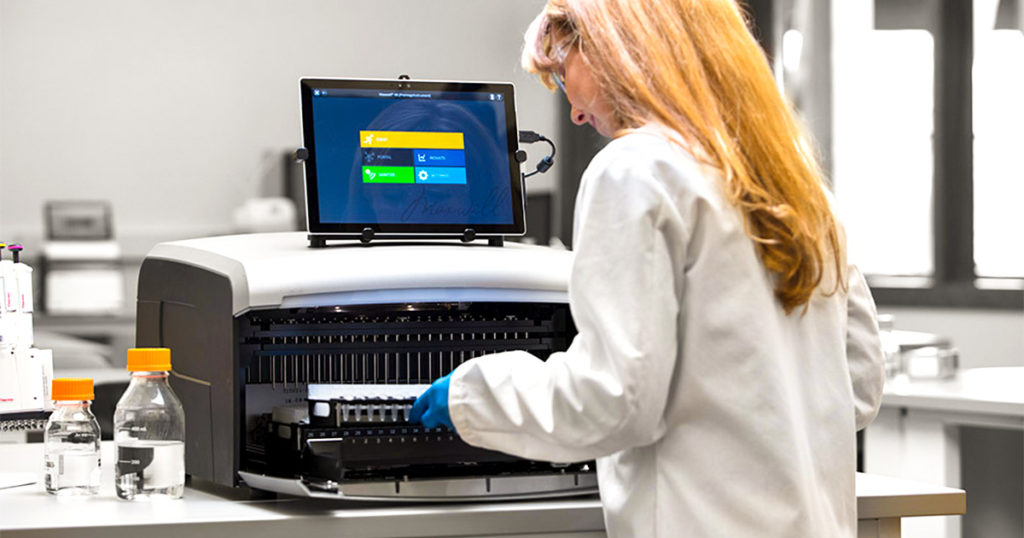
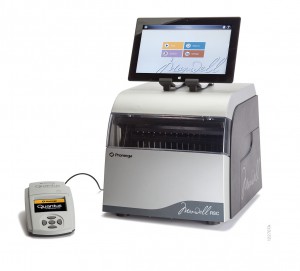
Fortunately, for the modern scientist, personal, bench top automation, has progressed far beyond the toothpick and the strip tube to quality-tested, reliable nucleic acid extraction platforms like the Maxwell® Rapid Sample Concentrator (RSC).
The Maxwell® RSC improves sample preparation consistency, eliminating variability associated with manual handling, and your downstream results will reflect this consistency. With the RSC you can extract DNA or RNA from up to 16 samples in approximately 1 hour and viral total nucleic acids in less than an hour.
The instrument is easy to use: simply load the sample, push a button and walk away. Cross contamination is minimized and the instrument is supported by the Promega technical support and service you have come to trust over the past 35 years.
Want to know more about how the Maxwell® RSC can give you the freedom to focus on the work that interests you the most? To learn more, click here.
XWe use cookies and similar technologies to make our website work, run analytics, improve our website, and show you personalized content and advertising. Some of these cookies are essential for our website to work. For others, we won’t set them unless you accept them. To learn more about our approach to Privacy we invite you to Read More
By clicking “Accept All”, you consent to the use of ALL the cookies. However you may visit Cookie Settings to provide a controlled consent.
We use cookies and similar technologies to make our website work, run analytics, improve our website, and show you personalized content and advertising. Some of these cookies are essential for our website to work. For others, we won’t set them unless you accept them. To find out more about cookies and how to manage cookies, read our Cookie Policy.
If you are located in the EEA, the United Kingdom, or Switzerland, you can change your settings at any time by clicking Manage Cookie Consent in the footer of our website.
Necessary cookies are absolutely essential for the website to function properly. These cookies ensure basic functionalities and security features of the website, anonymously.
Cookie
Duration
Description
cookielawinfo-checbox-analytics
11 months
This cookie is set by GDPR Cookie Consent plugin. The cookie is used to store the user consent for the cookies in the category "Analytics".
cookielawinfo-checbox-functional
11 months
The cookie is set by GDPR cookie consent to record the user consent for the cookies in the category "Functional".
cookielawinfo-checbox-others
11 months
This cookie is set by GDPR Cookie Consent plugin. The cookie is used to store the user consent for the cookies in the category "Other.
cookielawinfo-checkbox-advertisement
1 year
The cookie is set by GDPR cookie consent to record the user consent for the cookies in the category "Advertisement".
cookielawinfo-checkbox-necessary
11 months
This cookie is set by GDPR Cookie Consent plugin. The cookies is used to store the user consent for the cookies in the category "Necessary".
cookielawinfo-checkbox-performance
11 months
This cookie is set by GDPR Cookie Consent plugin. The cookie is used to store the user consent for the cookies in the category "Performance".
gdpr_status
6 months 2 days
This cookie is set by the provider Media.net. This cookie is used to check the status whether the user has accepted the cookie consent box. It also helps in not showing the cookie consent box upon re-entry to the website.
lang
This cookie is used to store the language preferences of a user to serve up content in that stored language the next time user visit the website.
viewed_cookie_policy
11 months
The cookie is set by the GDPR Cookie Consent plugin and is used to store whether or not user has consented to the use of cookies. It does not store any personal data.
Analytical cookies are used to understand how visitors interact with the website. These cookies help provide information on metrics the number of visitors, bounce rate, traffic source, etc.
Cookie
Duration
Description
SC_ANALYTICS_GLOBAL_COOKIE
10 years
This cookie is associated with Sitecore content and personalization. This cookie is used to identify the repeat visit from a single user. Sitecore will send a persistent session cookie to the web client.
vuid
2 years
This domain of this cookie is owned by Vimeo. This cookie is used by vimeo to collect tracking information. It sets a unique ID to embed videos to the website.
WMF-Last-Access
1 month 18 hours 24 minutes
This cookie is used to calculate unique devices accessing the website.
_ga
2 years
This cookie is installed by Google Analytics. The cookie is used to calculate visitor, session, campaign data and keep track of site usage for the site's analytics report. The cookies store information anonymously and assign a randomly generated number to identify unique visitors.
_gid
1 day
This cookie is installed by Google Analytics. The cookie is used to store information of how visitors use a website and helps in creating an analytics report of how the website is doing. The data collected including the number visitors, the source where they have come from, and the pages visted in an anonymous form.
Advertisement cookies are used to provide visitors with relevant ads and marketing campaigns. These cookies track visitors across websites and collect information to provide customized ads.
Cookie
Duration
Description
IDE
1 year 24 days
Used by Google DoubleClick and stores information about how the user uses the website and any other advertisement before visiting the website. This is used to present users with ads that are relevant to them according to the user profile.
test_cookie
15 minutes
This cookie is set by doubleclick.net. The purpose of the cookie is to determine if the user's browser supports cookies.
VISITOR_INFO1_LIVE
5 months 27 days
This cookie is set by Youtube. Used to track the information of the embedded YouTube videos on a website.
Performance cookies are used to understand and analyze the key performance indexes of the website which helps in delivering a better user experience for the visitors.
Cookie
Duration
Description
YSC
session
This cookies is set by Youtube and is used to track the views of embedded videos.
_gat_UA-62336821-1
1 minute
This is a pattern type cookie set by Google Analytics, where the pattern element on the name contains the unique identity number of the account or website it relates to. It appears to be a variation of the _gat cookie which is used to limit the amount of data recorded by Google on high traffic volume websites.