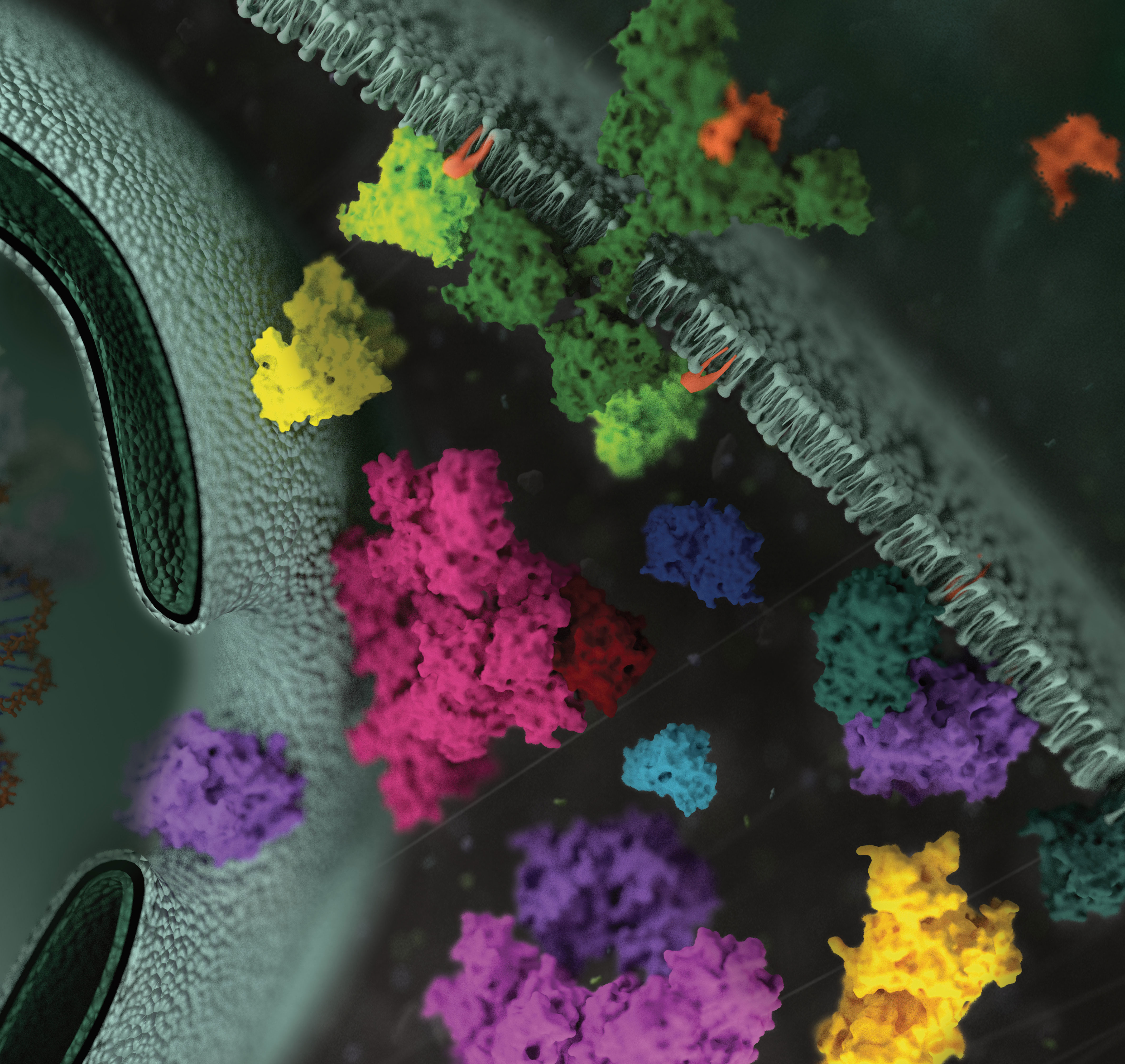
 Protein phosphorylation is the most widespread type of post-translational modification. It affects every basic cellular process, including metabolism, growth, division, differentiation, motility, organelle trafficking, membrane transport, muscle contraction, immunity, learning and memory (1,2). Protein kinases catalyse the transfer of the phosphate from ATP to specific amino acids in proteins. In eukaryotes, these are usually Ser, Thr and Tyr residues. Due to the development of specific phosphopeptide enrichment techniques and highly sensitive MS instruments, phosphoproteomics has enabled researchers to gain a comprehensive view on the dynamics of protein phosphorylation and phosphorylation based signaling networks.
Due to its high cleavage specificity, trypsin is the commonly used proteolytic enzyme in MS-based proteomics, cleaving peptides carboxyterminal of the amino acids lysine and arginine. However, various factors such as the tertiary structure of a protein, adjacent basic amino acids or negatively charged residues close to cleavage sites as well as PTMs are known to impair proteolysis.
To gain closer insights into the impact of phosphorylation on tryptic digestion, a recent publication(3) systematically characterized the digestion efficiency of model peptide sequences that are known to be prone to incomplete digestion.
The results indicated that increasing trypsin concentrations up to a trypsin to peptide ratio of 1:10 led to a significant gain (1) in the overall number of phosphorylation sites (up to 9%) and in the intensities of individual phosphopeptides, thereby improving the sensitivity of phosphopeptide quantification.
The effect of organic solvents (ACN, acetonitrile and TFE trifuorethanol was also evaluated). Positive results were noted with TFE when determining the digestion of individual peptides. However TFE interfered with TiO2 phosphopeptide enrichment and therefore was not recommended for use with complex samples.
- Engholm-Keller, K and Larsen, M.R. (2013) Technologies and challenges in large scale phosphoroproteomics. Proteomics 13, 910–31.
- Beausoleil, S. A. et al. (2010) Tissue-specific atlas of mouse protein phosphorylation and expression. Cell 143, 1174–89.
- Dickhut, C. et al. (2014) Impact of Digestion Conditions on phosphoproteomics. J. Proteome Res. 13, 2761–70.



Latest posts by Promega (see all)
- The Template That Stayed Behind: Why DNA Removal After In Vitro Transcription Is Harder Than It Looks - October 20, 2026
- Where Science Meets Art: 30 Years of the Promega Art Showcase - October 8, 2026
- Internships at Promega: What Did You Learn? - September 1, 2026