
From Content Creators to Communication Partners: The Role of Motion in Scientific Storytelling

Image generated by DALL-E.

Moving Science Forward — Literally

I’ve always believed that the best science stories don’t just inform — they move us. And in many cases, that’s quite literal.

Whether I’m designing a figure for a new assay or animating a step-by-step protocol, I see motion as a bridge that turns complexity into clarity. When used well, that bridge transforms scientific communication from dense and static into something dynamic, visual and memorable.

And it’s not just me — a graphic designer — saying this. Scholars like Daniel Liddle describe motion as a form of visual rhetoric: a way to persuade, clarify and build trust through movement. Motion isn’t just decoration — it’s meaning made visible.

In this post, I’ll explore why motion matters in scientific communication and how animation makes complex ideas easier to grasp. From turning a protocol into a story that sticks to making technical jargon something you can remember, motion design helps science feel more approachable and a lot more memorable.

Continue reading “From Content Creators to Communication Partners: The Role of Motion in Scientific Storytelling”
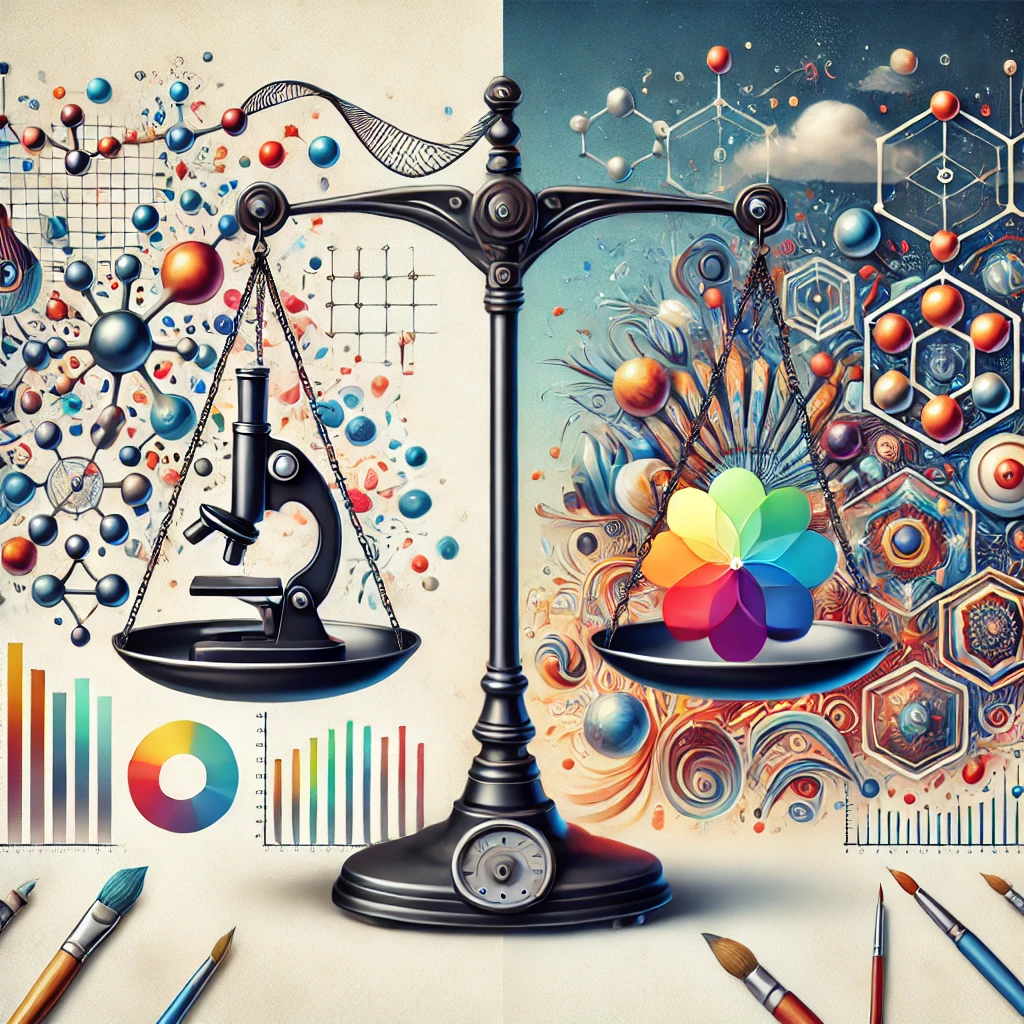

Figure Methodology: The Balance Between Accuracy and Aesthetics

Concept image of the balance between scientific accuracy and aesthetics.
Generated with DALL-E.

In the ever-changing landscape of life sciences, the relationship between science and design remains essential. For example, have you ever read a blog or article overloaded with excessive terminology? Or an advertisement with complex information or graphics? This can be overwhelming and may cause you to miss the key message. Similarly, when an image is overly designed, it risks missing the mark entirely.

Enter the scientific figures. Whether the data is conveyed through complex graphs or scientific illustrations, design plays a vital role in providing clarity to the story. With that in mind, here are a few tips I’ve learned as a designer working with scientists in the life science and healthcare fields that can help you collaborate more effectively:

Continue reading “Figure Methodology: The Balance Between Accuracy and Aesthetics”