Cellular Selectivity Profiling: Unveiling Novel Interactions and More Accurate Compound Specificity

This blog was written by guest contributor Tian Yang, Associate Product Manager, Promega, in collaboration with Kristin Huwiler, Manager, Small Molecule Drug Discovery, Promega.

Determining the selectivity of a compound is critical during chemical probe or drug development. In the case of chemical probes, having a clearly defined mechanism of action and specific on-target activity are needed for a chemical probe to be useful in delineating the function of a biological target of interest in cells. Similarly, optimizing a drug candidate for on-target potency and reducing off-target interactions is important in the drug development process (1,2). A thorough understanding of the selectivity profile of a drug can facilitate drug repurposing, by enabling approved therapeutics to be applied to new indications (3). Interestingly, small molecule drugs do not necessarily require the same selectivity as a chemical probe, since some drugs may benefit from polypharmacology to achieve their desired clinical outcome.

Selectivity profiling panels based on biochemical methods have commonly been used to assess compound specificity for established target classes in drug discovery and chemical probe development. Biochemical assays are target-specific and often quantitative, enabling direct measurements of compound affinities for targets of interest and facilitate comparison of compound engagement to a panel of targets. As an example, several providers offer kinase selectivity profiling services using different assay formats and kinase panels comprised of 100 to 400 kinases (4). However, just as biochemical target engagement does not always translate to cellular activity, selectivity profiles based on biochemical platforms may not reflect compound selectivity in live cells (5).

Continue reading “Cellular Selectivity Profiling: Unveiling Novel Interactions and More Accurate Compound Specificity”


Is Your Lab Environment Messing with Your Results? How to Spot the Signs Early

This blog was contributed by guest Avi Aggarwal, 2025 summer intern at Promega.

If you’ve ever scratched your head over inconsistent experimental results, especially ones that seem to fluctuate for no obvious reasonโ€”youโ€™re not alone. Sometimes the problem isnโ€™t your pipetting, your reagents, or even your protocol. It might be the room itself.

Changes in temperature, humidity, or even invisible dust particles can quietly throw off your results. Something as simple as moving your thermocycler under an air vent or setting up a plate reader where sunlight hits it in the afternoon could cause subtle but significant issues.

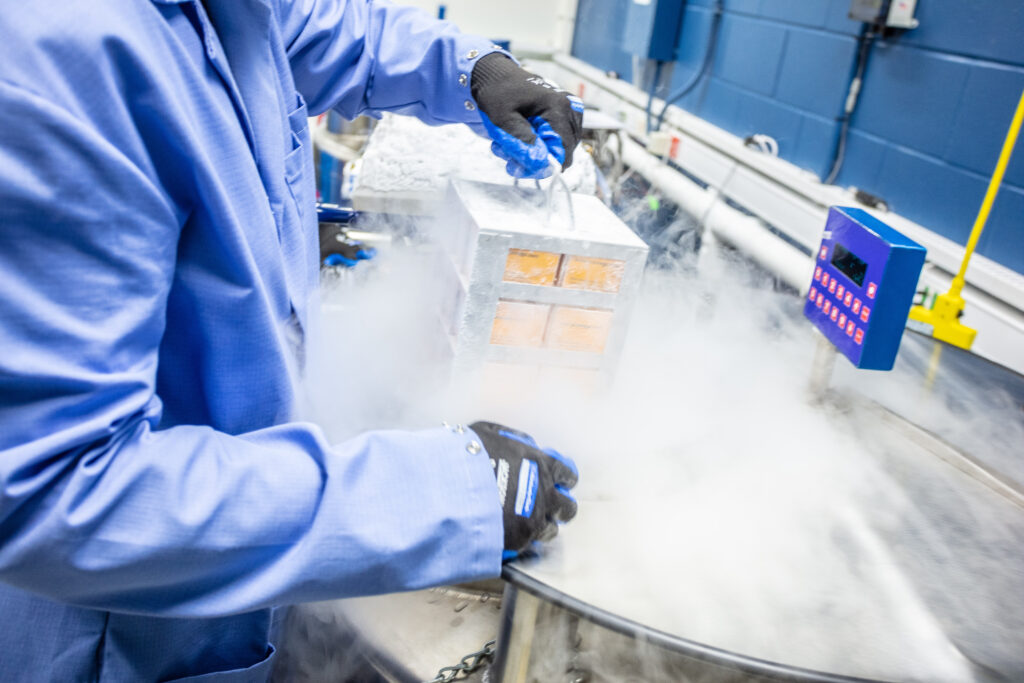
Scientist removes samples from liquid nitrogen tank, affecting the immediate laboratory environment.
Any number of things can affect the laboratory environment, from opening a cryo tank to moving an instrument under an air vent.

Our Project to Learn How Subtle Environmental Changes Can Affect Sensitive Lab Equipment

We spent some time developing an environmental anomaly detection framework aimed at helping scientists understand how subtle environmental changes can affect sensitive lab equipment and experimental results. Our team set out to monitor real-world lab conditions using temperature and humidity sensors, including live testing with a GloMaxยฎ Discover platform and Sensirion SHT45 sensors. We also worked with open-source environmental datasets to simulate a variety of lab-like conditions, such as daily cycles, sudden temperature spikes, and slow humidity drifts.

Continue reading “Is Your Lab Environment Messing with Your Results? How to Spot the Signs Early”

How The OceanOmics Centre is Using the Maxwell RSC to Scale eDNA Biodiversity Monitoring

This blog is written by guest blogger Ben Rushton, Application Specialist/Territory Manager at Promega Australia.

When you’re monitoring marine biodiversity at scale, every drop of seawater tells a story. At Minderoo OceanOmics Centre at the University of Western Australia, scientists are uncovering that story through environmental DNA (eDNA)โ€”and automation is helping them listen more clearly.

Laura Missen, a Scientific Officer at OceanOmics Centre, shares how automating their DNA extraction workflow with the Maxwellยฎ RSC 48 system has transformed how they gather and interpret data from marine ecosystems.

(Image credit: Giacomo d’Orlando / Ronin_Lab)
Continue reading “How The OceanOmics Centre is Using the Maxwell RSC to Scale eDNA Biodiversity Monitoring”

Exploring the Relationship Between IC50 and Kd in Pharmacology

This guest blog post is written by Tian Yang, Associate Product Manager at Promega.

In the realm of chemical probe development and drug discovery, understanding the interactions between drugs/compounds and their targets is crucial. Two frequently used metrics to characterize these interactions are IC50 and Kd, which guide researchers in evaluating the potential of compounds in effecting changes in target function. IC50 offers insights into a compound’s potency by quantifying its ability to inhibit a specific biological activity. Kd provides a measure of the affinity between a ligand and its receptor, reflecting how tightly a compound binds to its target (1). Together, these parameters are instrumental in the early stages of drug development, helping to identify promising candidates by assessing a compoundsโ€™s binding characteristics and its observed efficacy.

Continue reading “Exploring the Relationship Between IC50 and Kd in Pharmacology”

Targeting Epigenetic Regulators in Cancer: The Promise of BET and HDAC Inhibitors

This blog was written in collaboration with Tian Yang, Associate Product Manager at Promega.

Cancer is often driven not only by genetic mutations, but by changes in how genes are turned on or offโ€”epigenetic alterations. Two key players in this space are bromodomain and extra-terminal (BET) proteins and histone deacetylases (HDACs).

BET proteins help activate gene expression by recognizing acetylated lysines on histones, while HDACs remove these acetyl groups, repressing transcription. When these mechanisms become dysregulated, they can promote tumor growth or silence tumor suppressors.

To counteract this dysregulation, researchers have developed inhibitors that target BET proteins and HDACs. While combinations of these drugs have shown synergy, using two separate compounds introduces challenges with dosing, toxicity and pharmacokinetics. Recent efforts have focused on designing multitarget inhibitorsโ€”single molecules that can simultaneously block BET and HDAC activity.

Continue reading “Targeting Epigenetic Regulators in Cancer: The Promise of BET and HDAC Inhibitors”

Drug Target Confirmed? Tivantinibโ€™s Lesson on the Importance of Cellular Target Engagement

This guest blog post is written by Tian Yang, Associate Product Manager at Promega.

There are often challenges with translating results from a test tube into a living system, demanding more physiologically relevant assays. In drug discovery, demonstrating a compoundโ€™s ability to modulate its target protein in live cells is a critical step in the hit-to-lead workflow. A variety of cell-based assays can be used to assess a compoundโ€™s activity in live cells. Take kinase inhibitors as an example, these assays can range from substrate phosphorylation assays that more directly report on the activity of target kinases, to genetic reporter assays or cell viability assays that assess the downstream effects of target modulation.

In the case of Tivantinib, several pieces of data from its development were used to establish its role as an inhibitor of MET kinase. MET Kinase is a prominent target for anti-cancer therapeutics due to frequent MET dysregulation in a wide range of tumors. For example, over-activation of MET drives cancer proliferation and metastasis. In the initial report on Tivantinib, in addition to biochemical activity assays performed with purified MET, the activity of Tivantinib in cells was verified by several methods, including: 1) inhibition of phosphorylation of MET and downstream signaling pathways, 2) cytotoxicity in cancer cell lines expressing MET, and 3) antitumor activity in xenograft mouse models (1). Additionally, a co-crystal structure of the MET-Tivantinib complex was solved, seemingly confirming that Tivantinib is a bona fide MET inhibitor capable of engaging MET in live cells (2). Based on these observations and other pre-clinical data, Tivantinib appeared to be a promising drug candidate and was taken through phase 3 clinical trials targeting cancers with MET overexpression. However, Tivantinib ultimately was not approved as a new therapeutic, failing to show efficacy in these phase 3 clinical trials (3,4).  

Within three years of the initial publication on Tivantinib, two separate articles challenged the mechanism of action in Tivantinib-induced cytotoxicity of tumor cells (5,6). Authors for both articles showed that Tivantinib can kill both MET-addicted and nonaddicted cells with similar potency. Both articles also concluded that perturbation of microtubule dynamics, instead of MET inhibition, is likely responsible for the cytotoxicity observed with Tivantinib. Considering the failed clinical trials and uncertainties regarding the mechanism of action, one may wonder if the original pre-clinical work adequately determined if Tivantinib effectively binds and inhibits MET in cells? If Tivantinibโ€™s cellular engagement to MET was assessed directly rather than by MET phosphorylation analysis, would a different pre-clinical recommendation have been made?

Continue reading “Drug Target Confirmed? Tivantinibโ€™s Lesson on the Importance of Cellular Target Engagement”

Accurate and On-Time: A Look Inside Promega Logistics

Packages move through Kepler Center
Each week, thousands of parcels are shipped to customers from Kepler Center in Madison, WI.

Weโ€™re all used to the convenience of online ordering, whether itโ€™s a last-minute birthday gift or a phone charger delivered overnight. That same ease and speed is what scientists expect when ordering critical reagents for their work. At Promega, we get that. Thatโ€™s why we pledge: Youโ€™ll get what you need, when you need it.

For customers in the United States, any order received by 4:00 pm will be delivered the next day. We measure our success in honoring this pledge using a metric called โ€œorder fill rate.โ€ Our global order fill rate is consistently above our benchmark of 94.5%, sometimes passing 98%.

But how does that actually happen? With thousands of orders leaving our warehouse every week, it takes more than just good intentions. Here’s a look behind the scenes at how our teams deliver on that promise.

Continue reading “Accurate and On-Time: A Look Inside Promega Logistics”

Augmenting Human Capabilities with AI Tools

We hear a lot of stories about AI tools helping people complete tasks more quickly, or automating menial or redundant tasks. However, Promega isnโ€™t just interested in speeding things up. Weโ€™re focused on leveraging AI tools to help us do things better. All over the organization, employees are leveraging large language models (LLMs) and machine learning systems to accomplish things that werenโ€™t possible before, or to make their work more effective against their goals.

Three employees shared their recent successes, including strengthening supervisory skills, scaling up production processes and training new team members. Each of these examples uses AI in a unique way, while still elevating human expertise, creativity and decision-making.

Continue reading “Augmenting Human Capabilities with AI Tools”

Lead with Empathy: Supporting Caregivers in the Workplace

This post is guest-written by Diana Clark, Sr Benefits Manager, Promega


Promega Benefits Manager Diana Clark advocates for policies that support the specific needs of caregivers.

My personal caregiving journey began in my late-30s while raising young children and caring for a terminally ill parent. This period gave me firsthand experience into how difficult it can be to balance all of those responsibilities. I learned about the impossible choices caregivers face, and the toll it can take on a personโ€™s physical, emotional and professional wellbeing.

That personal experience has become a cornerstone of my work as a benefits manager advocating for meaningful, compassionate policies that truly support our employees.

At Promega, we believe people bring their whole selves to work. Supporting caregivers isnโ€™t just an act of kindness โ€“ itโ€™s an investment in our people and culture.

Continue reading “Lead with Empathy: Supporting Caregivers in the Workplace”

Immune Surveillance Meets Innovation: The Critical Need for dsRNA Detection

Todayโ€™s blog is written by guest blogger, Kai Hillman, Associate Product Marketing Manager at Promega.

RNA therapeutics have revolutionized modern medicine, offering groundbreaking solutions for diseases that were once deemed untreatable. These innovative treatments harness the power of RNA molecules to correct genetic anomalies and modulate protein expression, paving the way for personalized medicine. Among the many facets of RNA biology, double-stranded RNA (dsRNA) plays a pivotal role in cellular processes and immune surveillance.

Continue reading “Immune Surveillance Meets Innovation: The Critical Need for dsRNA Detection”