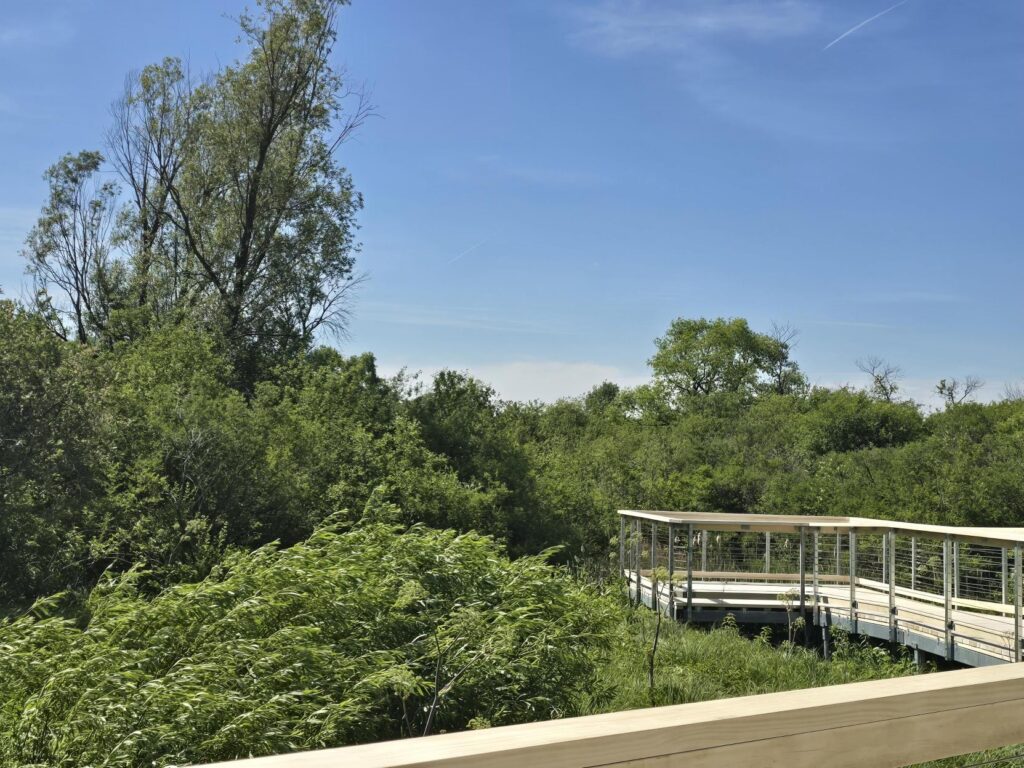
There’s a turkey in the middle of the boardwalk. A large female, she pauses for a while and surveys the wetland around her. Then, with two steps and a hop, she disappears into the tall grasses.
A rose-breasted grosbeak sings from the treeline. Warblers chase each other above the dry remnants of last year’s cattails. And nearby, the namesake artesian springs bubble from the earth as they have year-round, unseen by almost anyone, since before the recorded history of the land begins.
This protected parcel of wetland, called Nevin Springs, plays an important role in the local ecosystem and broader watershed. Now, thanks to a boardwalk built by Promega Corporation, these hidden springs can be accessed and appreciated for the first time.
Preserving Nature at Promega Madison
The Promega Madison campus is approximately 400 acres, and more than half of the land is dedicated to green space, including forests, wetlands and prairie. The company has long prioritized environmental preservation, from the prairie in the center of campus to the hiking and snowshoeing trails that wind through the woods. When new buildings are constructed, lumber harvested from the site is repurposed into art or furniture. The center of the Kornberg Center atrium even features a tree growing out of the ground.
At the north end of the campus, the 72-acre Nevin Springs parcel features rare wetlands and artesian springs. When Wisconsin was first settled in 1833, the area was largely treeless prairie and sedge meadow. The Nevin Springs land was farmed for a short time before being returned to natural wetland. Today, it is part of the Nine Springs E-Way, a seven-mile environmental corridor in Wisconsin’s Dane County that has been protected since 1976.
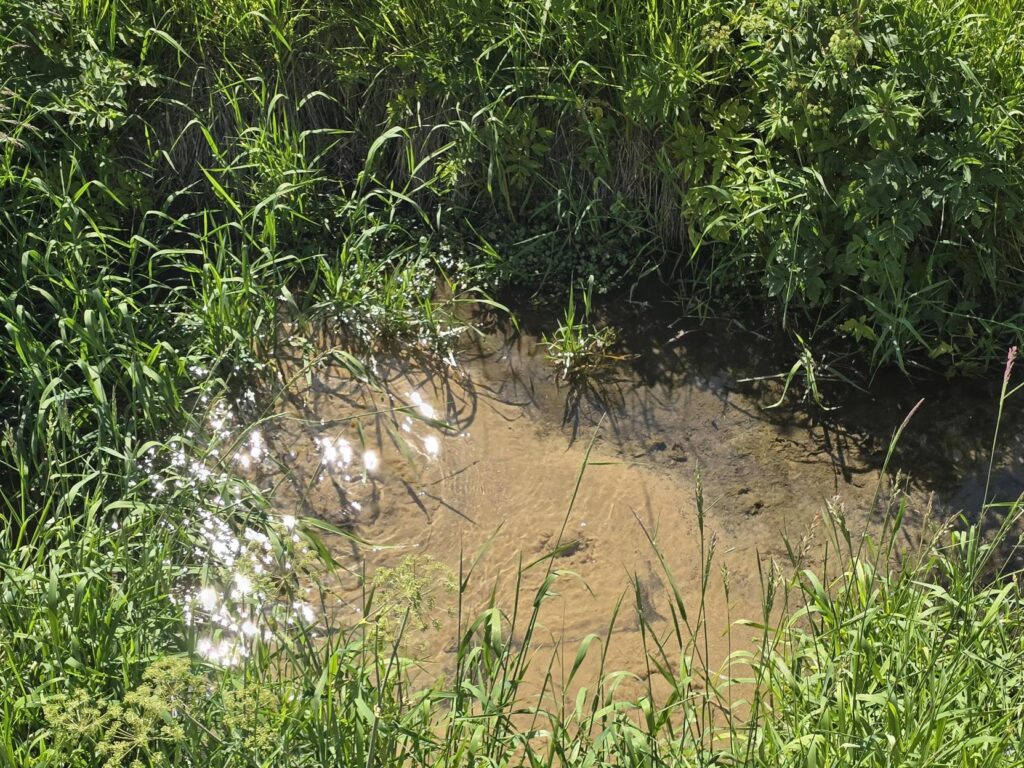
As a wetland, Nevin Springs serves a critical function collecting and naturally filtering stormwater for a large area south of Madison. The basin receives stormwater from a large portion of the surrounding land. Each time it rains in Fitchburg, much of the water slows, filters and re-infiltrates here on its way back to the aquifer. Some of that groundwater bubbles up through the ground, forming artesian springs that flow year-round. The rest contributes to the regional drinking water supply and feeds other nearby waterways.
Nevin Springs contains a calcareous fen, a rare form of wetland that depends on a constant supply of groundwater rich in calcium and magnesium. Calcareous fens offer unique conditions that support a distinctive array of sedges, ferns and other low shrubs, many of which aren’t found in other habitats. The fen is bordered by an oak savannah, which is also an increasingly rare ecosystem featuring scattered oak trees over an understory of prairie grasses and wildflowers. While Wisconsin once supported vast expanses of oak savanna, very little of this habitat remains today.
From Drone Discovery to Public Access
Promega founder and CEO Bill Linton became interested in the inaccessible springs after exploring the area with a drone. As he explored further, he proposed constructing a boardwalk into the habitat so more people could witness their beauty.
Why build a structure that brings people into a wetland that is actively rewilding? The answer, from both builders and ecologists, is that awareness can be a powerful force for protection. When people walk through a place regularly, they notice when something changes. They see changes in the water and vegetation. They spot trash or other disturbances and take steps to mitigate them. Perhaps most importantly, they witness the singular beauty of the springs and surrounding ecosystem and develop a connection that pushes them to be better protectors and stewards of the land.
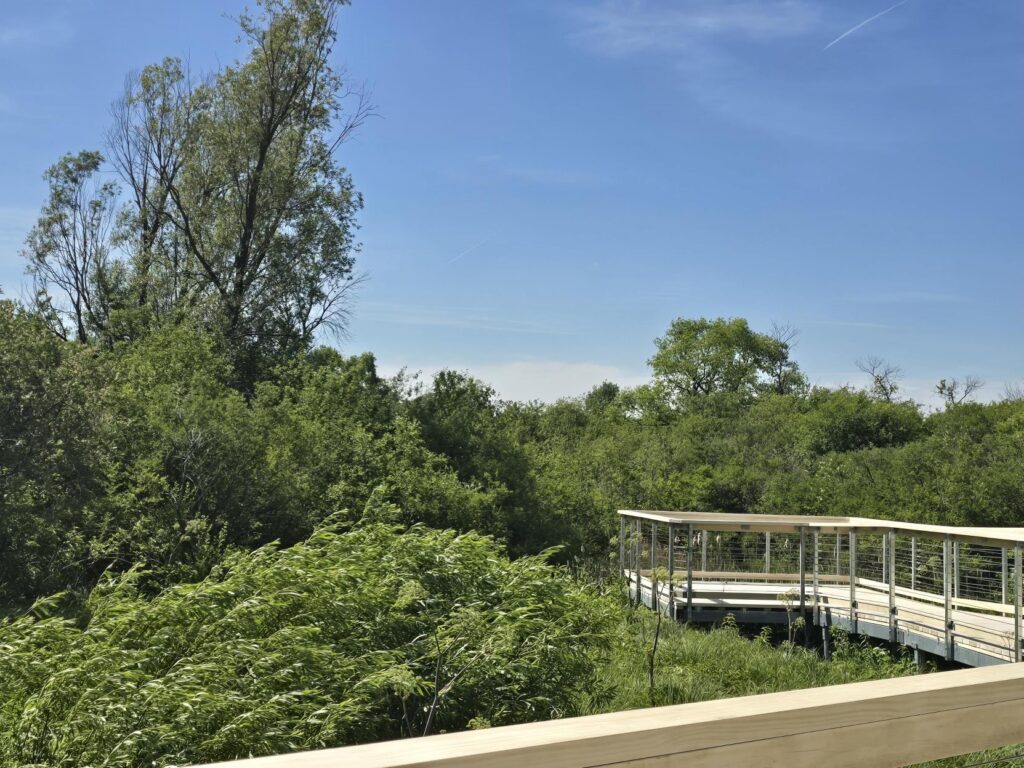
Today, a 720-foot boardwalk runs through the Nevin Springs wetland. It features two lookout points, with one overlooking the artesian springs. The structure is built from steel and Accoya wood, which is treated through a non-toxic chemical process that makes it more durable and safer than native hardwoods for fragile ecosystems. It’s supported by helical piers, which are steel shafts screwed into the ground rather than excavated. This method minimizes soil disturbance and protects the wetland during construction.
Safeguarding Long-Term Preservation
Looking forward, the future of the springs has been legally safeguarded. Working in cooperation with local and state officials, Bill Linton and Promega placed a permanent conservation covenant on the parcel’s title, ensuring the land will never be developed, and that the rewilding that has been happening for decades will continue.
When visiting Nevin Springs, look for watercress in the water below the springs lookout point. Listen for migratory birds stopping in the white oak trees around the perimeter. Ponder the journey water takes as it gathers and bubbles up in the artesian springs. They’ve been here all along, and they’ll continue as long as they’re protected.