The next generation of medicine may not come in a pill or vial — but in a living community of microbes. Scientists at Pharmabiome, a Zurich-based biotechnology company, are leveraging their expertise in microbiome research to create truly “living” therapies.
More Than a Gut Feeling
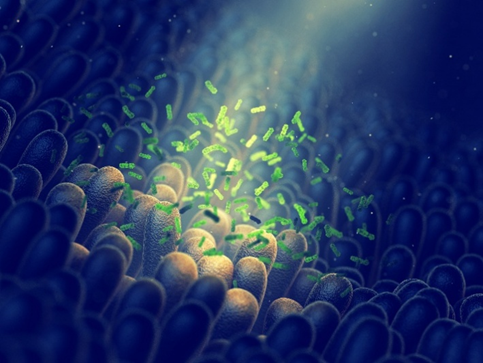
All around us – and inside –exists an entire universe of microscopic organisms commonly referred to as the microbiome. In fact, our body contains more microbes than human cells, working hand in hand to maintain normal physiology. The most heavily colonized part of our body is our gastrointestinal (GI) tract – our gut – housing thousands of different bacteria, viruses and fungi. Collectively termed ‘gut microbiota’, this complex network of microorganisms helps us digest nutrients, produces essential metabolites, protects us against pathogens, and more.
The diverse species in our GI tract co-exist in a dynamic equilibrium, each fulfilling a defined set of functions and interacting with other species through cross-feeding mechanisms that, together, promote gut health. When this delicate balance is perturbed, be it through dietary changes, antibiotic treatments, or other factors, the effect ripples across the body. Increasing evidence suggests that gut dysbiosis actively contributes to pathological conditions ranging from inflammatory bowel disease (IBD) and obesity to neurological and autoimmune disorders. The good news is, as our understanding of gut ecology evolves, so does the potential to harness and reshape the microbiome to improve health.
You Mean… This Treatment Is Alive?!
The growing recognition that our microbiome and overall health are connected has unleashed researchers’ creativity in finding ways to maintain and restore microbial balance. Meaning, to restrict the proliferation of pathogens and detrimental microbes and promote the proliferation of more beneficial species. Fiber-rich diets, fermented foods, or prebiotics, for instance, can support the growth of the “good” bacteria in our gut and potentially prevent pathogens from taking over. Another promising approach has emerged in the form of therapies utilizing living microorganisms. Probably the most widespread is probiotics, which typically consist of one or multiple bacterial strains grown separately and assembled into regimens designed to promote health benefits, usually in a format available without medical prescription. Over the past decade, a more regulated category of live biotherapeutic products (LBPs) aiming to treat infections and other diseases and subjected to the standard clinical development pipeline, has started to gain traction.
Based on practices dating back the fourth century, several companies have examined the potential of transferring stool material from healthy donors, carrying with it a sample of their microbiome, to diseased patients. In 2022, the US Food and Drug Administration (FDA) approved the first microbiome-based therapy, a fecal microbiota transplant (FMT) treatment named REBYOTA (Rebiotix, later acquired by Ferring Pharmaceuticals), to tackle recurrent Clostridioides difficile infection (rCDI). This was shortly followed by the approval of Vowst (Seres Therapeutics), an oral capsule-based fecal microbiota product, to treat the same condition in 2023.
While demonstrating good efficacy in patients, therapeutics derived from fecal matter also present certain drawbacks, such as the heavy reliance on healthy donors, standardization difficulties, and poor characterization of the fecal matter composition raising safety concerns. To address these limitations, researchers are now developing next generation LBPs consisting of more standardized, laboratory-grown bacterial preparations that mirror healthy gut microbiota composition and functions. One such company is PharmaBiome, based in Zurich, Switzerland.
An Encounter with PharmaBiome’s CSO, Dr. Gabriel Leventhal
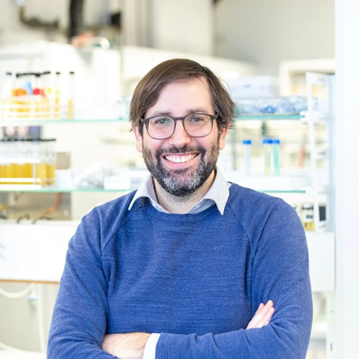
Scientists at PharmaBiome have developed a platform that enables the design, manufacturing and testing of defined bacterial consortia that replicate key functions of a healthy gut microbiota. We recently had the chance to learn more during an interview with Dr. Gabriel Leventhal, Chief Scientific Officer (CSO) and Lead R&D at PharmaBiome. Explore with us how they aim to improve outcomes in diseases linked to dysbiosis by leveraging their deep expertise and proprietary technology.
Can You Tell Us About PharmaBiome’s Technology and Its Potential?
GL: At PharmaBiome, we develop multi-strain bacterial consortia as treatments for gut microbiome-related diseases—so-called live biotherapeutic products. Our goal is to capture the therapeutic effects of fecal microbiota transplantation (FMT), but with a product that conforms to expectations of a pharmaceutical drug: a clearly defined composition and robust producibility at scale.
It is kind of amazing that feces can be successfully used to treat disease—and admittedly unconventional. The gut microbiome is a complex ecosystem where a multitude of different microorganisms interact with each other and with the human host. Unlike conventional drugs that act through chemical mechanisms, microbiome interventions require a whole-ecosystem engineering approach, an integral part of the work we do at PharmaBiome.
Our NicheMap™ technology identifies which functional roles of a microbiome are impaired in disease, in contrast to focusing on single disease-causing bacteria. This directs our approach to designing multi-strain consortium products: bacterial species grown together in co-culture as a ‘little ecosystem’ and acting in unison to achieve and effect.
How Does PharmaBiome Screen For, Select, and Develop the Consortia?
GL: Despite considerable advances in the microbiome field, an important challenge remains: uncovering the causative link—the actual mechanism—of how microbiome composition impacts disease. It isn’t the simple presence of certain microbes that influences disease, but rather their activity, including which compounds they consume and which other ones they produce. Measuring that activity in the relevant biological context, inside the active human GI tract, is extremely challenging.
Because it is based on measured biological data of microbiome activity instead of functional predictions from DNA sequencing data, our NicheMap™ technology addresses this knowledge gap. As bacteria typically behave quite differently when they are together with others than on their own, we perform such measurements in the lab in an assay that incorporates the context of the whole fecal microbiota.
Using NicheMap™, we were able to predict the response of human gut microbiomes to nutritional supplementation (Anthamatten et al. 2023) and identify that human microbiomes stratify based on their ‘succinotype’—the taxonomic identity of the succinate-consuming bacterium (Anthamatten et al. 2024). The NicheMap™ database is used to do two things: functionally interpret patterns of dysbiotic microbiome composition in disease and guide the selection of strains to include in our multi-strain consortia.
What Are the Potential Applications for Your Technology and Which Therapeutic Areas Could Benefit From It?
GL: Our ultimate goal is to develop microbiome drugs with an as clearly defined mechanism of action as conventional drugs—the same way we know which enzymes are inhibited by aspirin or that penicillin kills bacteria by blocking cell wall synthesis. While microbiome-based therapy approaches work, we are somewhat blind to how exactly, and we cannot fully predict how their pharmacology plays out in humans.
This is why we’ve put a focus on building a drug development platform that identifies clear mechanistic disease targets that we can measure and quantify, enabling better control over the translation of our products from the lab into patients. This degree of pharmacological rigor becomes increasingly important when we move away from the diseases where fecal transplants work well to those where they work only sometimes—think inflammatory diseases and cancer treatments, where we can start to describe ‘why’ and develop a more targeted and controlled approach.
How Can LBPs Make a Difference for Patients and Disease Management?
GL: The microbiome represents a new frontier for modern medicine. Traditional therapies typically focus on “fixing” problems by modifying the human body, for example clearing clogged arteries, removing pathogens, or even editing defects to our genetic code. The microbiome is fundamentally different in that it functions as an essential ‘support system’—both integral to the functioning and health of our bodies, and external to us. While we don’t have full control over which bacteria live inside our guts, we can control the environment that microbes experience there, which might favor some strains more and others less.
When this dynamic support system is out of balance, it can negatively impact all aspects of our health. Restoring balance requires approaches that go beyond conventional pharmacology, but with the same scientific rigor. It prompts us to develop new tools and strategies that enable success for interventions in our gut microbiome ecosystem.
What Are Current Trends and How Is the LBP Market Evolving?
GL: Many diseases for which microbiome treatments are currently being developed lack effective alternative therapies. Therefore, the potential impact for these patients is profound. Public awareness of gut health is increasing; yet, because microbiome interventions involve complex ecosystems, there is still some hesitancy rooted in our limited understanding of how FMT works. A key step will come with more mechanistic insights and targeted microbiome products.
Read the full interview here to discover more.
References
- Pribyl, A.L., Hugenholtz, P., and Cooper, M.A. (2025) A decade of advances in human gut microbiome-derived biotherapeutics. Nat. Microbiol. 10(2), 301-312
- Hitch, T.C.A. et al. (2022) Microbiome-based interventions to modulate gut ecology and the immune system. Mucosal Immunol. 15(6), 1095-1113
- IQVIA (2023) Bigger on the Inside: The Expanding World of Microbiome Therapeutics. White Paper.
- Pitashny, M. et al. (2024) The Future of Microbiome Therapeutics. Drugs, 85(2), 117-125
- Hou, K. et al. (2022) Microbiota in health and diseases. Signal transduction and targeted therapy, 7(12):135
- Gebrayel, P. et al. (2022) Microbiota medicine: towards clinical revolution. Journal of Translational Medicine, 20(1):111
The invisible world of microbes not only inspires scientists to develop new therapies, it also speaks to their artistic soul. Microbiomes and microbial interactions are showcased in two of the winning artworks in Promega Switzerland’s 2025 Art+Science contest.

Nour Mozaffari
Latest posts by Nour Mozaffari (see all)
- Therapeutics Come Alive: An Interview with PharmaBiome - November 12, 2025
- From PhD to Communications in Four Phases: A Practical Guide to Uncover your Career Skills - January 30, 2025