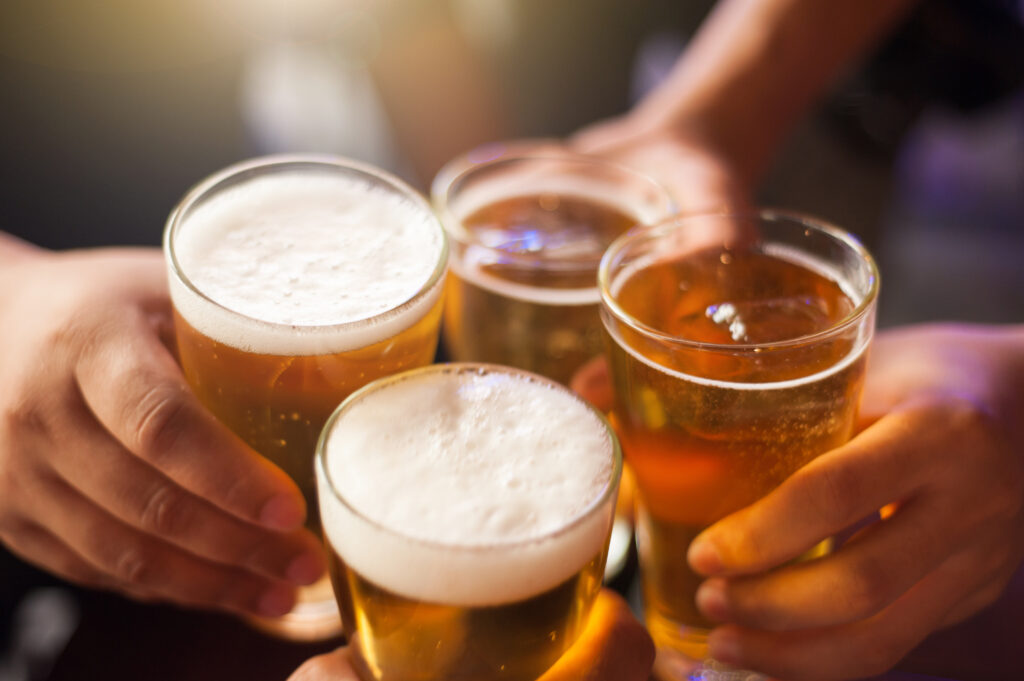
What if a vaccine didn’t come in a vial or a syringe, but in a pint glass?
It’s the kind of question that sounds hypothetical–something meant to provoke discussion rather than describe a real experiment. And yet, it’s one that a virologist claims to have taken seriously enough to test in his own kitchen.
Since publicly sharing his experiment and preliminary results, the idea of “vaccine beer” has drawn fascination, skepticism and no small amount of discomfort from across the scientific community.
The Origin of Vaccine Beer
The story centers on Dr. Chris Buck, a virologist at the U.S. National Cancer Institute whose research focuses on polyomaviruses–a family of viruses that infect up to 91 percept of people by the time they turn 9 years old, often without causing symptoms. One of these, BK polyomavirus, usually remains dormant and harmless. But when the immune system is weakened, the virus can reactivate, leading to kidney damage, painful bladder inflammation and serious complications for transplant recipients and other immunocompromised patients.
Buck engineered brewer’s yeast (Saccharomyces cerevisiae) to produce harmless viral proteins from BK polyomavirus. He then used that yeast to ferment beer, creating a drink that, in theory, could expose the immune system to viral antigens without causing infection. After drinking the beer himself, Buck reported that his body produced antibodies against the virus.
The appeal of the idea is clear: an oral vaccine that doesn’t require needles, refrigeration or complex medical infrastructure. In theory, such an approach could make immunization cheaper, easier and more accessible–especially in low resource settings.
A DIY Experiment Outside the Lab
What makes this story especially controversial is how it unfolded. Buck initially sought approval to test the beer under formal research protocols but was denied by ethics committees. Instead of abandoning the idea, he pursued it independently.
He founded a nonprofit organization and brewed the beer at home. Buck, his brother and a small number of others consumed it, reporting no adverse effects. Blood tests suggested that Buck developed antibodies against multiple strains of BK polyomavirus–levels he believes could be clinically meaningful. According to data Buck shared publicly, his own antibody levels increased against BK polyomavirus subtypes II and IV after drinking the beer; subtype IV was the primary target of the experimental brew.
Rather than waiting for peer-reviewed publication, Buck released his methods and preliminary data publicly through online repositories and blog posts. While the approach reflects a commitment to transparency, it also bypassed many of the safeguards typically associated with biomedical research.
Why Some Scientists Are Concerned
The reactions from the scientific and medical communities have been mixed.
Lack of Clinical Trials
Traditional vaccines undergo years of testing, including large-scale human trials designed to evaluate safety, dosing and effectiveness. The vaccine beer experiment involved only a handful of people and lacked control groups, making it impossible to draw firm conclusions.
Ethical and Regulatory Issues
Some bioethicists argue that self-experimentation and public dissemination of unverified results could undermine trust in science–particularly in vaccines. In a time when misinformation and skepticism are already widespread, critics worry that unconventional experiments could be misinterpreted or misused.
Public Perception Risks
A vaccine delivered through beer blurs the line between medical intervention and novelty. While that may make the concept feel more approachable to some, others fear it trivializes vaccination or encourages unsafe DIY experimentation.
The Case for Thinking Differently
Despite the criticism, Buck’s work has also attracted interest from researchers who see potential in edible or drinkable vaccines. Oral vaccines already exist for diseases like polio and cholera, proving that immune protection doesn’t always require an injection.
Buck has emphasized that beer is just one possible delivery vehicle. The same yeast-based approach could, in principle, be incorporated into non-alcoholic foods or beverages, such as yogurt or nutritional supplements. His broader vision is not about alcohol, but about reimagining how vaccines could be distributed and administered.
Where Things Stand Now
At present, vaccine beer remains firmly outside mainstream medicine. The concept has not been validated through peer-reviewed clinical trials, regulatory agencies have not approved it for medical use and Buck himself continues to pursue more conventional vaccine approaches within established research frameworks.
At the same time, the idea has prompted broader debate. The vaccine beer story sits at the intersection of creativity and controversy, raising questions about how far scientific self-experimentation should go, where transparency ends and irresponsibility begins, and whether unconventional approaches can expand access to public-health tools without undermining trust.
In other words, no one should expect to replace their flu shot with a trip to the taproom anytime soon. But the experiment has opened a broader conversation about how vaccines might be designed, delivered and made more accessible in the future.

Sara Millevolte
Latest posts by Sara Millevolte (see all)
- From Gum Disease to Breast Cancer: An Oral Bacterium’s Unexpected Journey - February 10, 2026
- Brewing Immunity: The Vaccine Beer Experiment - January 13, 2026
- Life on Mars? Proteomic Secrets of Bacterial Survival in Martian Brines - December 11, 2025

2 comments