Connecticut is a small yet ecologically interesting state. Over 85% of the human population lives in cities, yet more than 60% of the land is covered by forest, creating a diverse mix of habitats where wildlife and urban life overlap. In this landscape, bobcats have staged an impressive comeback over the past several decades, reclaiming their role as one of the region’s top predators. But as bobcat numbers rise, a quieter story is unfolding alongside them: the New England cottontail, the region’s only native rabbit, is vanishing.
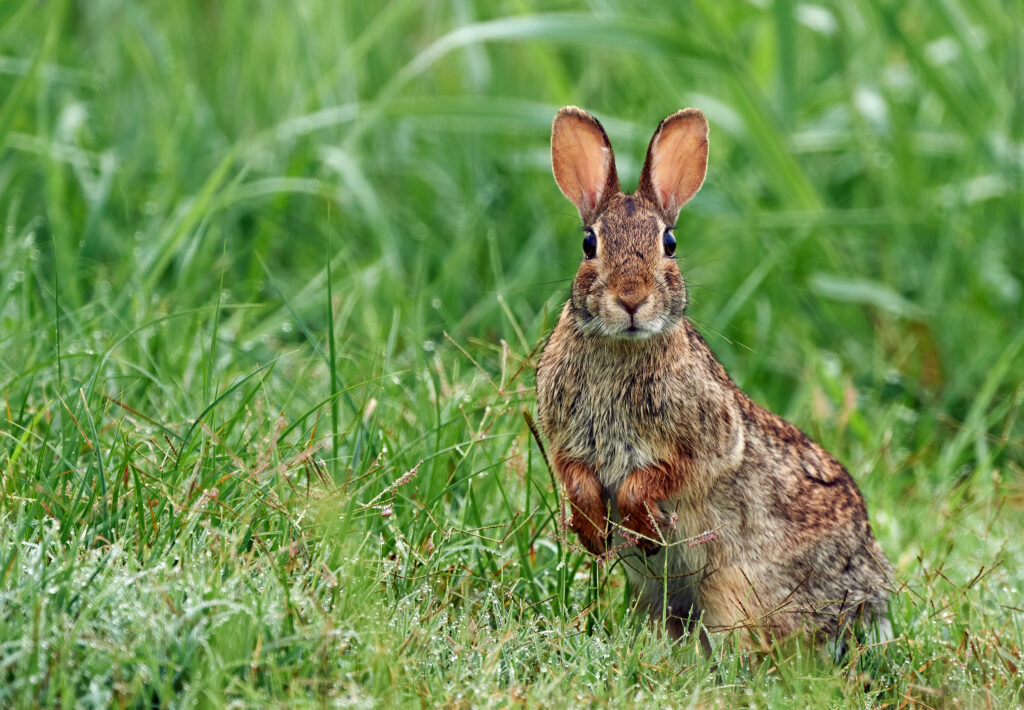
The New England cottontail has lost roughly 86% of its historic range, driven primarily by habitat loss and competition from the introduced eastern cottontail, a generalist species brought in by hunting clubs in the early 1900s. Only about five small, isolated populations remain, two of them in Connecticut. As predators like bobcats rebound in the same landscapes where these rabbits are struggling, understanding what bobcats eat and specifically, whether they’re eating New England cottontails, matters for conservation.
The problem is that studying bobcat diets is notoriously difficult. Bobcats are elusive, and traditional approaches like picking through scat for bone fragments and fur can only identify prey that hasn’t been fully digested. These methods also can’t reliably distinguish between the two cottontail species, which look nearly identical even to trained eyes. In this blog, we will look at how one research team used an unexpected sample source and modern molecular methods to get a clearer picture of bobcat diets and what their findings mean for the New England cottontail.
Roadkill As A Research Opportunity
Researchers at the University of Connecticut and Fordham University recently published a study in PLOS ONE that took a different approach than the traditional morphological sorting methods used in previous diet studies1. Instead of tracking live bobcats or collecting scat, the team turned to an unexpected and even renewable resource: roadkill. Working with the Connecticut Department of Energy and Environmental Protection, they collected bobcat carcasses from roads across the state, extracted samples from their stomachs and used a common practice in molecular biology, DNA metabarcoding, to identify every species present in the stomach contents.
DNA metabarcoding works by amplifying a short, universal genetic marker from a mixed sample and sequencing that region to identify all the species present. Unlike morphological analysis, which relies on recognizable physical remains, metabarcoding can detect prey DNA even after significant digestion has occurred. More importantly, DNA metabarcoding allows researchers to sample without knowing in advance what species might be present.
Decoding the Bobcat Diet
The team analyzed 63 bobcat stomach samples, and the results painted a detailed portrait of what Connecticut’s bobcats are eating. Cottontail species and eastern gray squirrel each showed up in over 80% of samples—the highest frequency reported in the literature for either prey type. Continuing the small mammal diet, researchers also found eastern meadow voles appeared in 41% of samples. Seeming to move on to big game, researchers also found nearly a third of bobcats had consumed white-tailed deer. In total, they found 14 unique prey species across the 63 bobcat samples, with individual bobcats eating anywhere from one to seven species.
One of the more surprising findings was the relatively high frequency of semi-aquatic mammals. Muskrat appeared in about 16% of samples and American mink in 11%. Both results were considerably higher than previous diet studies have reported. Bobcats aren’t typically thought of as hunters of wetland species, but Connecticut’s landscape is interspersed with wetlands, a non-tidal, inland freshwater ecosystem. Researchers in this study suggest that bobcats may be hunting opportunistically in and around these habitats more than what was previously thought.
Pet owners can breathe a sigh of relief as no domestic dog or cat DNA was detected in any of the samples.
The Cottontail Question
This study demonstrates the power of pairing an opportunistic sample source like roadkill with modern molecular tools. DNA metabarcoding provided a more complete picture of bobcat diet than traditional methods, increasing cottontail detection roughly threefold compared to morphological sorting alone. PCR amplification for this study was performed using the GoTaq Green Master Mix (Promega), and the species-specific cottontail analysis relied on Sanger sequencing of a diagnostic mitochondrial region.
As the authors note, generalist predators like bobcats function as “biodiversity capsules” with their stomach contents reflecting the prey communities available on the landscape. By reading those capsules, researchers can learn not just what bobcats eat, but what’s out there to be eaten.
References
- Hughes, K.A. et al. DNA metabarcoding on roadkill stomach contents reveals the breadth of species present in bobcat diets. PLOS ONE 21(3): e0344976 (2026). https://doi.org/10.1371/journal.pone.0344976 ↩︎

Anna Bennett
Latest posts by Anna Bennett (see all)
- Down the Rabbit Hole: The Search for New England’s Disappearing Cottontail - March 31, 2026
- How Enzymes Are Powering A New Generation of Micro-Robots - February 24, 2026
- A New View of Protein Degradation with HiBiT and Live Cell Imaging - September 23, 2025