A Clean Brain Is a Healthy Brain

College student sleeping instead of studying
Can you sleep your way to a “cleaner” brain?
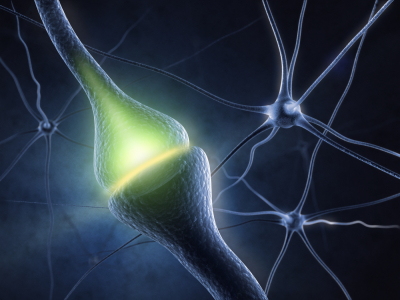
It is hard to undermine the role of cleanliness in disease prevention, both internally and externally. Within our body, the lymphatic system plays an important role in clearing the intercellular passages of large and potentially harmful toxic molecules and recirculate back into the blood stream. This enables the transport of these molecules to liver for inactivation and subsequent removal from the body. Therefore, lymphatic system prevents build-up of soluble proteins in the interstitial space. Typically, more metabolically active a cell is, more intricate is the lymphatic vasculature around it. This observation was in contrast to our scientific knowledge a few years ago, when we believed that due to the presence of the blood-brain barrier, there was no lymphatic system active in the brain. The brain, as we know, is highly active metabolically and the removal of harmful solutes and proteins from the neuronal vicinity is of utmost urgency. For a long time it was believed that cerebrospinal fluid (CSF), while coursing through the brain also removed cellular metabolite by products, apart from carrying nutrients to brain tissue, through a process known as diffusion. This is a rather slow process and it did not very well explain how large molecules such as proteins were removed from the interstitial place.

Recently, using two-photon imaging technique in live mice, scientists at Rochester discovered (1) that there is another vasculature functioning in the brain which circulates CSF to every corner of the brain much more efficiently, through bulk flow or convection. Continue reading “A Clean Brain Is a Healthy Brain”

Music and the Brain: A Fun Friday Find

Notes and Neurons: In Search of the Common Chorus is a great discussion from World Science Fair 2009. Have you ever been driving along listening to the radio and suddenly a song plays and transports you to a different time or place? Have you ever wondered at the way music stirs your memories and emotion? Or have you ever stopped to think about how music, in its admittedly different forms, has been an integral part human of culture for as far back as we can study? Does music speak a particular primordial language that we all understand?

In this presentation Bobby McFerrin and three neuroscientists discuss the way the brain gets involved in music–the listening, physicality, participation and emotion. Essentially, music is a “whole nervous system activity”, involving many parts of the central nervous system that function nearly simultaneously. At one point in the talk pitch, tambre and rhythm defined and demonstrated. The researchers point out that certain intervals in music such as the minor third are prevalent in speech associated with negative emotions, but that no positive emotions are associated universally with a particular pitch.

The link to the full length presentation is here:Notes and Neurons.

But for fun today, get your whole brain involved and join Bobby McFerrin in this demonstration of the universality of the pentatonic scale.
[youtube http://www.youtube.com/watch?v=ne6tB2KiZuk&w=560&h=315]

Sleep Well Today to Learn Well Tomorrow

World War II Poster
Sleep, defined as a state of reversible disconnect from the environment (1), is an integral part of life. In this fast-paced life, you might think of sleep as a waste of time and unnecessary, impinging on productivity. But, nothing can be farther than the truth. Sleep researchers around the world are trying to understand what is the most important physiological function of sleep. It is too simplistic to say that sleep rests the brain, and it is not entirely true since neuronal activity in many parts of the brain do not slow down appreciably during sleep. So, what does sleep do? Continue reading “Sleep Well Today to Learn Well Tomorrow”

A Food for Happiness? Go Fish

Salmon, smoked
Salmon is a good source of omega-3 fatty acids.

We’ve heard that omega-3 fatty acids, such as those from various fish sources, have important anti-inflammatory, as well as cardiac health benefits.

In fact, WebMD has an Omega-3 Fatty Acid Fact Sheet with so much positive health information that you may add “Buy wild-caught salmon” to your list of things to do on the way home tonight.

In other words, eating fish is a no-brainer, right? Continue reading “A Food for Happiness? Go Fish”

Seeing the Potential

neuronal signalingI had never heard of Halorubrum sodomense until a few days ago. It’s name describes it pretty well, it is a salt-tolerant (Halophilic) organism that contains the red-colored photosynthetic pigment archaerhodopsin, and it was originally isolated from the region of Sodom near the Dead Sea. It’s an organism that is well-known only to those with reason to study it. Many of the rest of us will never have cause to say its name, or to even remember it, and may even occasionally wonder why it is studied at all.

Halorubrum sodomense was in the news recently because a genetically engineered form of its rhodopsin was used to create a method that lights up mammalian neurons as they fire. This exciting development was reported in a paper by Kralj et al, published in the Nov 27 issue of Nature Methods. Continue reading “Seeing the Potential”

The Makings Of A Cerebral Music Decoder

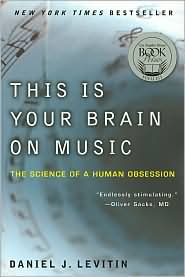
A Review Of Daniel Levitin’s This Is Your Brain On Music

ISBN: 978-0-452-28852-2

Physicist Emerson Pugh once quipped, “if the human brain were so simple that we could understand it, we would be so simple that we couldn’t” [1]. In his book This Is Your Brain On Music neuroscientist Daniel Levitin notes how the number of ways that brain neurons can connect is so vast that we will never fully comprehend all the thought processes that we are capable of.

In recent years, mapping techniques have revealed a lot about the functional regions of the brain. Wernicke’s area is responsible for language processing, the motor cortex for physical movement and frontal lobes for generating personalities. Both encephalography and MRI have given us key spatial-temporal data about brain function in these regions. But we also find that activities such as listening to music contravene such a simplistic compartmentalization.

In fact the perception of pitch, tempo, the emotions invoked by a piece of music and the lyrics of a song all use different parts of the brain albeit simultaneously. Levitin repeatedly emphasizes the multi-faceted aspects of the music ‘experience’ noting how a, “precision choreography of neurochemical release and uptake” leads to our appreciation of music. The brain is thus a massively parallel device, capable of carrying out several different tasks at once.

Continue reading “The Makings Of A Cerebral Music Decoder”