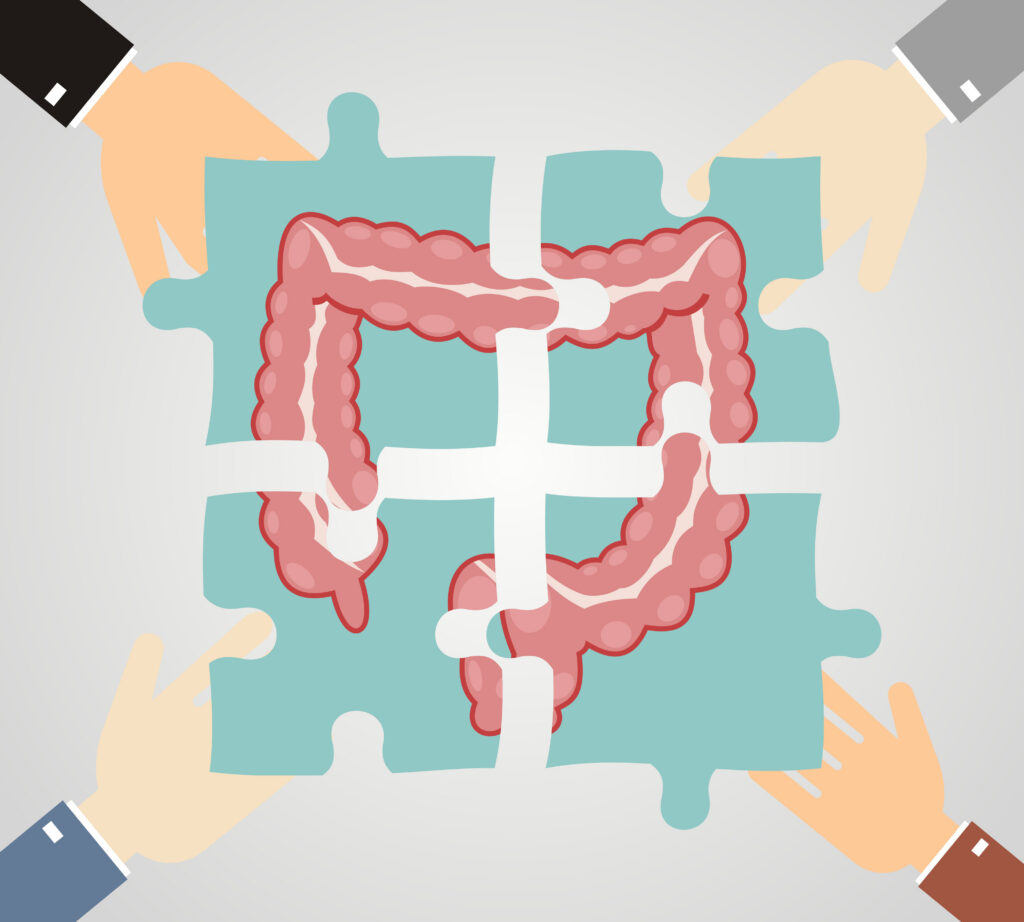
If you’ve read anything about the gut microbiome in the last decade, you’ve probably encountered a familiar setup: researchers collect stool samples, sequence the microbial DNA, and draw conclusions about gut health based on what microbes populate the gut. It’s a practical approach because stool is relatively easy to collect and doesn’t require invasive procedures. But how well does a stool sample represent the health of the entire intestinal tract?
A team of researchers at the Quadram Institute Bioscience and UK Health Security Agency set out to answer this question in primates1. They characterized the intestinal microbiome of cynomolgus macaques, a primate commonly used in biomedical research because of its genetic and physiological similarities to humans. Rather than relying on stool alone, the team collected samples from six distinct regions along the intestinal tract in 24 captive-bred animals ranging in age from 4 to 20 years.