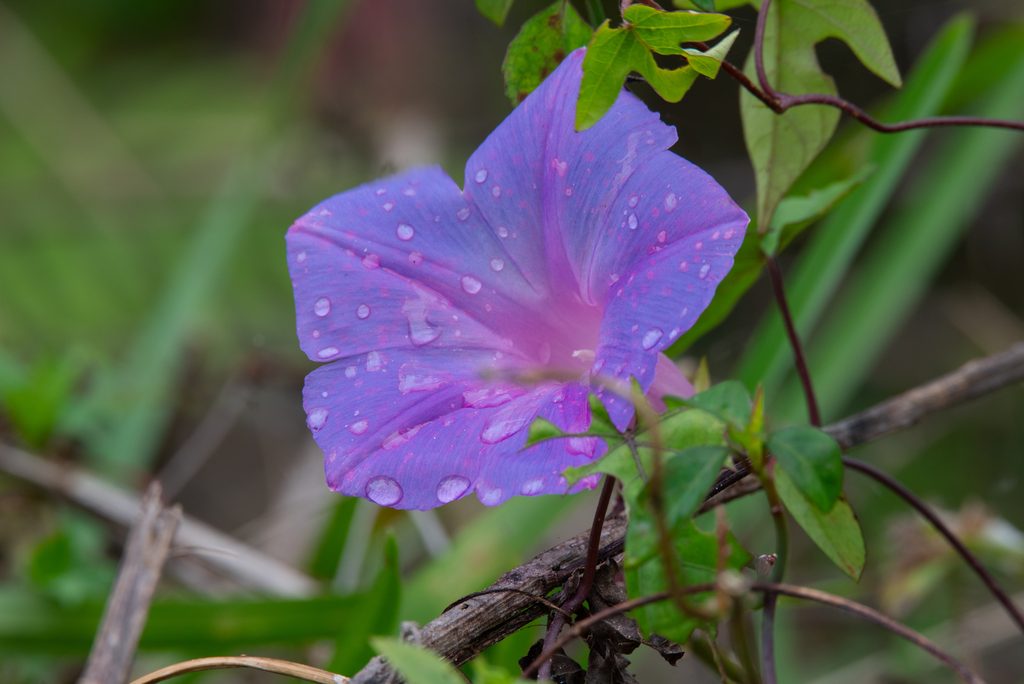
When I first learned about Mendel and his garden peas, I was fascinated. I was amazed that Mendel developed the proposals of dominant and recessive inheritance of traits from a single “factor” called a gene simply from looking at the segregation patterns of traits like flower and pea pod color. I probably also romanticized the idea of a monk peacefully crossing garden peas.
Recently, I encountered a plant genetics paper that investigated anthocyanin-based pigmentation in the Ivy-leaf morning glory, published by Hernandez and colleagues in Heredity (1). This study began with an observation of one family of the Ivy-leaf morning glory that had white flowers and had no visible anthocyanin-derived pigments on any part of the plant (2). Now, this one white-flowered Ivy-leaf morning glory has allowed the description of a mutation that eliminates the production of anthocyanins without affecting upstream branches of the anthocyanin pathway, giving scientists a way to understand the role of anthocyanins in plants.