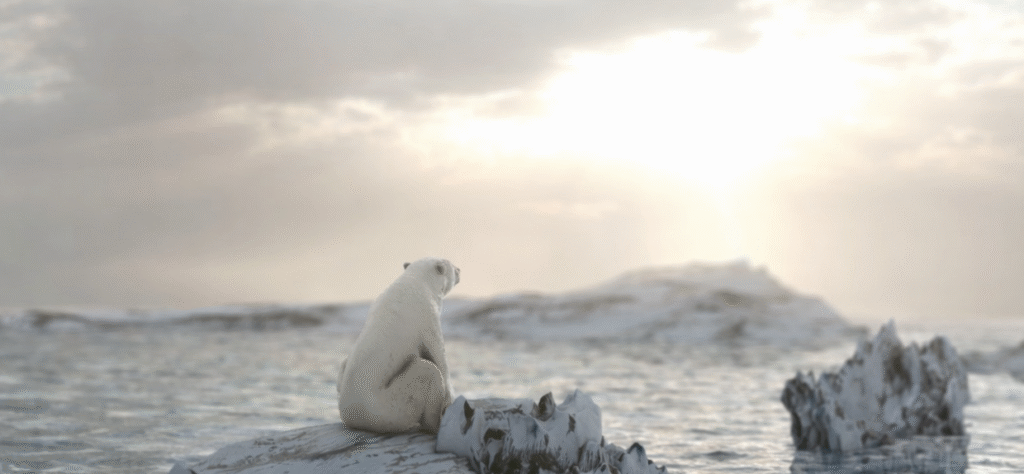
When you think about climate change in the Arctic, you might imagine melting sea ice or maybe hungry polar bears. After all, polar bears depend on sea ice to hunt seals, and seals are their main source of energy. The negative effects of decreasing sea ice on polar bear body condition index (BCI), survival and reproduction have been documented in polar bear populations from regions such as the Western Hudson Bay and the Southern Beaufort Sea. So, when researchers started studying the polar bears in Svalbard, Norway (Barents Sea region), which is losing sea ice at a faster rate than any other region, they expected the BCI of those bears would also be declining. Except it isn’t.
What Did the Researchers Study?
In this long-term study, the team analyzed over 20 years of data (1995–2019) from more than 700 adult polar bears captured in the Svalbard region. Each spring, researchers measured body size and girth and used those values to calculate a body condition index (BCI), which is a way to estimate how much fat reserve a bear has. Declines in body condition of animals in the wild is often an early warning signal that the population could be at risk. If food becomes scarce or hunting gets harder, body condition usually declines before other indicators such as reproductive success or survival.
Unexpected Results: the Body Condition of the Svalbard Region’s Polar Bears Didn’t Decline
Instead of a steady drop in body condition, the researchers saw something different:
- Body condition declined slightly in the late 1990s
- After ~2000, body condition stayed stable or improved through the next two decades
This pattern held for both males and females, despite the larger energy needs of females for reproduction. The authors suggested three key factors that might be contributing to the Svalbard polar bears maintaining BCI despite sea ice loss (for now): flexible diet, high payoff feeding windows and geographic region.
It’s All in the Diet
While polar bears diets are largely supported by hunting ringed seals, bears in Svalbard have become increasingly opportunistic. Their food sources include, Bearded seals, which can be hunted even when sea ice is sparse; harbor seals, who continue to expand their range northward with warming conditions; bird eggs and seabirds that are plentiful in the summer; the growing Svalbard reindeer population; walrus and whale carcasses, which can be huge energy sources. Together, these food sources may help offset reduced access to ice-associated seals.
Because polar bears gain most of their annual energy stores in just the spring months, the prey density during this critical window can have a large impact. If prey density is high, bears may still build enough fat—even when the hunting season is shorter. The authors suggest that in some years, less ice doesn’t necessarily mean fewer seals— in fact hunting efficiency might be higher under certain conditions.
Location, Location, Location
Even within the Svalbard region, the researchers found strong spatial patterns in BCI based on the bear’s location within the region. The bears in southern and eastern Svalbard tended to be in better condition than bears in northwestern Svalbard. It is likely that these differences result from variations in habitat, prey availability and ecotype (whether the bears are pelagic bears that follow the ice, or costal bears that or stay local year-round). Northwestern Svalbard is mainly occupied by local coastal bears, whereas the southern and eastern regions have more pelagic bears. This suggests that local habitat and prey availability—rather than bear ecotype—is likely driving the spatial differences in condition. These distinctions could also help explain why averaging results across the Arctic could be misleading.
Why Are the Svalbard Results Differ from Studies in Other Regions?
The perception that melting sea ice is causing problems with polar bear populations is not unfounded. In places like Western Hudson Bay and the Southern Beaufort Sea, declining sea ice has been linked to poorer body condition, reduced survival and lower reproductive success.
So why is Svalbard different? The authors point to several key contrasts between Svalbard and other areas. In many regions, polar bears depend heavily on ringed seals as a food source and have very few alternatives, whereas the Svalbard bears have access to more diverse food options on land and nearshore. This is partially do topographical differences between the Svalbard region and regions that are seeing declining bear BCI. The Barents Sea contains a large, shallow continental shelf, and thereby supports a larger, more divers marine population.
The bear population size itself could be a contributing factor. The Barents Sea polar bear population was also heavily overhunted until the 1970s, so it is likely that the population is still recovering meaning the bears have less competition for food than those in populations that are at or over capacity.
Finally, the authors note that sea ice quality and dynamics, not just quantity, make a difference. Climate patterns like the Arctic Oscillation could influence changes in ice movement, thickness and the presence of open leads. These could improve seal accessibility even in years with less total ice.
What Does It All Mean?
The results of this long-term study, while encouraging for the Svalbard bears, offer a cautionary tale. It shows the danger of extrapolating results from one ecosystem to another and highlights the importance of localized long-term monitoring as the Arctic continues to warm. By showing a more nuanced picture of the impact of climate change, we see the importance of the local ecology on population outcomes. It is important to note that these findings do not imply that sea ice loss is harmless. The Barents Sea lost sea ice at a rate of 4 days per year between 1979 and 2014. This was faster than any other polar bear region on Earth. These results don’t mean that the polar bears of the Barents Sea will continue to thrive. They do illustrate that there is no “one size fits all” outcome; that ecological consequences of climate change unfold differently across different regions. This study doesn’t mean sea ice loss is harmless—but it does show why long-term, region-specific research matters when predicting the future of Arctic species.
Reference
- Aars, J., Ieno, E.N., Andersen, M. et al. (2026) Body condition among Svalbard Polar bears Ursus maritimus during a period of rapid loss of sea ice. Sci Rep 16, 2182.

Kelly Grooms
Latest posts by Kelly Grooms (see all)
- Polar Bears, Shrinking Sea Ice and a Scientific Surprise - February 5, 2026
- From Forever Chemicals to Ancient Proteins: Five Science Stories from 2025 - January 8, 2026
- World Wildlife Conservation Day: Reflecting on the Role of Science in Protecting Threatened or Endangered Species and Ecosystems - December 4, 2025
