Bones and Blood: Uncovering History Through DNA

Halloween invites us to look beneath the surface—to find the stories hidden in bones, blood, and the echoes of the past. Science, too, has its own way of conjuring the long dead, not through spells but through DNA analysis. The three Promega Connections blogs highlighted below revisit centuries-old mysteries, using modern genetics to reveal the truths hidden where legend once ruled.

The Bones of a King: Richard III

Under a modern car park in Leicester, England, archaeologists uncovered bones twisted by scoliosis and scarred by battle. Could these truly belong to the infamous Richard III? DNA evidence answered with haunting precision in “King Richard III Identified.”

Mitochondrial DNA matched that of a living descendant of Richard’s sister, confirming the king’s identity more than 500 years after his death. Beyond solving a royal mystery, genetic analysis gave historians a clearer picture of the much-maligned monarch—his appearance, stature, and final violent moments. The same technology that identified Richard III may one day reveal the fate of his murdered nephews, the “Princes in the Tower.” Even as bones turn to dust, DNA keeps their stories alive.

Continue reading “Bones and Blood: Uncovering History Through DNA”

Matching Luciferase Reporter Assays to Your Experimental Goals

Luciferase reporter assays are highly versatile, but their true power comes when the reporter system you’ve selected is well aligned with your experimental objectives. Whether you’re tracking transcriptional changes or pathway activity, assessing miRNA/siRNA regulation, or using as a readout in CRISPR-based screens, choosing a reporter and detection assay format that fit your specific research goal is critical for meaningful, reproducible results.

You may have already read about how to choose a luciferase reporter assay, but now, we will walk through how to match luciferase reporter systems—reporter types, detection chemistries, and formats—to your specific experimental needs. While luciferases like NanoLuc have applications beyond gene expression, this blog focuses on genetic reporter applications and the workflows that support them.

Continue reading “Matching Luciferase Reporter Assays to Your Experimental Goals”

How to Choose a Luciferase Reporter Assay

Luciferase reporter assays are essential tools in molecular and cellular biology, offering sensitive and quantitative means to study gene expression, transcriptional regulation, signal transduction pathways, and cellular responses to various stimuli. With multiple luciferase reporters and detection reagents available, how do you know which one fits your specific workflow or readout needs?

Choosing a reporter and detection system that aligns with your experimental goals helps you tailor your luciferase reporter assay for the most meaningful results. This blog post will help you navigate the options and key considerations.

Continue reading “How to Choose a Luciferase Reporter Assay”

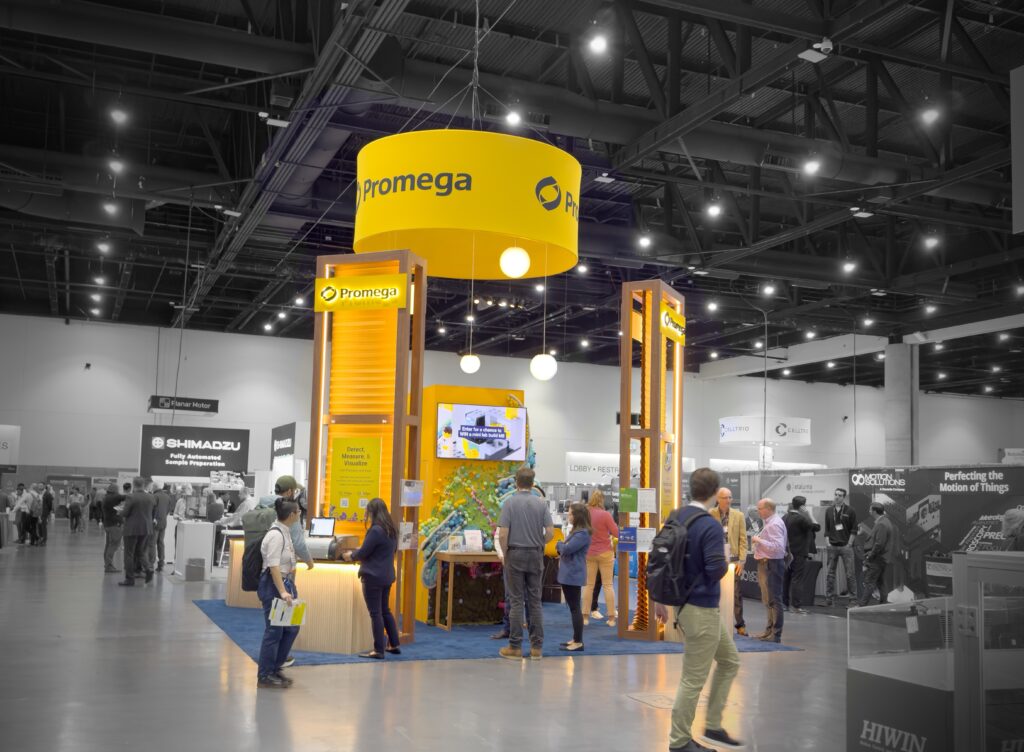
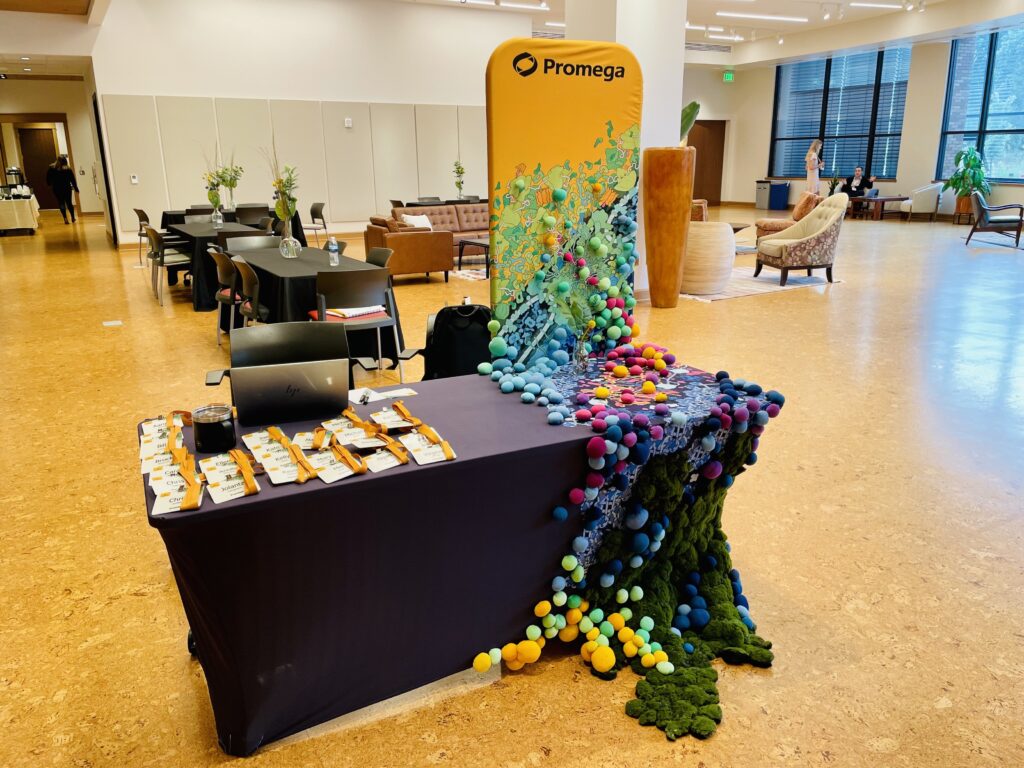
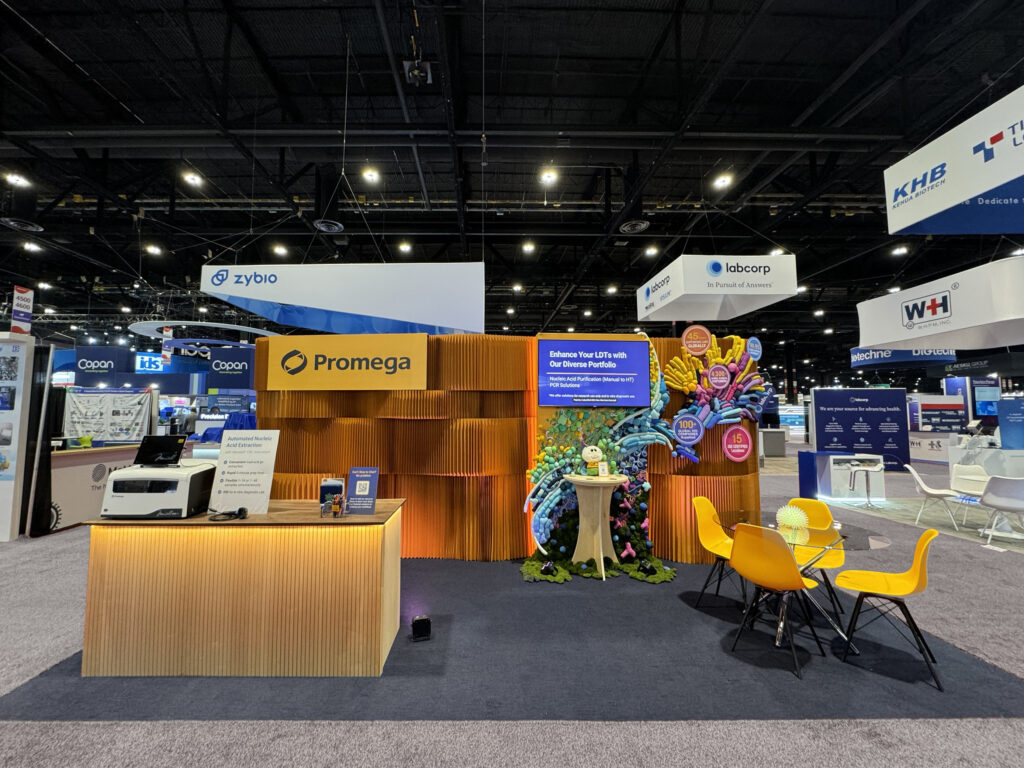
Bringing Science to Life: How Art and Sustainability Shape Our New Trade Show Booth Design

Step inside a Promega booth and leave the ordinary behind. Here, science sparks creativity, sustainability is woven into every detail, and discovery isn’t just something you see—it’s something you feel.

Continue reading “Bringing Science to Life: How Art and Sustainability Shape Our New Trade Show Booth Design”

Genetic Symphonies: Building Hox of Life 

Like the recipe book for life, every living creature has DNA. DNA contains genes, which contain instructions for making proteins. There are many types of important proteins that impact the way our body functions. Transcription factors (TFs) are a special protein that controls what other proteins are made by directly interacting with DNA to turn genes “on” or “off.” 

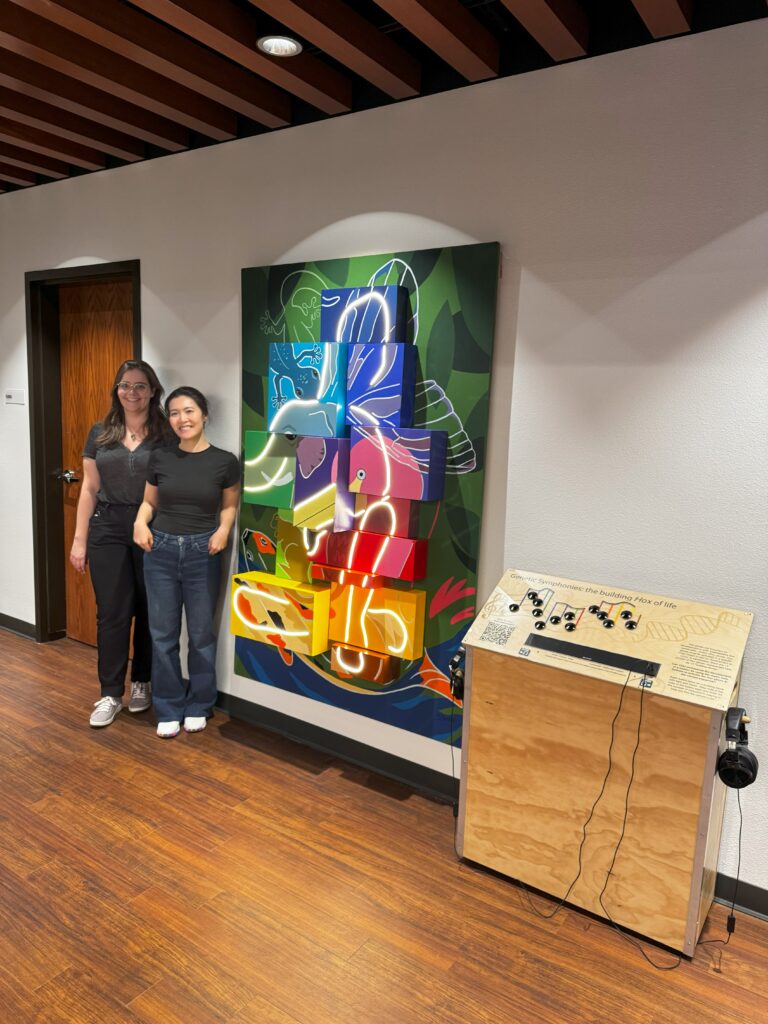
The newest art installation at our Biopharmaceutical Technology Center Institute (BTCI) brings this concept to life. “Genetic Symphonies: Building Hox of Life” uses a human skeleton to showcase how TFs turns on Hox genes by flipping the switches in the correct order. Hox proteins are a special TF that function during growth and development—and all mammals have them. There are 13 groups of Hox TFs (Hox1-Hox13) and unlike other proteins, Hox TFs must be made in a certain order for proper development to occur, starting with Hox1 and ending with Hox13. 

In this interactive exhibit, the user is a TF and must turn on Hox genes by flipping the switches in the correct order on a control podium. Every switch (Hox gene) you flip will be accompanied by light and sound (Hox proteins), representing the production of Hox TF proteins. If you successfully turn on all 13 light switches in the correct order, then the entire skeleton will be lit up, orchestrating your own developmental symphony. 

Continue reading “Genetic Symphonies: Building Hox of Life “

Exploring the World Through the Promega and Eppendorf Family Exchange Program

The Eppendorf Family Exchange program offers a unique opportunity for Promega families to participate in an international exchange initiative designed to bring our global community closer together. Through this program, children of Eppendorf and Promega employees immerse themselves in new cultures, gain language skills, and forge lifelong friendships.

The program began in 2019 during the 40th anniversary of Promega when we received the generous gift of an exchange program from a friend in the industry: Eppendorf. Every year, ten children ages 14-18 have the opportunity to participate in this enriching exchange, experiencing daily life from a new cultural perspective in a different country for two to four weeks. In return, Promega families will host a child from an Eppendorf family.

Continue reading “Exploring the World Through the Promega and Eppendorf Family Exchange Program”

Lab Safety: The Catalyst for Every Great Experiment 

In any laboratory environment, safety is imperative. From conducting basic research to handling hazardous chemicals, the associated risks require strict attention to safety protocols and procedures. And lab safety isn’t just about protecting yourself—it’s about ensuring the well-being of your colleagues or classmates, upholding the integrity of experiments, and protecting your environment. Here are some tips on how you can protect yourself and your surroundings in the lab.

Continue reading “Lab Safety: The Catalyst for Every Great Experiment “

The Largest Known Genome: Unveiling Nature’s Genetic Giant 

In genetics, sizes often come with surprises. One tiny fern, Tmesipteris oblanceolata, also known as the Fork Fern, proved this phrase true, taking the scientific community by storm when it broke the record for the largest known genome. Researchers reported this discovery on May 31, 2024, stating that the plant, which is small enough to fit in the palm of your hand, harbors a full set of genetic instructions over 50 times the size of the human genome.

Tropical rainforest in New Caledonia with ferns and moss-covered trees
Continue reading “The Largest Known Genome: Unveiling Nature’s Genetic Giant “

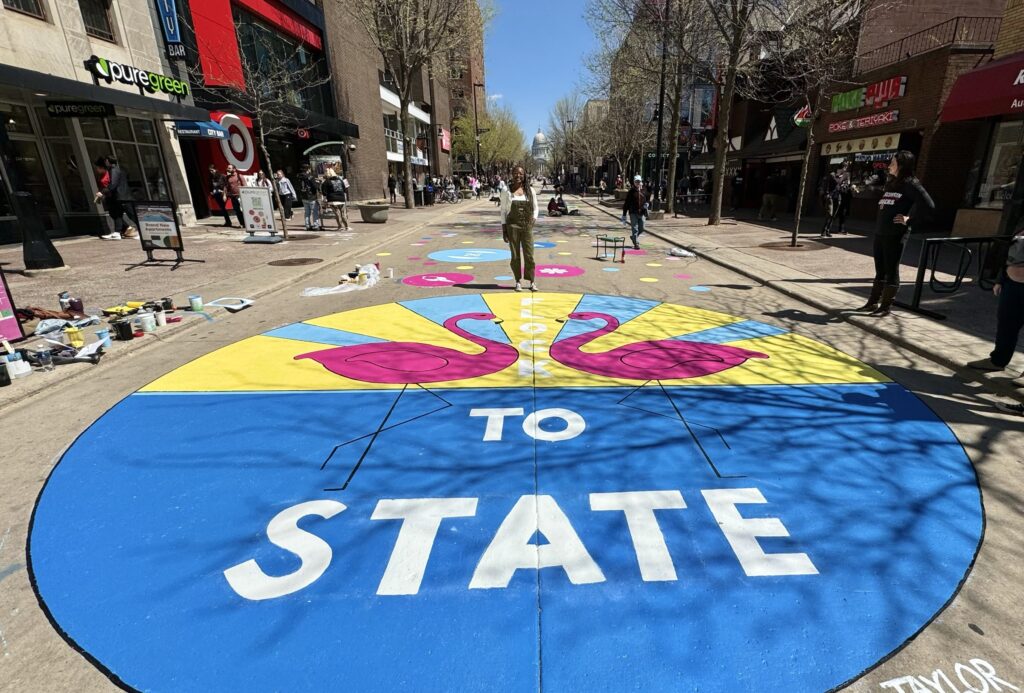
Community Canvas: Taylor McAda’s Vibrant Mural on Madison’s State Street

On April 21st, 2024, hundreds of volunteers accompanied four local artists in Madison, Wisconsin for a public painting event to help decorate the 400-600 blocks of State Street. This project is the first embodiment of the city of Madison’s pedestrian mall experiment, set to kick off in May. Taylor McAda, Promega Senior Graphic Designer, was selected to design and paint one of four original 20-foot circle murals.

Continue reading “Community Canvas: Taylor McAda’s Vibrant Mural on Madison’s State Street”

Celebrating Our 2023 Promega In Action Awardees

Each year, Promega employees are offered the opportunity to receive up to 40 hours paid time off to donate in volunteer service through our Promega In Action program. Providing sustained support of organizations in our community, our employees participate in a wide range of activities.  

In 2023, we awarded 26 individuals who volunteered for 23 different organizations, some bringing along their Promega team members in attendance. From crafting comfort shawls for families of future organ and tissue donors, to volunteering with Meals on Wheels, to journeying to South Africa to deliver charitable donations for children in need, the opportunities to contribute to our community are abundant and impactful.

Continue reading “Celebrating Our 2023 Promega In Action Awardees”