
From Gum Disease to Breast Cancer: An Oral Bacterium’s Unexpected Journey

You’re sitting in the dentist’s chair, nodding along to the familiar flossing lecture you’ve been politely ignoring for most of your adult life. Fair enough. It’s hard to get excited about gum health. But it turns out your dentist may have been underselling the pitch.

A study published in January 2026 in Cell Communication and Signaling shows that a common gum disease bacterium can promote breast cancer growth and spread in mice, and the findings hint at a particularly troubling link for people carrying BRCA1 mutations (1). “Floss to help prevent cancer” probably wasn’t on your 2026 bingo card, yet here we are.

Continue reading “From Gum Disease to Breast Cancer: An Oral Bacterium’s Unexpected Journey”
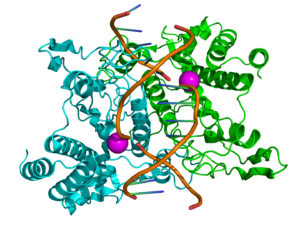

Think Restriction Enzymes are so last decade? Not so fast!

Ribbon diagram of EcoRI homodimer bound to doublestranded DNA

Restriction enzymes sometimes get a lot of flak. In the not-so-distant past, they were the workhorses of molecular biology. Restriction enzymes played a huge role in developing early DNA sequencing techniques. They chop DNA in a predictable manner, which makes cutting and pasting genes of interest manageable and relatively easy, enabling the development of  genetic engineering and recombination technologies. These technologies are now moving beyond restriction enzymes toward more modern methods, with the most talked-about method being CRISPR /Cas9. As technology continues to advance at such a rapid pace, restriction analysis  and other “ancient” technologies feel antiquated. But this is not necessarily the case.

Continue reading “Think Restriction Enzymes are so last decade? Not so fast!”