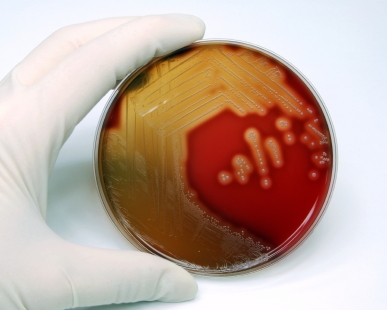
Worms from Heaven and Hell

C. elegans were recently part of an experiment on the International Space Station.

Worms from the heights of space and the depths of the earth were in the news last week, one well-known species soaring to the heavens as part of a space flight experiment and a previously undiscovered species revealing the surprising extent of multicellular life in the hidden depths of earth.

The Worm from the Heavens
Caenorhabditis elegans perhaps qualifies as the most well-known of all worms. This 1mm roundworm, is a staple model organism in molecular biology. It’s easy to grow and store, possesses a simple neuronal network, and is transparent, making it easy to study cell differentiation and development. It was the first multicellular organism to have its genome sequenced, and the developmental fate of all its somatic cells has been studied. In some ways we know C. elegans better than we know ourselves.
Continue reading “Worms from Heaven and Hell”

Microbiome Studies: We Are More than the Sum of our Parts

What if you could help protect yourself from certain diseases by populating your gut with “good” bacteria, or selectively getting rid of “bad” ones? Two news articles suggesting this possibility caught my eye this week. The articles both summarized results from the microbiome project—a research effort geared towards developing a deep understanding of how the bacteria that live in and on our bodies influence our health. Analyses of these bacterial populations are providing new insights that suggest we are much more than the sum of our parts, and that our health may depend not only on our own genes and lifestyle but also on the contributions of the bacteria that colonize us.

Continue reading “Microbiome Studies: We Are More than the Sum of our Parts”

Lab Equipment Today: Kitchen Gadget Tomorrow?

The Latest in Cooking Equipment

My husband likes to cook and he also likes to collect kitchen gadgets. Mushroom slicers, blenders, numerous graduated vials and measuring devices, meat thermometers, etc., our kitchen drawers are overflowing with the essentials for precision cooking. For each culinary process, there is a unique device, and he uses them all. I do not even know what some of them are for. I only use knives and measuring cups. But his cooking is way better than mine so there is obviously some benefit to using the right tools well.

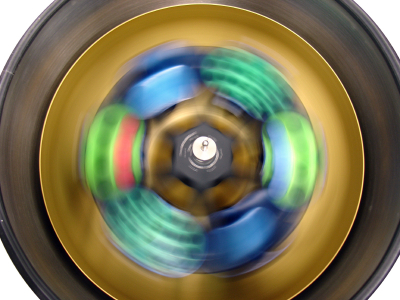
Some of the most sophisticated kitchen tools come straight from the laboratory. I was interested to read an article in the March 2011 issue of Scientific American describing how high-speed centrifuges are among the newest trends in fancy kitchen equipment. They are being used in restaurants to separate ingredients into their component parts and create potent flavorings. It turns out that centrifugation is a fast and convenient way to purify fat from various vegetables and nuts, creating interesting flavored butters and dairy-free creams (think pea butter or essence of carrot). Centrifugation is a fast alternative to straining or filtering as a means of separating components.

Continue reading “Lab Equipment Today: Kitchen Gadget Tomorrow?”

The Search for New Antibiotics: Looking for Achilles’ Heel (Again)

Some of the first available doses of penicillin were used to treat allied soldiers wounded on D-Day. It was the end of one war, but just the beginning of another–one that has gone on for a long time. The story of the development of antibiotics, and the emergence of resistant bacteria, followed by the renewed search for new antibiotics, seems neverending. As soon as a new antibiotic is discovered, it seems only a matter of time before a resistance mechanism emerges, and remaining one step ahead of the bugs can seem like a relentless challenge. Continue reading “The Search for New Antibiotics: Looking for Achilles’ Heel (Again)”
Human Microbiome Project

coliform bacteria

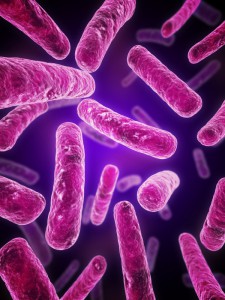
Did you know that the microorganisms living in and on the human body (most on the skin, in the gut, and in the mouth) outnumber all our human cells by a factor of ten? But read on before you grab the hand sanitizer and schedule a colonic, these “germs” may be an integral part of what makes you… well “you”. Indeed, the profile of microorganisms happily living in and on your body may be as unique a signature as your DNA profile or your fingerprints—perhaps more so.

Continue reading “Human Microbiome Project”

Variations on the Two-Hybrid Assay

two-hybrid assays help fit molecules together like puzzle pieces image shows a puzzle

The use of reporter genes for simple analysis of promoter activity (promoter bashing) is a well known practice. However, there are many other elegant applications of reporter technologies. One such application is illustrated in the paper by Zheng et al., published in the Sept. 2008 issue of Cancer Research. These researchers from the Hormel Institute at the University of Minnesota showed that the cyclin-dependent kinase cdk3 phosphorylates the transcription factor ATF1 and enhances its transcriptional and transactivation activity. The observed cdk/ATF1 signaling was shown to have an important role in cell proliferation and transformation. To do this they used several variations of a reporter-based two-hybrid assay.

Continue reading “Variations on the Two-Hybrid Assay”