The Hidden Costs of “Good Enough” Extraction

The translational oncology landscape has changed dramatically in the past two decades, and with it, the demands on the laboratories doing this work. Today’s translational oncology workflows require DNA and RNA from the same FFPE tissue section, cell-free DNA from large plasma volumes, and nucleic acids from heterogeneous batches of sample types processed in a single run. The analyte diversity has increased dramatically, and at the same time, the downstream assays interrogating those samples have grown more sensitive. The operational pressures have grown alongside the scientific ones. Labs are processing more samples than ever, but not with proportionally more staff. Same-day extraction to analysis is increasingly the expectation, not the exception. All of that change and complexity lands at the extraction step first.
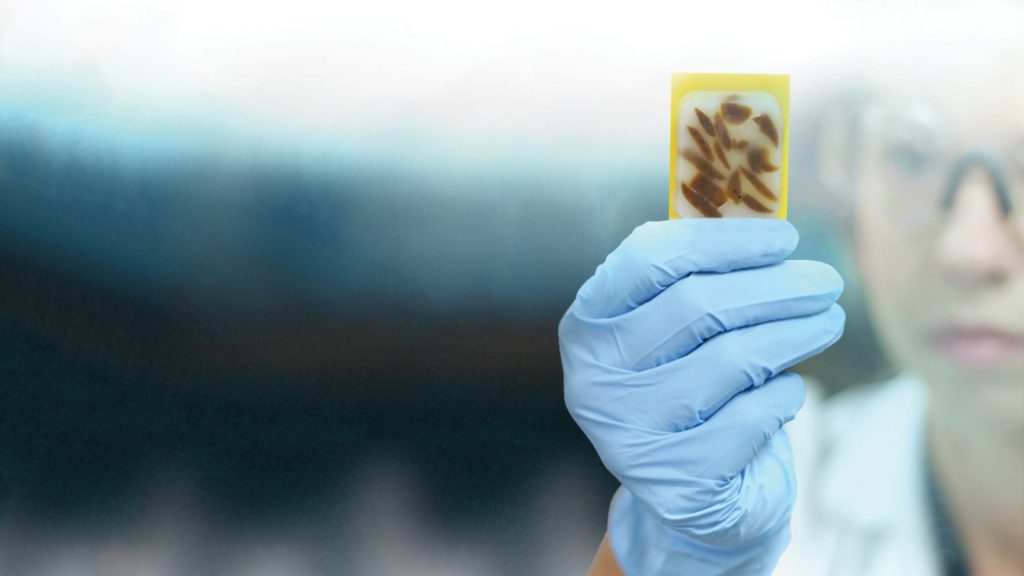
Scientist holding up an FFPE tissue sample. Such samples are vital for nucleic acid extraction required for retroactive studies.

Extraction has long been treated as the step before the experiment, the part you complete before the real work begins. However, as these pressures on the translational laboratory grow, overlooking potential issues with extraction could be disastrous, particularly for labs working with limited, irreplaceable samples, because pre-analytical variability at the extraction step propagates through every downstream process. When extraction is overlooked, information in a sample can be lost and with it the insight into the biological question your downstream assay is asking.

Continue reading “The Hidden Costs of “Good Enough” Extraction”
Finding the Right Maxwell® RSC Kit for Your Nucleic Acid Extraction

This blog was written by guest writers Paraj Mandrekar (Technical Services Scientist 3) and Michelle Mandrekar, (Research Scientist 4).

Here are some designer’s notes comparing the Maxwell® RSC Blood DNA and the Maxwell® RSC simplyRNA kit chemistries for nucleic acid extraction.

The Maxwell RSC Blood DNA Kit and Maxwell RSC simplyRNA Blood Kit were both developed from the same non-silica-based purification chemistry and use the same underlying paramagnetic particle. This chemistry is characterized by an extreme binding capacity (the capacity of nucleic acid that can be bound on the particle), leading to both chemistries being capable of isolating large amounts of nucleic acid volumes and then eluting into relatively small volumes (50 µL). It is not unusual with either chemistry to have isolates that exceed 100 ng/µL. Although the chemistries have several similarities, there are some important distinctions between how the two chemistries were designed that influence which kit you choose for your nucleic acid extraction.

Image of blood with molecules of DNA and RNA superimposed Nucleic Acid Extraction
Continue reading “Finding the Right Maxwell® RSC Kit for Your Nucleic Acid Extraction”

Working with RNA doesn’t have to be a nightmare

We’re all familiar with the Central Dogma of Molecular Biology: DNA is transcribed into RNA, which is translated into proteins. It’s drilled into our heads from the early days of biology classes, and it’s surprisingly useful when we start exploring in our own research projects. For example, if you’re interested in gene expression, you’ll most likely be working with RNA, specifically mRNA. Messenger RNA (mRNA) is transcribed from DNA and is used by ribosomes as a “template” for a specific protein. The total mRNA in a cell represents all of the genes that are actively being transcribed. So, if you want to know whether or not a gene is being transcribed, RNA purification is a great place to start.

When preparing your RNA samples for a downstream assay, there are several roadblocks and pitfalls that could give you quite a headache. Let’s tackle two of the most common.

Continue reading “Working with RNA doesn’t have to be a nightmare”