Exploring the Relationship Between IC50 and Kd in Pharmacology

This guest blog post is written by Tian Yang, Associate Product Manager at Promega.

In the realm of chemical probe development and drug discovery, understanding the interactions between drugs/compounds and their targets is crucial. Two frequently used metrics to characterize these interactions are IC50 and Kd, which guide researchers in evaluating the potential of compounds in effecting changes in target function. IC50 offers insights into a compound’s potency by quantifying its ability to inhibit a specific biological activity. Kd provides a measure of the affinity between a ligand and its receptor, reflecting how tightly a compound binds to its target (1). Together, these parameters are instrumental in the early stages of drug development, helping to identify promising candidates by assessing a compounds’s binding characteristics and its observed efficacy.

Continue reading “Exploring the Relationship Between IC50 and Kd in Pharmacology”

Compound Screening Using Cell-Free Protein Expression Systems

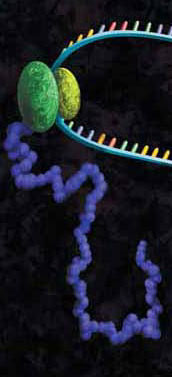
A protein chain being produced from a ribosome.
Both prokaryotic and eukaryotic cell-free protein expression systems have found great utility in efforts to screen organic compounds for inhibition of the basic cellular functions of transcription and translation, common targets for antibiotic compounds.

Cell-free systems can provide some advantages over cell-based systems for screening purposes. Cell-free systems allow exact manipulation of compound concentrations. This is an important parameter when evaluating the potential potency of the lead compound.

There is no need for cellular uptake to evaluate the effect of the compounds. While uptake evaluation is important for determining the eventual efficacy of the drug, it can unnecessarily eliminate valuable lead compounds in an initial screen. The interpretation of results in living cells is complicated by the large number of intertwined biochemical pathways and the ever-changing landscape of the growing cell. Cell-free systems allow the dissection of effects in a static system for simpler interpretation of results and the ability to specifically monitor individual processes such as transcription or translation. Individual targets not normally present, or found at low concentrations, can be added in controlled amounts.

The following references illustrate this application: