When it comes to blocking the spread of viral pathogens that cause human disease, epidemiologists—people who study disease outbreaks—like to talk about herd immunity. But what do they mean when discussing the herd and their immunity? Today, I will tackle this subject but with a side jaunt: I am going to co-opt the word “herd” and replace it with “flock” thus making chickens the center of attention rather than cattle for this analogy about immunity in a population. (Disclaimer: I am utterly biased toward chickens and enjoy talking about my flock of 24 hens and pullets).
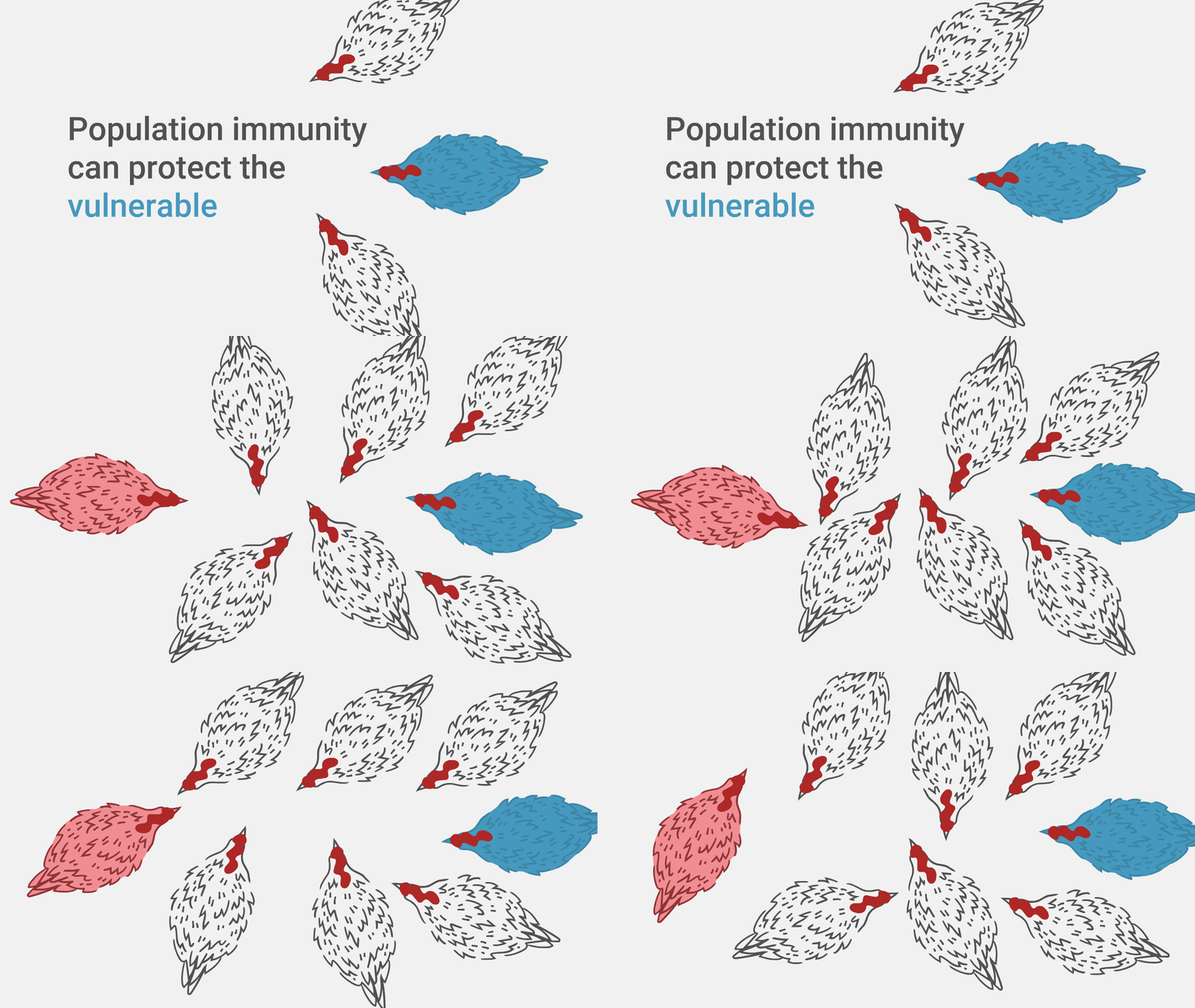
Who is the Herd Flock They Keep Talking About?
By using a collective term for a number of individuals such as “herd” or “flock”, epidemiologists and public health experts are referring to a population or community. Doing some investigation, I learned herd immunity was a term first used in 1917 and referred to…cows. That makes sense, right? When we talk about groups of cattle, the term used is “herd”. Turns out there was an infection that caused spontaneous miscarriages in cattle and became epidemic in American herds. Farmers managed this threat by destroying or selling the infected cows. However, a livestock veterinarian had a different view, describing this pathogen as “…a fire, which, if new fuel is not constantly added, soon dies down. Herd immunity is developed, therefore, by retaining the immune cows, raising the calves, and avoiding the introduction of foreign cattle” (1). Essentially, this veterinarian was noting that keeping the infected cows who had immunity against the contagion meant the herd were less likely to be reinfected and, thus, put an end to the epidemic.
Continue reading “Herd Immunity: What the Flock Are You Talking About?”