Q: Can PCR products generated with GoTaq® DNA Polymerase be used to for T- vector cloning?
A: Yes. GoTaq® DNA Polymerase is a robust formulation of unmodified Taq Polymerase. GoTaq®DNA Polymerase lacks 3’ →5’ exonuclease activity (proof reading) and also displays non-template–dependent terminal transferase activity that adds a 3′ deoxyadenosine (dA) to product ends. As a result, PCR products amplified using GoTaq® DNA Polymerase will contain A-overhangs which makes it suitable for T-vector cloning.
We have successfully cloned PCR products generated using GoTaq® and GoTaq® Flexi DNA Polymerases into the pGEM®-T (Cat.# A3600) and pGEM®-T Easy (Cat.# A1360) Vectors.
Q: Can GoTaq® Long PCR Master Mix be used for T-Vector Cloning?
A: Yes it can. GoTaq® Long PCR Master Mix utilizes recombinant Taq DNA polymerase as well as a small amount of a recombinant proofreading DNA polymerase. This 3´→5´ exonuclease activity (proof reading) enables amplification of long targets. Despite the presence of a small amount of 3´→5´ exonuclease activity, the GoTaq® Long PCR Master Mix generates PCR products that can be successfully ligated into the pGEM®-T Easy Vector System.
We have demonstrated that GoTaq® Long PCR Master Mix successfully generated DNA fragments that could be ligated into pGEM®-T Easy Vector System without an A-tailing procedure, and with ligation efficiencies similar to those observed with the GoTaq® Green Master Mix.
For details refer to Truman, A., Hook, B. and Wieczorek, D. Using GoTaq® Long PCR Master Mix for T-Vector Cloning.
Tip: For cloning blunt-ended PCR fragments into T-vectors, use the A-tailing protocol discussed in the pGEM®-T and pGEM®-T Easy Technical Manual #TM042.
Q: How do I prepare PCR products for ligation? What products can be used to purify the DNA?
Continue reading “T-Vector Cloning: Answers to Frequently Asked Questions” When it comes to combating cancer does size matter? If every cell in the body has the propensity to become cancerous, it should naturally follow that larger animals that pack greater number of body cells and that those whose cells undergo greater number of cell divisions are more likely to develop cancer. By the same logic, organisms with longer lifespans must also have a greater chance of accumulating mutations leading to cancer. Surprisingly, the risk of developing cancer is only 5% in elephants and 18% in whales whereas it is as high as 30% in humans and rodents. The apparent lack of correlation between body mass, longevity and cancer- known as Peto’s paradox- has flummoxed scientists for several decades.1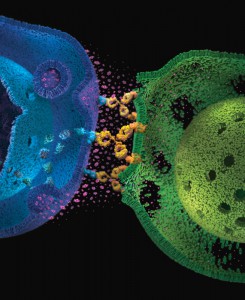


 Neonatal sepsis is a systemic infection prevalent in preterm and very low birth weight infants and causes high morbidity. Most cases of neonatal sepsis are caused by pathogenic bacteria that invade the bloodstream, triggering an abrupt and overwhelming infection in the target organs accompanied by a systemic inflammatory response. Testing for neonatal sepsis is challenging because it does not affect a specific organ and presents multiple symptoms that are often confused with other related conditions (1). Current diagnostic tests for sepsis include those that identify markers of the host response to infection (e.g., procalcitonin, C reactive protein, cytokines, etc.) and those that detect bacterial infection in blood (bacteremia) (2). The lack of specific diagnostic biomarkers for early and accurate detection of neonatal sepsis has spurred the quest for next-generation biomarkers using powerful mass screening technologies such as proteomics.