Weaving Tangled Webs with Cell-Free DNA

The ability to isolate and assay circulating cell-free DNA from plasma holds promise for improved diagnostics and treatment in the clinic. The use of blood-based non-invasive prenatal testing (NIPT) has been well described. Such testing is based on circulating cell-free fetal DNA in blood of a pregnant woman for diagnosis and screening  of chromosomal anueploidy (e.g. Trisomy 21, Down Syndrome), sex-linked diseases, and genetic diseases that are known to result from a specific mutation in a single gene (1). Additionally, most cancers carry somatic mutations that are unique to the tumors, and dying tumor cells release small pieces of their DNA into the blood stream (2). This circulating cell-free tumor DNA can be used as a biomarker to “follow” cancer progression or regression during treatment, and diagnostic methods also are being developed to detect even early stage cancers from circulating tumor DNA (3). Further, increases in circulating cell-free DNA have been well documented after intense exercise, trauma, sepsis and even associated with autoimmune diseases such as system lupus erythematosus (SLE; 1,4). In these latter examples increases in extracellular DNA are associated with evolutionarily conserved innate immune responses involving the production of neutrophil extracellular traps (NETs). Monitoring the circulating cell-free DNA of NETs has implications for treatment and diagnosis of autoimmune diseases, cardiovascular events and traumatic injuries (4–7).

How Neutrophils Weave a Defensive Web
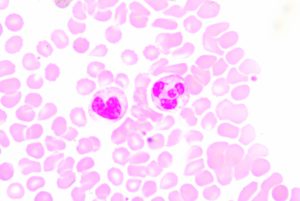
Blood smear showing two prominent neutrophils in the field of view

Neutrophils are the most abundant type of white blood cell and are part of the innate immune response, participating in non-specific immune responses to injury or pathogens. They are one of three types of granuolcytes, and can be recognized by their multi-lobed nucleus and the prominent granules that fill their cytoplasm. Generally they are first to the scene of injury or infection. Early in my scientific career, I was taught that neutrophils fought disease via phagocytosis and occasionally by firing a barrage of toxic enzymes and molecules at invaders. Mostly though they released cytokines that recruited the “important” cells of the specific immune system to the area.

For these reasons, I never really thought much about neutrophils. That is until recently, when I learned about Neutrophil Extracellular Traps (NETs). It turns out that neutrophils are pretty awesome, sacrificing themselves in a cloud-like explosion of DNA, chromatin, and granule proteins

Continue reading “Weaving Tangled Webs with Cell-Free DNA”

Deciding What to Share: Evaluating Content in a Self-Publishing World

A BuzzFeed News analysis of “news” stories during the final three months of the 2016 US presidential campaign revealed that on Facebook, the 20 top-performing fake-news stories from hoax sites and hyper partisan blogs generated 8,711,000 instances of engagement (shares, reactions, or comments) while the 20 top-performing stories from news web sites generated 7,367,000 instances of engagement (1). Basically fake news generated 1.5 million more responses than real news.

This is particularly concerning given that a Pew Research study from July 2016 indicated that 63% of Americans say that family and friends are an important way they get news—they get their news from their social networks (online or offline) rather than from vetted broadcast or print media (2), and 54% of people asked in this same study responded that they “sometimes” or “often” received news from social networking sites such as Facebook or Twitter.

I too must confess that quite often it’s a tweet or a Facebook post that alerts me to a news story or world event. Often it’s even a tweet or a post that leads me to the latest science news. I can’t remember the last time I deliberately watched the 6:00 news, though it was a staple in my house when I was growing up.

So what does all of this mean for science communication, science literacy and a basic understanding of what is really going on in the world?

Continue reading “Deciding What to Share: Evaluating Content in a Self-Publishing World”

From Napkin Sketch to “Custom Kit”: CloneWeaver® Workflow Builder Gets Your Cloning Organized

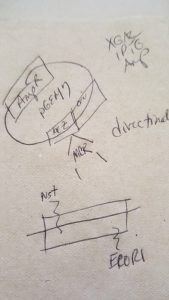
20161018_150403Let’s face it, most lab techs and purchasing agents aren’t all that happy when you send them an Instagram picture of your latest lunchroom-napkin cloning strategy as your order form for your next big cloning experiment. So we have created the CloneWeaver® Workflow Builder. You can transfer your brilliance easily from that lunchroom napkin to an orderly email or print out of every vector, enzyme, purification kit, and transfection reagent your next big molecular cloning experiment requires. You can even save your one-of-a-kind “cloning kit” for future endeavors.

The CloneWeaver® tool will walk you through every step of the molecular cloning process from selecting a vector to finding a transfection reagent for mammalian cells. So if you are starting a new project, we are with you every step of the way. We will help you find restriction enzymes and even remind you about markers and biochemicals that you may want to have on hand for your experiment. Within the tool we have links to additional resources like our RE Tool and catalog pages if you need more help.

clone_weaverAlready have a favorite vector and a freezer full of restriction enzymes? No problem, skip those steps and move on to getting the perfectly sized nucleic acid markers or the particular polymerase your experiment requires.
Are you teaching a molecular genetics course? CloneWeaver® workflow builder is perfect for creating the list of laboratory reagents you are going to need for your students—and you will have this same list as a starting point for other lab experiments or classes later on because you can save the lists that you build. You can even pass them along to other professors.

So, if molecular cloning is in your future, let us help you get organized. Try the CloneWeaver® Workflow Builder.

A Very Happy and BATTY Halloween

Crowds gather on the Congress Ave Bridge in Austin, TX to see the bat colonly.
Crowds gather on the Congress Ave Bridge in Austin, TX to see the bat colony.

My colleagues in the scientific communications group at Promega are pretty sure that I have bats in my belfry. And, they may be right. After all I have written extensively and repeatedly about bats in North America and the threat that they are facing from White Nose Syndrome, the devastating disease caused by a cold-loving fungus (you can read my last post here). And, just last week I skipped an awesome party on Rainey Street in Austin, TX, to instead hang out by the Congress Ave bridge in hopes of seeing the urban bats fly.

But just in time for the annual Promega Connections Halloween blog, I stumbled across some good news for our distant mammalian cousins.

Continue reading “A Very Happy and BATTY Halloween”

Back to Basics: Organizing Your Writing like It’s a Hamburger

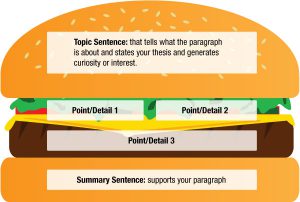
The "hamburger" scheme for organizing a paragraph.
The “hamburger” scheme for organizing a paragraph.

Last night I was helping my daughter, who is in fourth grade, with her homework. We had completed a math worksheet, a geography worksheet and had moved onto writing. For her paragraph assignment, she was supposed to write about a special place. So I began drawing the concept map that we typically use to help her organize her thoughts. She stopped me before I could get started.

“No Mom, wait,” she grabbed the pencil and paper from my hands, “I have a better idea.”

She drew five shapes on the paper.

“We should write the paragraph like it’s a hamburger. The first sentence is the topic—it’s the top of the burger, tells you what is inside—it makes you hungry to read more. Next comes the juicy, meaty part. Three details—three sentences. Then the bottom bun, the summary that supports the whole paragraph. It’s the hardest to write.” She proudly sat down with her drawing and pencil.

“I LOVE that,” I exclaimed. “That’s a great way to organize a paragraph.”

“Yeah,” my husband looked up from his Suduko that he had been working on, “and the cheese goes right here.” He pointed to one of the three boxes my daughter had drawn underneath the bun.

“And the lettuce over here,” my daughter giggled.

“Well, I like mine with lettuce and tomato,” I chanted with no apologies to Jimmy Buffett, “Heinz 57 and French-fried potato..,”

“A big kosher pickle,” my daughter joined in, and the evening’s homework activities degenerated from there. (Sometimes it’s the parents who are easily distracted.)

My daughter’s hamburger graphic was new to me, but the concept wasn’t. It is a solid method for organizing a piece of writing, and it can be applied all kinds of writing—from a paragraph, to an essay, to a speech and even to a scientific article.

Continue reading “Back to Basics: Organizing Your Writing like It’s a Hamburger”

An Epizootic for the Ages: Revisiting the White-Nose Syndrome Story

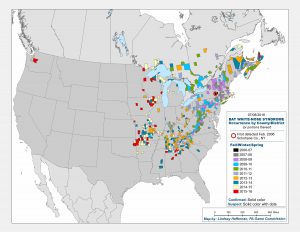
Map showing the spread of WNS across North America

In March 2016, two hikers on a trail east of Seattle, WA, found a little brown bat lying on the ground in obviously poor condition. The bat was taken to an animal shelter where it died two days later from White-Nose Syndrome (WNS).

This bat was the first case of WNS found west of the Rocky Mountains. It represented a jump in the spread of WNS, and a troubling one. WNS was first detected in a cave in Albany, New York, and since then it has been moving slowly westward at a rate of about 200 miles per year, according to David Blehert of the United States Geological Survey, the laboratory that confirmed the WNS diagnosis for the Washington bat. Before this year’s discovery outside of Seattle, the westward-most case detected was in eastern Nebraska.

WNS, caused by a cold-loving fungus, Psuedogymnoascus destructans (Pd), can kill 100% of the hibernating bats in a colony, and in the ten years since it has been detected and monitored has killed over 6 million bats in the United States and Canada. As of July 2016, bats infected with the fungus have been found in 29 states and 5 Canadian provinces.

According to Blehert, this is probably the “most significant epizootic of wildlife” ever observed; never before have we seen hibernating mammals specifically affected by a skin fungus. What does that mean? Are we looking at extinction for some bat species? What are the ecological consequences of rapidly losing so many individuals to disease so quickly? And, what, if anything, can be done to combat the disease and help bat populations recover?

Continue reading “An Epizootic for the Ages: Revisiting the White-Nose Syndrome Story”

Summer Friday Fun Blog: Science Humor

It is the start of summer here in Wisconsin, so it’s time for some Friday Fun (#FridayFun) blog posts on Promega Connections. To kick us off, I have scraped the internet for a few good and groaner, G-rated science jokes.

So, here it goes, a few jokes to send you smiling (or shaking your head) into your weekend.

Has anyone read the book on antigravity? I hear you can’t put it down.
Has anyone read the book on anti-gravity? I hear you can’t put it down.


Continue reading “Summer Friday Fun Blog: Science Humor”

Increasing Drug Research and Development Efficiency Using a 4-point Screening Method to Determine Molecular Mechanism of Action

Fig 4. Four point MMOA screen for tideglusib and GW8510. Time dependent inhibition was evaluated by preincubation of TbGSK3β with 60 nM tideglusib and 6 nM GW-8510 with 10μM and 100μM ATP. (A). Tideglusib [60 nM] in 10μM ATP. (B). GW8510 [60 nM] in 10μM ATP. (C.) Tideglusib [60 nM] at 100μM ATP. (D.) GW8510 [60 nM] at 100μM ATP. All reactions preincubated or not preincubated with TbGSK3β for 30 min at room temperature. Experiments run with 10μM GSM peptide, 10μM ATP, and buffer. Minute preincubation (30 min) was preincubated with inhibitor, TbGSK3β, GSM peptide, and buffer. ATP was mixed to initiate reaction. No preincubation contained inhibitor, GSM peptide, ATP, and buffer. The reaction was initiated with TbGSK3β. Reactions were run at room temperature for 5 min and stopped at 80°C. ADP formed was measured by ADP-Glo kit. Values are mean +/- standard error. N = 3 for each experiment and experiments were run in duplicates. Control reactions contained DMSO and background was determined using a zero time incubation and subtracted from all reactions. Black = 30 min preincubation Grey = No preincubation.
Four point MMOA screen for tideglusib and GW8510.
Time dependent inhibition was evaluated by preincubation of TbGSK3β with 60 nM tideglusib and 6 nM GW-8510 with 10μM and 100μM ATP. (A). Tideglusib [60 nM] in 10μM ATP. (B). GW8510 [60 nM] in 10μM ATP. (C.) Tideglusib [60 nM] at 100μM ATP. (D.) GW8510 [60 nM] at 100μM ATP. All reactions preincubated or not preincubated with TbGSK3β for 30 min at room temperature.  Black = 30 min preincubation Grey = No preincubation.
The first small-molecule kinase inhibitor approved as a cancer therapeutic, imatinib mesylate (Gleevec® treatment), has been amazingly successful. However, a thorough understanding of its molecular mechanism of action (MMOA) was not truly obtained until more than ten years after the molecule had been identified.

Understanding the MMOA for a small-molecule inhibitor can play a major role in optimizing a drug’s development. The way a drug actually works–the kinetics of binding to the target molecule and how it competes with endogenous substrates of that target–ultimately determines whether or not a a candidate therapeutic can be useful in the clinic. Drugs that fail late in development are extremely costly.

Drug research and discovery for neglected tropical diseases suffer from a lack of a large commercial market to absorb the costs of late-stage drug development failures. It becomes very important to know as much as possible, simply and quickly, about MMOA for candidate molecules for these diseases that are devastating to large populations.

One such neglected topical disease is Human African trypanosomiasis (HAT, also known as sleeping sickness). Continue reading “Increasing Drug Research and Development Efficiency Using a 4-point Screening Method to Determine Molecular Mechanism of Action”

Making Drug Discovery More Efficient: Predicting Drug Side Effects in Early Screening Efforts

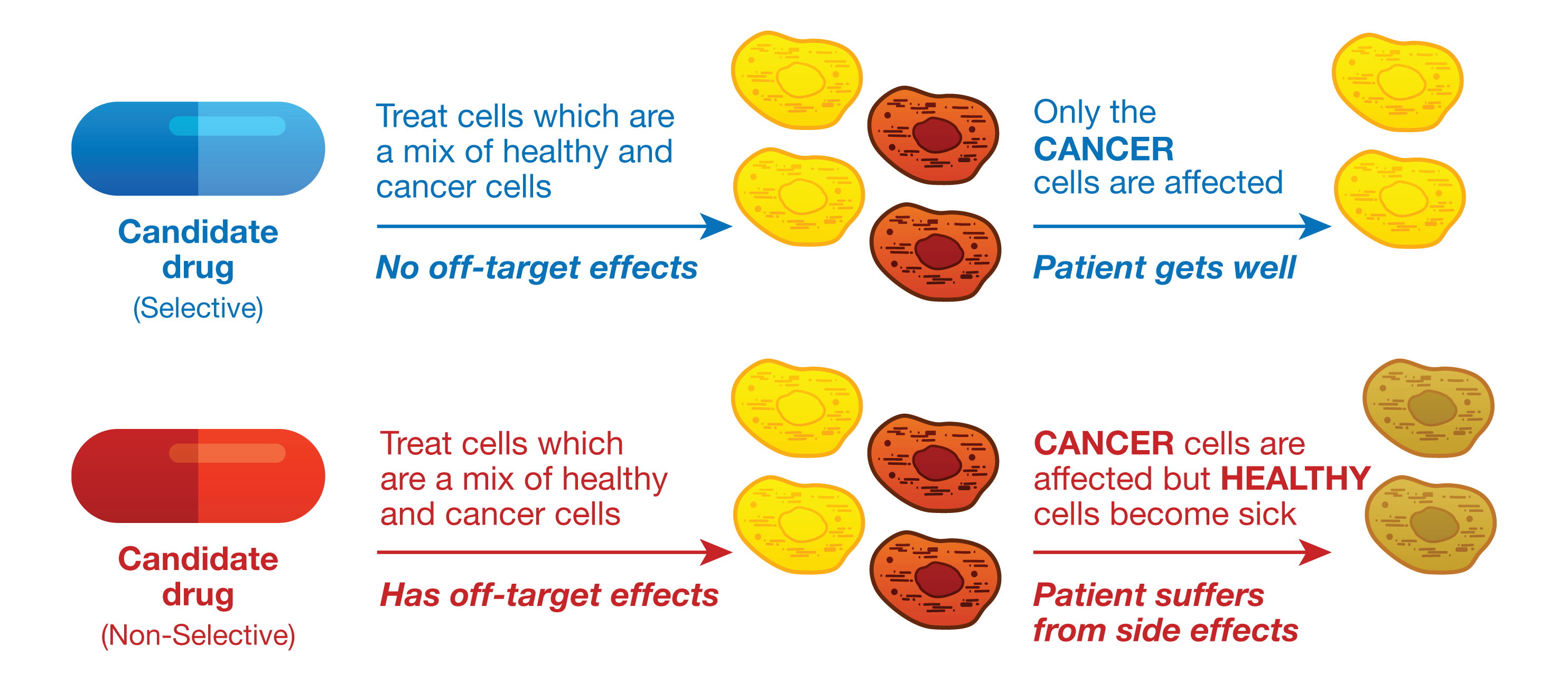
26911030-Laymans-KSPS-figure-WEB-R4Drug research and development is a complex and expensive process that begins with initial screening steps of candidate chemical compounds, and compounds that appear to have the desired potency against a specific cellular target or pathway are further evaluated. Candidate compounds that fail late in development or during clinical trials because of off-target effects are costly, and can be dangerous. Therefore drug developers not only need to ensure that a candidate compound is effective as a therapy, but also they need to predict any potential undesirable side effects due to off-target activities as early as possible in the drug discovery and development process. Continue reading “Making Drug Discovery More Efficient: Predicting Drug Side Effects in Early Screening Efforts”

What’s for Dinner? Mystery Meat Served at the 47th Explorer’s Club Annual Dinner Finally Identified

Could this be the 1951 mystery meat?

I remember one particular encounter with “mystery meat” when I was in college. I was walking along the serving line at the dining hall, and when I came to the entrée, I asked the server, “What is it?”

She replied quite succinctly, “Don’t know. Got beef in it.” I passed on the entrée that night, settling for salad and bread.

I would probably not have be a good candidate for membership in the Explorers Club.

The Explorers Club, founded in New York City in 1904, is a professional society that champions the cause of field research (1). The member list is impressive, including Teddy Roosevelt, the American President responsible for setting aside many of the most treasured public lands in the United States so that explorers have fields for research and wild places for adventures, Neil Armstrong, the first man to set foot on the moon, and Don Walsh and Jacques Piccard, the two men who descended into the Mariana’s trench to explore the deepest part of the ocean, among others.

In addition to a membership list that reads like a who’s who of science and exploration, The Explorers Club also has an annual dinner that for many years has popularized a menu of “exotic” foods (at least exotic foods from the point of view of the typical Midwest United States pallet). One of the club’s most celebrated dinners took place on January 13, 1951.

Continue reading “What’s for Dinner? Mystery Meat Served at the 47th Explorer’s Club Annual Dinner Finally Identified”